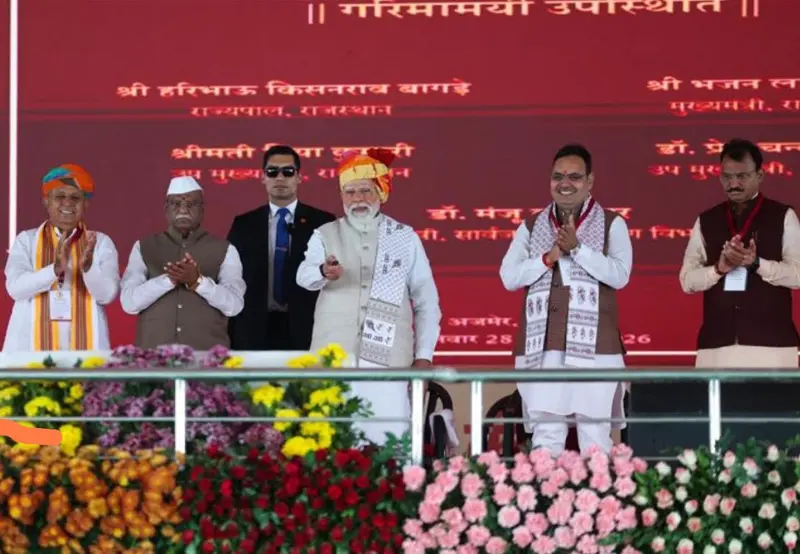

India has taken another significant stride towards enhancing its renewable energy infrastructure. Prime Minister Narendra Modi recently inaugurated major Powergrid transmission projects in Rajasthan worth approximately ₹3,600 crore. These developments are designed to strengthen the state’s renewable power evacuation capacity — an essential component in India’s clean energy expansion strategy.
The newly inaugurated infrastructure will enable smoother transmission of solar and wind energy from Rajasthan, one of India’s fastest-growing renewable energy hubs, to demand centres across the country.
Key Transmission Projects Unveiled
The government-backed transmission projects include:
- Multiple high-capacity power lines
- Transmission substations
- Grid connectivity enhancements
These facilities will significantly reduce bottlenecks in renewable power evacuation, ensuring that clean electricity generated in Rajasthan can be delivered efficiently to consumers nationwide.
By increasing transmission capacity, India is positioning itself to integrate more renewable energy into the national grid while maintaining grid stability.
Rajasthan: A Renewable Power Hotspot
Rajasthan has emerged as a leading centre for large-scale solar and wind energy projects. The state’s abundant sunshine and extended land availability have attracted major renewable developers, making it a cornerstone of India’s energy transition.
However, renewable power growth requires not just generation but also efficient evacuation systems — the electrical highways — that transport electricity from generation sites to consumption zones.
The newly inaugurated Powergrid facilities directly address this need by adding robust evacuation infrastructure to accommodate rising power flows.
Strengthening India’s Renewable Infrastructure
Upgrading transmission networks is essential for achieving India’s renewable energy targets. With plans to reach 500 GW of non-fossil energy capacity by 2030, expanding evacuation infrastructure becomes crucial.
The Powergrid projects inaugurated by the Prime Minister will:
- Improve grid flexibility
- Reduce transmission losses
- Enable higher renewable penetration
- Support economic development through reliable power supply
These upgrades align with India’s long-term goal to build a more resilient, low-carbon electricity system.
Supporting National Power Distribution Efficiency
Transmission projects of this scale also benefit distribution utilities across states. By improving connectivity between high-generation renewable centres and load centres, states can better manage electricity supply, reduce dependence on fossil fuel-generated power, and improve energy security.
Rajasthan’s enhanced evacuation capacity will also help balance regional power flows and reduce congestion on busy grid corridors.
A Boost for Green Growth and Investments
The ₹3,600 crore investment in transmission infrastructure sends a strong message to renewable energy developers and investors: India is serious about operationalising its clean energy goals.
Improved evacuation corridors reduce project risk and can:
- Attract further private investment
- Accelerate renewable project commissioning
- Strengthen investor confidence in grid reliability
Ultimately, these enhancements set the stage for more renewable capacity to come online rapidly and efficiently.
National Impact Beyond Rajasthan
While the projects are based in Rajasthan, their effects will be felt across the national grid. Enhanced connectivity enables surplus renewable electricity from Rajasthan to support power demands in other states, particularly during peak usage periods.
This interconnected approach allows renewable generation to reach regions that previously lacked adequate transmission infrastructure.
What This Means for India’s Energy Transition
India’s renewable ambitions are expansive, and progress depends on both generation and the transmission backbone that supports it.
By launching these Powergrid facilities, the government has reinforced the country’s commitment to:
- Increasing renewable adoption
- Modernising grid architecture
- Ensuring energy reliability
- Reducing carbon emissions
This initiative exemplifies how strategic infrastructure investments can accelerate the shift towards a cleaner and more sustainable energy future.
Conclusion
The inauguration of ₹3,600 crore transmission projects in Rajasthan marks a milestone in India’s clean energy journey. By boosting renewable power evacuation, the government is not only strengthening grid reliability but also laying the foundation for future renewable expansion.
As India moves forward with its climate and energy goals, investments in transmission infrastructure will continue to play a pivotal role. With more renewable capacity expected to come online, upgraded evacuation systems will be essential to deliver clean power to consumers efficiently, sustainably, and reliably.