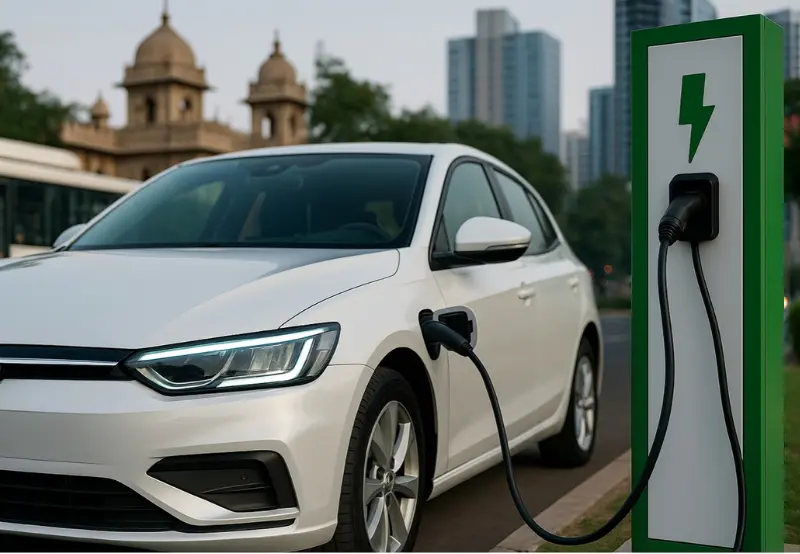

Discover how NITI Aayog EV adoption blueprint and India Electric Mobility Index are reshaping India’s green mobility future with policy shifts, disincentives, and new EV leaders.
Table of Contents
- Introduction
- NITI Aayog EV Adoption Blueprint: What’s New in 2025?
- Shifting Gears: From Subsidies to Mandates
- Priority Segments: Buses, Trucks & More
- India Electric Mobility Index: Who’s Leading?
- Financing: Addressing EV Affordability
- Comparing with Global EV Policy Shifts
- Challenges Ahead
- Conclusion
- Focus Keyword Summary & SEO Tips
1. Introduction
On 4 August 2025, NITI Aayog, India’s apex policy think tank, unveiled a comprehensive EV adoption blueprint aimed at revolutionising India’s green mobility landscape. The policy proposes a strategic shift from incentive-driven support to mandate-based adoption, signalling India’s intent to mature the EV ecosystem.
Simultaneously, the India Electric Mobility Index—launched in partnership with leading transport and policy agencies—ranked Delhi, Maharashtra, and Chandigarh as the top-performing regions in electric mobility preparedness.
2. NITI Aayog EV Adoption Blueprint: What’s New in 2025?
The NITI Aayog EV Adoption Blueprint 2025 offers a bold, data-backed roadmap focusing on:
- Replacing financial subsidies with regulatory mandates and disincentives
- Accelerating electrification in public and freight transport
- Enhancing EV financing and leasing ecosystems
- Promoting state-level EV adoption metrics and rankings
The move indicates a policy pivot—from encouraging adoption to ensuring compliance, similar to global EV leaders like China and Norway.
3. Shifting Gears: From Subsidies to Mandates
India’s previous EV strategy largely relied on schemes like FAME I and II, which incentivised buyers and manufacturers. However, NITI Aayog’s new approach focuses on:
- Mandating EV quotas for high-emission segments (trucks, intercity buses)
- Introducing congestion taxes and ICE vehicle penalties in urban centres
- Enabling EV-only zones in polluted cities
- Phasing out subsidies by 2027, as local industry becomes competitive
This transition aligns with global best practices, aiming to drive systemic change, not just isolated success stories.
4. Priority Segments: Buses, Trucks & More
The blueprint emphasises electrifying segments with maximum environmental impact, particularly:
- Public Transport Buses – Over 65% of new bus tenders from 2026 will require electric variants
- Urban Freight Trucks – Regulations will mandate EV fleets in last-mile delivery hubs
- Fleet Aggregators – Ola, Uber, Amazon and Flipkart are expected to convert up to 75% of urban vehicles to electric by 2030
- Institutional Buyers – School buses, corporate transport, and intercity operators will be given compliance deadlines
This category-first strategy reflects targeted emission reduction.
5. India Electric Mobility Index: Who’s Leading?
The newly launched India Electric Mobility Index (2025), a first-of-its-kind initiative by NITI Aayog, evaluates states and UTs based on:
- EV registrations
- Charging infrastructure
- Policy readiness
- Market size and innovation
Top Performers:
- Delhi – Strong adoption and policy support
- Maharashtra – EV Manufacturing and multi-city deployment
- Chandigarh – EV-centric urban planning
Mid-Tier:
- Karnataka, Tamil Nadu, Telangana
Low Readiness:
- Bihar, Jharkhand, and parts of the Northeast
This ranking system is designed to motivate healthy inter-state competition.
6. Financing: Addressing EV Affordability
Access to EV financing remains a bottleneck in Tier 2 and Tier 3 cities. NITI Aayog has proposed:
- Low-interest green loans backed by sovereign guarantees
- Insurance-linked incentives for fleet operators
- Special NBFC funding windows for EV startups
- Creation of a national EV risk guarantee fund
These steps aim to democratise EV access for small businesses, startups, and self-employed operators.
7. Comparing with Global EV Policy Shifts
NITI Aayog’s strategy mirrors global EV leaders:
- China: Mandates 40% EV sales by 2030
- EU: ICE ban by 2035 with tax disincentives
- USA: $7,500 EV rebate phasing out in favour of tax mandates
India’s blueprint—though uniquely tailored—demonstrates an increasing convergence with global trends, combining regulation with innovation.
8. Challenges Ahead
Despite the progress, India’s EV roadmap must tackle:
- Battery supply chain dependencies
- Urban infrastructure limits for charging
- Consumer trust gaps in rural markets
- Fragmentation in state-level EV policies
To succeed, coordination between centre, state, and private sector will be essential.
9. Conclusion
The NITI Aayog EV Adoption Blueprint 2025 marks a historic pivot in India’s clean mobility mission. From incentive-driven early adoption, the focus is now on policy mandates, financing access, and segment-specific rollouts.
Coupled with the India Electric Mobility Index, India is setting the stage for transparent, performance-driven green mobility—positioning itself as a global EV leader in the coming decade.