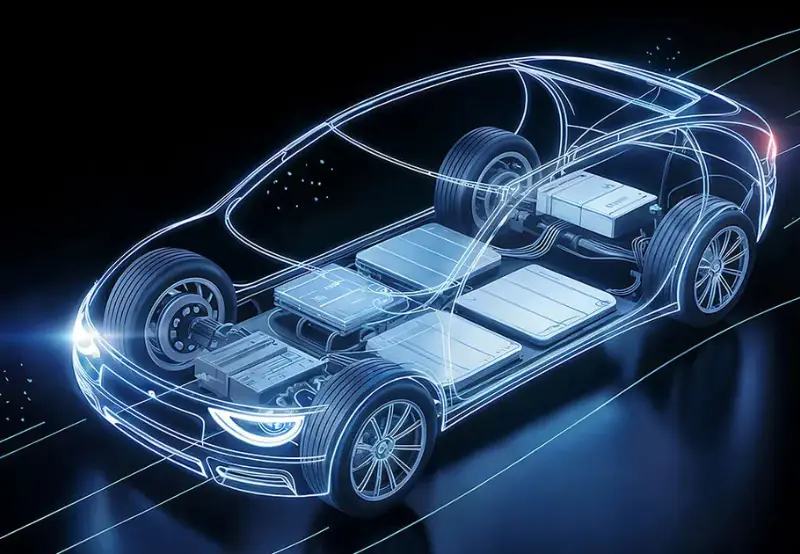

Discover how ChargePoint and Eaton’s V2X-capable ultra-fast EV charging system is revolutionising fleets and public networks with advanced vehicle-to-grid (V2G) and energy management.
Table of Contents
- Introduction
- ChargePoint and Eaton’s Strategic Partnership
- Understanding V2X Technology
- Why Ultra-Fast Charging is Critical
- Benefits for Fleet Operators and Public Networks
- The Role of Smart Energy Integration
- How This System Supports Grid Stability
- Impact on EV Adoption and Clean Energy
- Global Comparisons and Market Context
- Challenges and Future Prospects
- Conclusion
Introduction
Electric vehicle (EV) adoption is surging worldwide, but one key challenge remains: charging speed and infrastructure scalability. Enter ChargePoint and Eaton’s V2X-capable ultra-fast EV charging system—a pioneering solution designed to meet the needs of fleet operators, public charging networks, and energy-conscious businesses.
This cutting-edge platform goes beyond traditional charging. By integrating Vehicle-to-Everything (V2X) technology, it enables bi-directional energy flows, turning EVs into mobile energy storage units. With energy prices fluctuating and grid demands intensifying, this system empowers businesses, governments, and individuals to optimise their energy usage and accelerate the clean energy transition.
ChargePoint and Eaton’s Strategic Partnership
ChargePoint, a global leader in EV charging infrastructure, and Eaton, a power management giant, have joined forces to deliver this transformative solution. The partnership leverages:
- ChargePoint’s expertise in networked EV charging infrastructure, spanning more than 250,000 charging ports globally.
- Eaton’s deep knowledge of energy management and power distribution systems, crucial for building smarter charging networks.
Together, they are creating future-ready charging ecosystems that integrate seamlessly with renewable energy and advanced grid management tools.
Understanding V2X Technology
The star of this innovation is V2X (Vehicle-to-Everything) technology. Unlike traditional chargers that only deliver power to EVs, V2X enables bi-directional energy transfer, allowing EV batteries to:
- Power homes or businesses (V2H, Vehicle-to-Home).
- Provide energy to the electric grid during peak demand (V2G, Vehicle-to-Grid).
- Support critical infrastructure or events (V2B, Vehicle-to-Building).
This makes EVs more than just transportation tools—they become active participants in energy ecosystems.
Why Ultra-Fast Charging is Critical
As EV numbers rise, traditional charging stations no longer meet growing expectations. Ultra-fast charging offers:
- High Power Delivery: Up to 400–500 kW, reducing charging times to 15–20 minutes.
- Fleet-Friendly Solutions: Designed for depots, logistics hubs, and delivery networks that require minimal downtime.
- Public Network Scaling: Capable of supporting highways and urban charging corridors.
This shift helps businesses reduce operational downtime and paves the way for widespread EV adoption.
Benefits for Fleet Operators and Public Networks
The new V2X-capable ultra-fast charging solution delivers significant advantages:
- Lower Operational Costs: By using V2X capabilities, fleets can charge vehicles when energy is cheaper and discharge during peak pricing.
- Energy Resilience: Acts as a backup power source during outages, supporting business continuity.
- Infrastructure Flexibility: Scalable systems suitable for both small business fleets and large urban networks.
- Improved Asset Utilisation: Fleets can monetise idle EV batteries by feeding energy back into the grid.
The Role of Smart Energy Integration
ChargePoint and Eaton’s innovation is not just about faster charging; it’s about intelligent charging. The system integrates with:
- AI-driven energy management software to predict demand and optimise power flows.
- On-site renewable energy sources such as solar panels and battery energy storage systems.
- Dynamic load balancing to prevent overloading local grids.
By merging EV charging with smart energy technology, businesses can achieve lower energy bills and a reduced carbon footprint.
How This System Supports Grid Stability
V2X technology addresses one of the largest challenges in renewable energy adoption: intermittency. Solar and wind power are not always available, but with thousands of connected EVs acting as distributed storage units, the system can:
- Store excess renewable power during sunny or windy days.
- Release power back into the grid during evening demand peaks.
- Minimise reliance on fossil fuel peaker plants.
This creates a virtual power plant (VPP) effect, strengthening energy security.
Impact on EV Adoption and Clean Energy
The ChargePoint and Eaton V2X-capable system plays a pivotal role in driving EV adoption:
- Reduced Range Anxiety: Ultra-fast charging reduces downtime, making EVs viable for high-mileage fleets.
- Policy Alignment: Supports government mandates for net-zero and EV transition by 2035 in key markets.
- Economic Growth: Creates opportunities for charging network operators, equipment manufacturers, and clean energy investors.
Global Comparisons and Market Context
V2X and ultra-fast charging are gaining traction globally:
- Japan: Nissan has pioneered V2G with the Leaf EV, supporting disaster recovery.
- Europe: Pilot V2X programmes in the Netherlands and Germany are enabling residential energy trading.
- United States: California utilities are incentivising V2G adoption to stabilise grids.
ChargePoint and Eaton’s combined expertise positions them to lead the North American and European charging markets.
Challenges and Future Prospects
Despite its potential, this technology faces several hurdles:
- Regulatory Complexity: Energy markets and policies need to adapt to bidirectional charging models.
- Standardisation: Ensuring global interoperability for connectors and software.
- Infrastructure Costs: Ultra-fast chargers require high-capacity grid connections, which can be expensive.
However, as battery costs decline and EV adoption rises, economies of scale will reduce costs and accelerate deployment.
Conclusion
The ChargePoint and Eaton V2X ultra-fast EV charging system represents more than just a charging solution; it’s a blueprint for sustainable energy ecosystems. By enabling smarter energy flows, supporting grid stability, and offering unmatched charging speeds, this partnership sets a new benchmark for the EV industry.
This innovation signifies the future where EVs, renewables, and smart grids work seamlessly together, powering not just vehicles but entire communities.
For businesses, fleet operators, and policymakers, this technology offers an opportunity to maximise energy efficiency, monetise idle assets, and accelerate the transition to clean energy.
Read More: https://ecodigest.in/high-efficiency-ev-charging-system/