
Xiaomi steps into the subsidy race as China prepares to halve its purchase tax incentives for EVs. Discover how this move affects buyers, makers and China’s EV market.
Introduction
Chinese smartphone-maker-turned-automaker Xiaomi has made waves by launching a new consumer subsidy offer for its electric vehicles (EVs) — just as China prepares to revise its purchase-tax incentives for new energy vehicles (NEVs). With the current exemption set to shrink from a maximum of RMB 30,000 to around RMB 15,000, EV makers are stepping in to buffer consumer risk and lock in orders. Xiaomi’s participation highlights both the intensity of competition in China’s EV market and the critical role of tax policy in shaping buyer behaviour.
Why the Subsidy Race Has Started
China’s regulatory environment for EV incentives is changing. Previously, buyers of qualifying EVs enjoyed a full exemption from the standard 10 % purchase tax — up to a cap of about RMB 30,000. From 2026–27, the exemption is being halved; buyers will face a 5 % tax rate and a reduced maximum benefit of about RMB 15,000.
This timing presents a risk for customers: if they order a vehicle today but the delivery slips into 2026, they may lose a large portion of the tax advantage. To avoid buyer hesitation — and to secure more orders ahead of the tax drop — manufacturers are stepping in.
What Xiaomi Is Offering
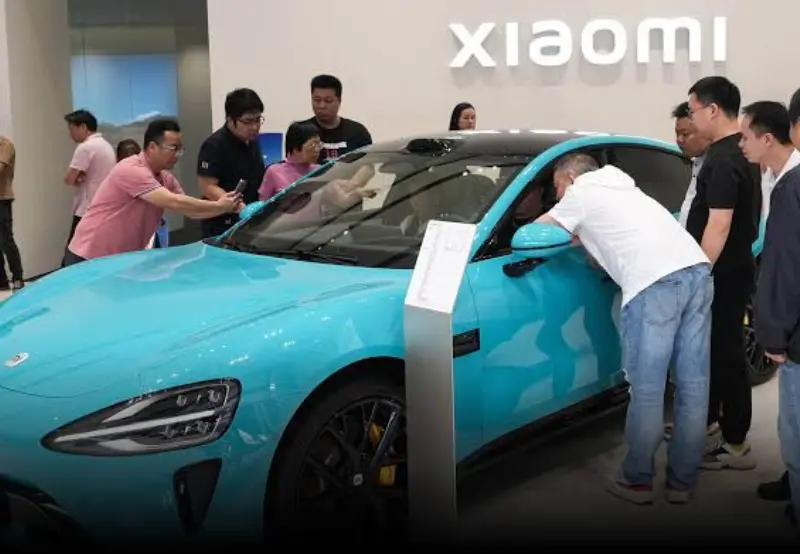
Xiaomi’s solution is straightforward: place a confirmed order by 30 November 2025, lock in the expected promotional vehicle models (namely the SU7, SU7 Ultra and YU7) and Xiaomi guarantees to cover the difference in tax benefit if delivery is delayed into 2026.
This offer mirrors moves by other Chinese EV makers like Nio and Li Auto, who have similarly pledged to protect buyers from the impact of the upcoming tax reduction.
By capping its support at RMB 15,000, Xiaomi exactly matches the “worst-case” loss a buyer might face under the new tax regime — providing assurance and encouraging earlier commitments.
Implications for Buyers and the EV Market
For buyers in China, this subsidy race offers short-term advantage: early orders come with a hedge against policy change and may accelerate decision-making. For manufacturers, the stakes are high — these incentives may help reduce order-book delays, strengthen brand loyalty and avoid sales drop-off in a year when tax benefits shrink.
But there are broader implications too:
- Market acceleration: Subsidy offers may create a surge in bookings before year’s end, particularly for models with long-lead times.
- Delivery risk: If production or delivery is delayed, manufacturers covering tax losses incur extra cost — increasing pressure on supply-chains and timelines.
- Competitive pressure: With multiple makers offering similar guarantees, differentiation may shift toward delivery speed, battery range, features and service rather than just price.
- Policy sensitivity: China’s EV policy remains a major market driver. This episode underscores how changes in tax rules can ripple across buying behaviour and industry strategy.
What This Means for Xiaomi
Xiaomi’s entry into the EV subsidy race reinforces its intent to play a serious role in the auto sector. Known for smartphones and consumer electronics, Xiaomi is leveraging its brand, distribution network and manufacturing scale to challenge traditional automakers. By stepping in with a buyer-protection offer, Xiaomi sends a message of confidence in its EV ambitions and in its ability to manage production/timing risk.
For Xiaomi:
- It may capture early-adopter bookings, boosting visibility and scale.
- The risk is that taking on the tax-differential guarantee adds cost and complexity if deliveries are delayed.
- Success will depend on Xiaomi achieving sufficient manufacturing cadence, maintaining quality, and keeping delivery schedules.
Broader Market & Policy Considerations
This development also casts light on the evolving dynamics of China’s EV market:
- Tax policy as lever: The reduction in purchase tax incentives heralds a shift from heavy subsidies toward more sustainable market structures. How smoothly this transition is managed may determine short-term sales impact.
- Model rollover and timing: Buyers and makers are now acutely aware of delivery timing relative to tax cut-offs; supply-chain readiness matters more than ever.
- Industry consolidation: Smaller makers may struggle to offer similar guarantees or absorb the risks; the subsidy race might favour larger, diversified players.
- Global ripple: China’s EV subsidy strategy and tax policy set signals for other markets — especially as Chinese EV exports grow and global competition intensifies.
Challenges & Watch-Points
Despite the positive sign of proactive manufacturer action, several challenges remain:
- Delivery-bottleneck risk: Guarantees only work if manufacturers meet deadlines; further delays may lead to buyer dis-satisfaction or financial exposure.
- Profit margin pressure: Absorbing subsidy cost, managing demand spikes and delivering volume may squeeze margins — especially in a competitive market with thinning margins.
- Policy risk: Future changes in EV subsidy policy or tax rules remain a variable; manufacturers and buyers must remain agile.
- Secondary market effect: Rapid booking surges may lead to longer waitlists, which could impact buyer sentiment or pricing in the used market.
Conclusion
Xiaomi’s entry into the subsidy race under China’s EV tax-change regime is a timely and strategic move. By guaranteeing buyers protection against a reduction in purchase tax incentives, Xiaomi is actively managing timing risk and seeking to secure orders before process shifts take hold.
In a market as large and dynamic as China’s EV ecosystem, moves like this illustrate how deeply policy, manufacturing execution and consumer psychology are intertwined. The coming months — particularly order volumes, delivery performance and competitive responses — will be key in determining whether this subsidy race shifts from being a tactical manoeuvre to triggering a broader surge in EV adoption.
For buyers, this is a chance to leverage manufacturer support amid shifting tax rules. For manufacturers, it illustrates that in the EV era, managing both production and policy-timing is as important as the product itself.
For more insights, EV News