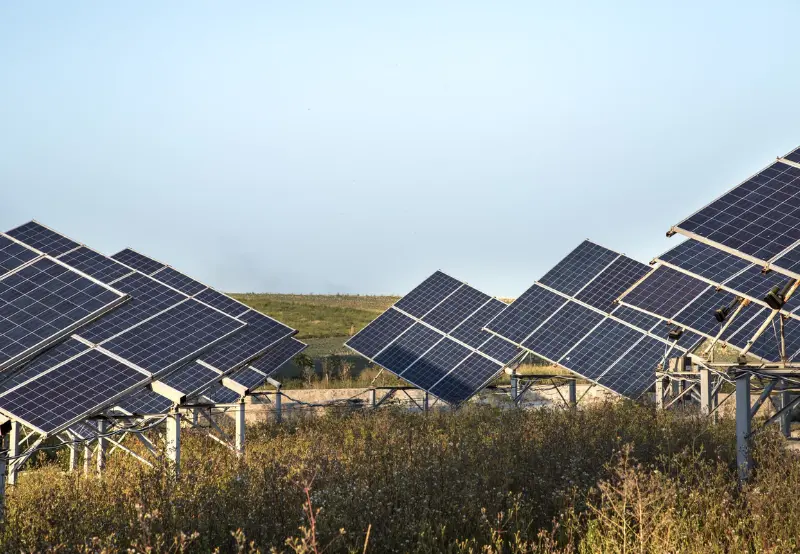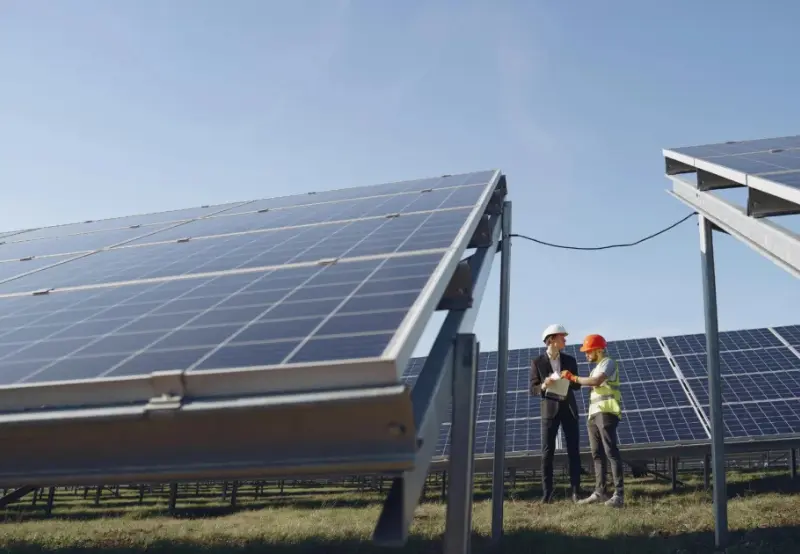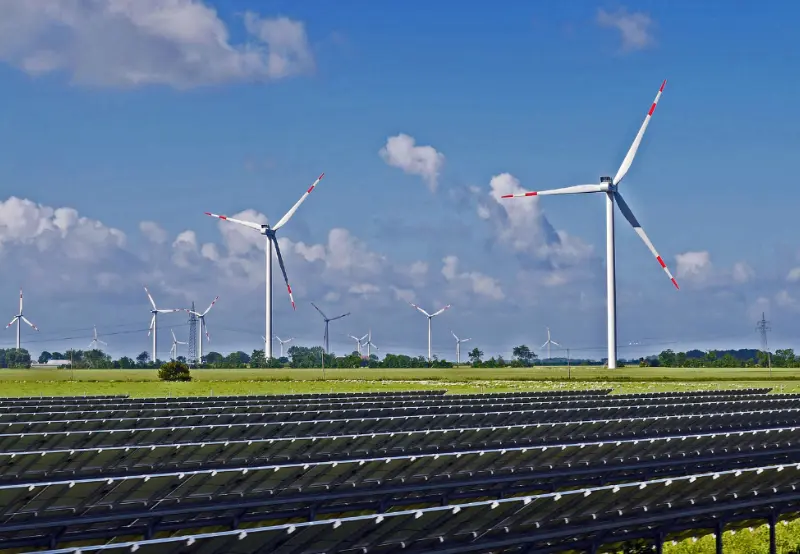

Tamil Nadu Green Energy Corporation (TNGECL) has floated a tender for a 34.75 MW hybrid project — repowering ageing windmills while adding solar capacity — to boost clean, reliable energy.
Introduction
In a major step toward modernising its renewable infrastructure, the Tamil Nadu Green Energy Corporation Ltd (TNGECL) has announced an open e-tender to transform several ageing wind farms into a hybrid wind-solar power facility. This initiative targets a combined capacity of 34.75 MW, injecting new life into older wind sites while leveraging solar potential.
Project Scope & Technical Details
- The tendered hybrid capacity consists of 18.75 MW of repowered wind plus 16 MW of newly installed solar, totalling 34.75 MW.
- It is structured under a Build-Own-Operate (BOO) model, meaning the developer will construct, operate and maintain the plant under long-term terms.
- Four legacy sites have been selected for the hybrid project: Kayathar I & II (Tuticorin district), Muppandal (Kanyakumari district), and Puliyankulam (Tirunelveli district).
- TNGECL estimates the project cost to be around ₹200 crore based on its internal study.
Why This Initiative Is Important
Reviving Ageing Wind Infrastructure
Many of the existing wind turbines at these sites date back to the 1980s–1990s and suffer from operational issues or are non-functional due to lack of spare parts. Repowering these turbines will not only improve generation efficiency but also optimise land usage by combining wind and solar in a single location.
Better Energy Stability
By pairing wind (which often operates at night or when it’s windy) with solar (which works during daylight), the hybrid setup can provide a more consistent and balanced supply of renewable energy. This helps reduce intermittency and makes the energy output more reliable.
Boost to State Renewable Targets
This project aligns with Tamil Nadu’s broader green-energy goals and supports its Renewable Purchase Obligation (RPO) targets, helping the state meet growing power demand sustainably.
Regulatory and Bid Process
- The Tamil Nadu Electricity Regulatory Commission (TNERC) has already approved this repowering-based hybrid project, which makes it Tamil Nadu’s first such combined facility.
- Interested bidders are required to pay a significant Earnest Money Deposit (EMD), and the tender follows a transparent e-tender process to encourage fair developer participation.
- The winning developer will not only build the hybrid plant but will also handle operations & maintenance for the contract duration.
Strategic Implications & Benefits
- Modernisation Through Repowering: This tender offers a way to upgrade outdated wind infrastructure rather than abandoning it, giving a second lease of life to old wind sites.
- Efficient Use of Land: Using the same location for both wind and solar makes better use of land and grid infrastructure.
- Investor Appeal: The hybrid model is likely appealing to developers looking for projects with stable and diversified generation.
- Grid Strengthening: Hybrid plants enhance grid stability by smoothing out generation fluctuations, which is beneficial for both utilities and consumers.
Challenges & Key Risks
- Technical Integration: Merging wind turbines with new solar infrastructure requires careful planning around grid connection, controls and maintenance.
- Financial Viability: While the tender is promising, achieving the right tariff through competitive bidding will be critical for project feasibility.
- Development Risks: Developers must navigate site-specific challenges (like terrain, grid access) and unforeseen costs during repowering.
- Regulatory Risk: Any delay or policy change could affect project economics, especially in a Build-Own-Operate structure.
What to Watch Going Forward
- Bid Participation: The number and profile of bidders will indicate how attractive the tender is to the private sector.
- Tariff Discovery: The tariff arrived at via reverse auction could set a benchmark for future hybrid projects in Tamil Nadu.
- Execution Timeline: Key dates (e.g., bid submission, commissioning) will show how fast TNGECL can deliver on this renewal vision.
- Policy Alignment: Further alignment with state-level renewable plans and renewable purchase obligations will be crucial.
Conclusion
TNGECL’s 34.75 MW hybrid wind-solar tender represents a smart, forward-looking drive to modernise its ageing wind fleet while maximising renewable output. By upgrading old turbines and pairing them with solar capacity, the state demonstrates a commitment to efficient, stable and sustainable energy generation.
This project could become a blueprint for how other Indian states repower legacy wind sites and build hybrid renewable capacity — combining experience with innovation, and legacy infrastructure with future-ready technology.
If successful, Tamil Nadu will not only boost its green-energy capacity but also reinforce its position as a leader in hybrid and repowered renewable systems.