
ACME Solar secures 130 MW under REMC’s 1,000 MW RTC green-power tender at ₹ 4.35/unit to supply firm, dispatchable renewable energy to Indian Railways.
Breaking Down the Deal
ACME Solar Holdings Ltd has emerged victorious in an e-reverse auction held by REMC (Railways Energy Management Company Ltd), winning a 130 MW contract under its 1,000 MW round-the-clock (RTC) renewable energy tender.
Notably, ACME’s winning tariff stood at ₹ 4.35 per unit, a competitive rate given the RTC nature of the contract.
What the Agreement Requires
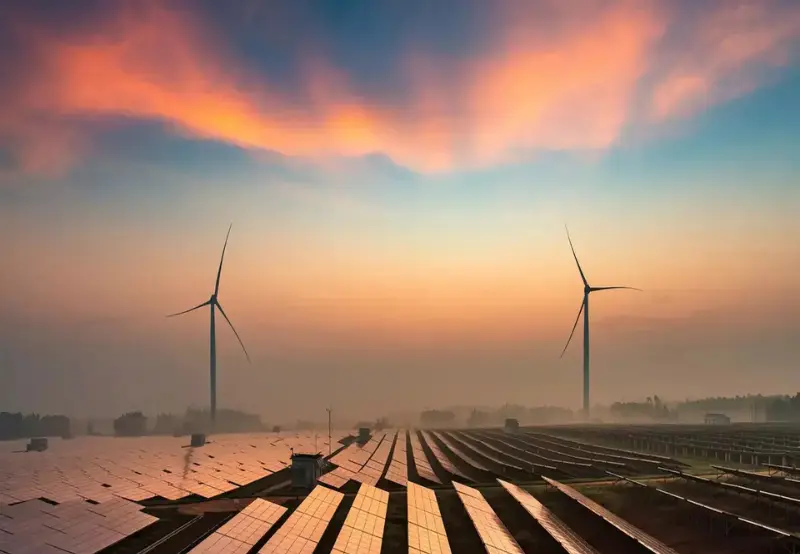
Under the terms of the tender, ACME Solar must supply firm, 24/7 electricity, which means the power supply is backed by a combination of solar, wind, and energy-storage systems (ESS).
Key availability requirements:
- 75% minimum annual availability in the first three years from commissioning.
- 85% availability from the fourth year onwards.
To meet these obligations, ACME will likely co-locate solar capacity with battery storage and optional wind power, as needed.
Strategic Importance: Why It Matters
- Direct PPA with Indian Railways
ACME will sell power directly to the Indian Railways via a Power Purchase Agreement (PPA), avoiding intermediaries. The Railways’ requirement for a consistent power profile makes RTC contracts especially valuable. - Demonstrating Renewable Competitiveness
The low price of ₹ 4.35/unit highlights how renewables — when paired with storage — are becoming cost-effective even for firm, round-the-clock supply. - Execution Timeline
ACME must commission the project within 30 months of signing the PPA. The company intends to expedite this, leveraging its existing land and grid-connectivity portfolio.
Implications for ACME Solar
- Portfolio Strengthening: This bid win enriches ACME’s already diversified pipeline, which spans solar, wind, and hybrid projects.
- Financial Visibility: A long-term PPA with a major end-user like Indian Railways bolsters revenue predictability.
- Operational Challenge: Delivering a round-the-clock, high-availability power plant demands a robust mix of generation and storage capabilities.
- Market Leadership: Securing an RTC contract positions ACME as a key player in India’s clean-energy transition, especially in dispatchable and firm renewable power.
Broader Impact on the Renewable Sector
- Accelerating Dispatchable Green Power: This project highlights how renewables backed by storage are increasingly viable for baseload-like applications.
- Signalling to Other Developers: ACME’s win may encourage more players to bid for similar RTC tenders, boosting competition in round-the-clock renewables.
- Scaling Energy Storage: Large RTC contracts will drive demand for storage technologies — batteries, hybrid systems — helping scale up the clean-energy ecosystem.
Risks and Challenges
- Capital Intensity: RTC projects require significant upfront investment in both generation and storage.
- Technology Risk: Balancing solar, wind and ESS to deliver required availability without over-engineering will be a technical and financial challenge.
- Market Risk: Future power-market dynamics, changes in policy, or fluctuations in storage cost could affect profitability.
- Execution Risk: Commissioning within the agreed 30-month timeline depends on timely infrastructure development, supply-chain stability, and regulatory clearances.
Conclusion
ACME Solar’s win in the 130 MW round-the-clock RTC auction is a significant mark of progress — not just for the company, but for India’s renewable-energy ambition. By promising firm, continuous green power to the Indian Railways at a competitive tariff, ACME is helping prove that dispatchable clean energy is not just possible, but commercially viable.
If executed successfully, this project could become a blueprint for future RTC renewables bids, and accelerate the deployment of renewable plus storage systems in India. ACME’s role in this next phase of the clean-energy transition looks set to be influential.