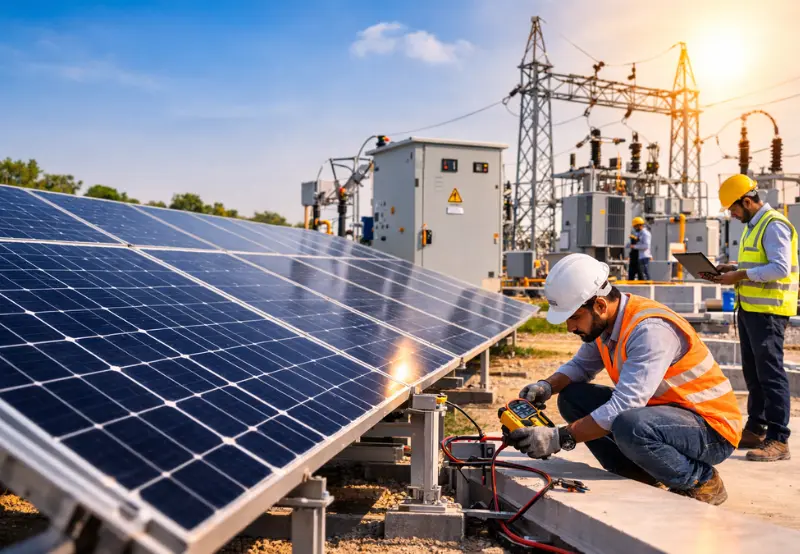
Adani Group plans a 1,126 MW / 3,530 MWh battery storage system in Gujarat’s Khavda park, to be completed by March 2026. A major leap for India’s renewable grid and storage ecosystem.
Introduction
The Adani Group has announced its bold intention to build what will become India’s largest battery energy storage system (BESS), located in Khavda, Gujarat. Slated for completion by March 2026, the facility will be among the largest single-location storage systems in the world.
With this move, the Group signals a major step-up in deploying storage infrastructure to support its vast renewable energy ambitions—and to meet the rising need for grid flexibility, reliability and round-the-clock clean power.
Project Overview & Key Features
- The proposed BESS will have a power capacity of 1,126 MW and an energy capacity of 3,530 MWh. In other words, it can deliver over 1 GW of power for three hours.
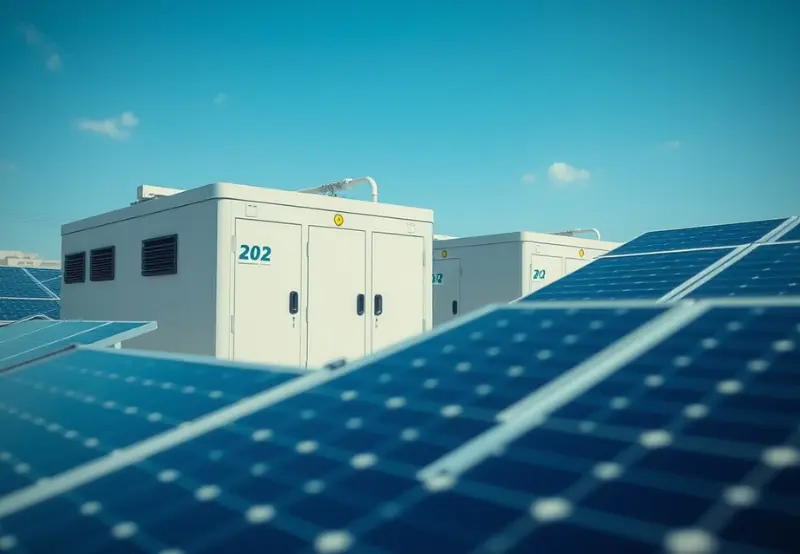
- Over 700 battery-container units will be deployed at the single site in Khavda.
- The project uses advanced lithium-ion battery technology and smart energy-management systems to optimise performance and support the large-scale renewable integration at the site.
- Longer-term, the Adani Group aims to scale its storage capacity to 50 GWh within five years.
This project isn’t just big—it positions the Group to enable “24/7 renewable power”, mitigate curtailment of solar and wind output, and bolster grid stability.
Why It Matters for India’s Clean-Energy Transition
Grid Flexibility & Reliability
India’s rapid addition of solar and wind capacity has created a growing need for energy storage to balance supply and demand, smooth out variability and support grid stability. The Adani battery storage system is a major response to that need.
Supporting a Massive Renewable Park
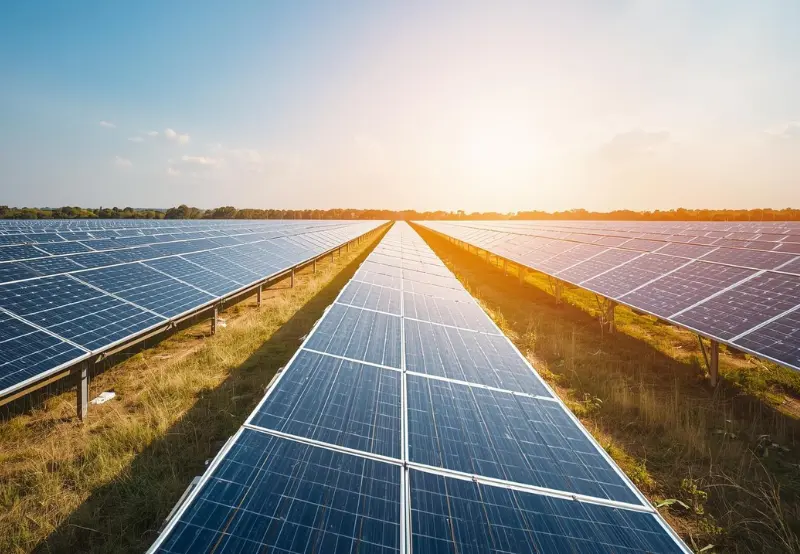
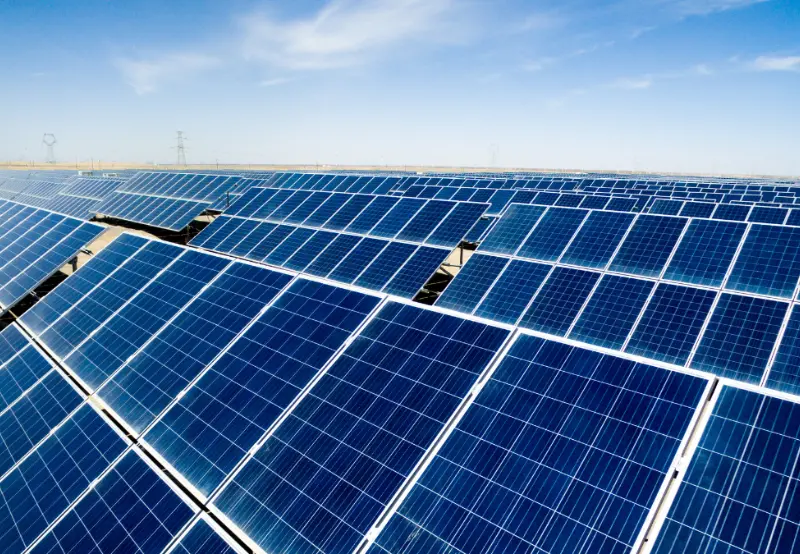
The Khavda renewable energy complex is already one of the largest in India, and coupling it with a massive storage dimension means the site moves from being just a generation park to a renewable + storage ecosystem. This enables shifting energy from peak sun hours into evening or night, or storing surplus generation.
Scale & Global Benchmarking
Because of its size, this BESS project will put India on the map for large-scale storage deployment. It sends a signal that the country is catching up to global norms in terms of storage scale and sophistication.
Economic & Technological Spillovers
Such a large project will likely drive manufacturing of battery containers, power-conversion units, advanced controls and, indirectly, create a boost for local industry, jobs and supply-chain maturity in the storage sector.
Challenges & What to Watch
- Execution risk: Building over 700 container-units and delivering 1,126 MW capacity in a single location by March 2026 is ambitious. Delays or cost escalation could pose problems.
- Technology risk: Ensuring battery durability, safety (especially given India’s climate, heat and humidity) and smart management of large-scale systems is challenging.
- Financing & cost‐effectiveness: Large BESS deployments carry significant CAPEX. Ensuring cost per kWh stored is competitive will matter for the business model.
- Integration with the grid: Storage must be tightly integrated with generation, transmission and distribution. Grid-policy, regulatory frameworks, charger/consumer usage patterns all play a role.
- Supply-chain & raw-material constraints: Batteries rely on lithium, cobalt, etc. Securing reliable supply and managing price/availability remains key.
Strategic Implications & Broader Impact
- For the Adani Group: This project strengthens its position as a clean-energy leader not just in generation but in storage and system integration. It diversifies its clean-energy portfolio and widens its competitive moat.
- For the energy-storage industry in India: A project of this scale can act as a catalyst—driving scale, cost declines, local manufacturing and more confidence in BESS opportunities.
- For India’s renewable goals: To reach 500 GW non-fossil fuel capacity by 2030 and target net-zero by 2070, storage is a critical enabler. Projects like this clear a major hurdle.
- For policy & investment: A lighthouse project like this might encourage more investment, stronger policy frameworks for BESS, and more tenders – helping build a robust storage ecosystem.
What to Watch Next
- Official announcement and financing details: While the outlines are public, seeing detailed investment numbers, technology partners and timelines will matter.
- Technology partnerships: The Adani Group is reportedly seeking international technology tie-ups. Who partners with them will be telling.
- Manufacturing & localisation: Will the containers, battery modules, power-electronics be made in India? Local supply will reduce cost and strengthen the ecosystem.
- Commercial operations & learning: Once the project is live, measuring performance (efficiency, reliability, cost per cycle) will set benchmarks.
- Regulatory support & market mechanisms: How the Indian power market treats storage (tariffs for discharge, grid-services payments, incentives) will impact the business case.
Conclusion
The Adani battery storage system represents a game-changing move in India’s clean-energy journey. By planning a 1,126 MW / 3,530 MWh deployment at Khavda, the Adani Group is not just building a project — it’s building infrastructure for an electrified future.
If executed well, this project will significantly reduce renewable-power curtailment, enable round-the-clock clean supply, build local storage industry momentum and position India as a serious player in large-scale battery systems globally.
In short: the power of generation is becoming matched by the power of storage—and that’s a critical step for renewable energy to become reliable, resilient and mainstream.
For more insights, Energy Storage