
A Major Decision for Kerala’s Solar Landscape
Kerala’s renewable energy journey has just crossed an important legal milestone. The Appellate Tribunal for Electricity (APTEL) recently dismissed an appeal challenging the Kerala State Electricity Regulatory Commission (KSERC) order that imposed fixed electricity charges on solar prosumers.
At first glance, this may sound like technical regulatory jargon. But in reality, the decision directly affects thousands of households and businesses that have invested in rooftop solar systems across the state.
So, what exactly happened? And more importantly — what does this mean for you if you own or plan to install solar panels?
Let’s unpack it step by step.
Understanding the Background of the Case
Growth of Rooftop Solar in Kerala
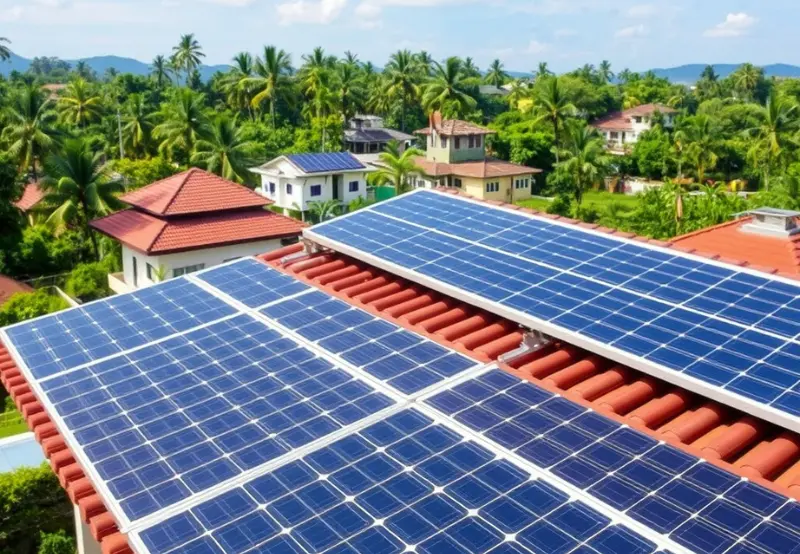
Over the past decade, Kerala has quietly emerged as one of India’s strongest adopters of rooftop solar energy. Programmes promoting decentralised renewable energy encouraged homeowners to turn their rooftops into mini power stations.
Solar panels became symbols of energy independence — lower electricity bills, cleaner energy, and protection from rising tariffs.
Emergence of Solar Prosumers
A new category of electricity users soon appeared: prosumers.
A prosumer is both a producer and consumer of electricity. During the day, solar panels generate power; surplus electricity flows into the grid. At night, households draw electricity back from the same grid.
Sounds fair, right? But this model introduced new challenges for utilities.
Role of KSERC in Electricity Regulation
The Kerala State Electricity Regulatory Commission (KSERC) regulates tariffs, grid operations, and electricity policies within the state. As rooftop solar installations expanded, KSERC had to rethink how grid costs were shared among consumers.
What Was the KSERC Order About?
Introduction of Fixed Charges
KSERC introduced fixed charges applicable even to solar prosumers connected under net metering arrangements.
Earlier, many prosumers believed generating their own electricity meant minimal grid-related expenses. The new rule clarified otherwise.
Objectives Behind the Regulation
The commission argued that:
- Solar consumers still depend on the grid infrastructure.
- Transmission and distribution systems require continuous maintenance.
- Utilities incur costs regardless of energy consumption levels.
Grid Maintenance Concerns
Think of the grid like a highway. Even if you drive less, the road still needs repairs, lighting, and management. Similarly, electricity infrastructure must remain operational 24/7 — whether power flows one way or both.
Who Challenged the Order and Why?
Concerns Raised by Solar Consumers
Consumer groups and renewable energy stakeholders opposed the decision, arguing that fixed charges discouraged rooftop solar adoption.
Their key concerns included:
- Reduced financial benefits of solar investment
- Increased payback periods
- Policy uncertainty for clean energy adopters
Financial Impact Arguments
Petitioners claimed prosumers already contribute to sustainability goals and should receive incentives rather than additional charges.
The appeal eventually reached APTEL.
APTEL’s Final Verdict Explained
Key Observations by the Tribunal
APTEL dismissed the appeal and upheld KSERC’s authority to impose fixed charges.
The tribunal noted that:
- Grid connectivity provides continuous backup power.
- Infrastructure costs exist independent of energy usage.
- Regulatory commissions possess discretion in tariff design.
Legal Reasoning Behind the Decision
The judgement reinforced a key principle: electricity tariffs must ensure fairness across all consumer categories.
If prosumers avoided infrastructure costs entirely, non-solar consumers would indirectly bear higher financial burdens.
Fixed Charges – What Do They Actually Mean?
Difference Between Energy Charges and Fixed Charges
Let’s simplify.
- Energy Charges: Payment for units of electricity consumed.
- Fixed Charges: Payment for maintaining access to the electricity network.
Even if your solar panels generate most of your power, the grid remains your safety net.
How Billing Works for Prosumers
Under net metering:
- Solar energy offsets consumption.
- Excess power is exported.
- Fixed charges apply regardless of net consumption.
In short — the grid remains a paid service.
Impact on Kerala’s Solar Prosumers
Residential Consumers
For households, monthly bills may see a modest increase. However, solar installations still provide significant long-term savings.
The ruling mainly adjusts expectations rather than eliminating benefits.
Commercial Solar Users
Commercial establishments may feel a stronger financial impact because of larger system capacities and higher fixed tariff components.
Yet operational cost savings from solar generation remain substantial.
Will This Affect Rooftop Solar Adoption?
Investor Confidence
Policy stability often matters more than incentives. Ironically, a clear judicial ruling can improve investor confidence by removing regulatory ambiguity.
Consumer Behaviour
Some consumers may reconsider system sizing or financial calculations. Others may shift towards higher self-consumption strategies instead of exporting excess power.
Grid Sustainability vs Consumer Incentives
Balancing Renewable Growth
Here lies the central dilemma:
How do you promote renewable energy while keeping utilities financially viable?
Too many incentives weaken distribution companies. Too many charges discourage adoption.
The answer lies somewhere in balance.
Utility Financial Stability
Electricity distribution companies must maintain transformers, substations, and transmission lines — even when rooftop solar reduces energy sales.
Fixed charges aim to bridge this revenue gap.
Kerala’s Solar Policy in the Bigger Energy Transition
State Renewable Targets
Kerala aims to expand decentralised solar generation significantly under its renewable roadmap. Rooftop systems remain a cornerstone of this transition.
Distributed Energy Future
The future grid will likely be decentralised, digital, and bidirectional — where millions of small producers interact dynamically with utilities.
Regulations like this are early steps towards that transformation.
Industry Reactions and Expert Opinions
Power Utilities’ Perspective
Utilities largely welcomed the decision, arguing it ensures equitable cost-sharing among all electricity users.
Renewable Energy Advocates’ View
Clean energy advocates remain cautious. Many stress the need for balanced policies that continue encouraging solar investments while maintaining grid reliability.
Lessons for Other Indian States
Regulatory Trends Across India
Several Indian states are now reviewing net metering frameworks. Kerala’s case could become a reference model for future tariff structures nationwide.
The broader trend suggests a gradual shift from incentive-heavy policies to sustainability-focused pricing mechanisms.
What Solar Consumers Should Do Now
Smart Consumption Planning
Solar owners can maximise benefits by:
- Increasing daytime electricity usage
- Using battery storage solutions
- Optimising system capacity
Maximising Solar Savings
The secret isn’t exporting more energy — it’s consuming your own solar power efficiently.
Think of solar as reducing dependency rather than eliminating grid interaction.
Future of Net Metering in India
Possible Policy Evolutions
Future regulations may include:
- Time-of-day tariffs
- Dynamic pricing
- Battery-linked incentives
- Smart grid integration
India’s solar journey is evolving from subsidy-driven growth to market-based sustainability.
Conclusion
The APTEL decision supporting fixed charges for solar prosumers marks a defining moment in Kerala’s renewable energy governance. While some solar users may view the ruling as a setback, it ultimately reflects a maturing electricity ecosystem.
Clean energy adoption cannot exist in isolation from grid economics. The challenge ahead lies in ensuring fairness — rewarding green adoption while sustaining essential infrastructure.
For Kerala, the message is clear: rooftop solar remains valuable, but participation in the shared electricity network comes with shared responsibility.
The solar revolution continues — just with more realistic economics.