Solar Cycle 25 is peaking in July 2025 with up to 115 sunspots, signalling heightened solar activity. Learn its real impact on Earth, satellites, power grids, and climate.
Table of Contents
- What is Solar Cycle 25?
- What Happens During a Solar Maximum?
- Why Scientists Are Closely Watching Solar Cycle 25
- 7 Key Facts About the 2025 Solar Maximum
- Impacts on Satellites, Power Grids & Communication
- The Climate Connection: Is the Sun Getting Stronger?
- How Governments & Agencies Are Preparing
- What Can Individuals Expect During This Time?
- Is Solar Cycle 25 Dangerous or Normal?
Solar Cycle 25 has reached its peak in July 2025, according to NASA, NOAA, and international solar observatories. Up to 115 sunspots have been recorded this month, making it one of the most active solar periods in recent history—though still modest when compared to historic peaks like Solar Cycle 19 (1957).
This moment isn’t just about cosmic fireworks. The solar maximum can influence Earth’s satellites, disrupt power grids, affect radio communications, and even create dazzling auroras.
1.What is Solar Cycle 25?
The Sun operates on an 11-year cycle of magnetic activity, swinging between quiet periods (solar minimum) and highly active phases (solar maximum). Each cycle is numbered—Solar Cycle 25 began in December 2019 and is now peaking in mid-2025.
Scientists track these cycles by counting sunspots, which are dark patches on the Sun’s surface caused by magnetic storms.
2.What Happens During a Solar Maximum?
During the solar maximum, the Sun’s magnetic field flips, and solar activity spikes. This includes:
- More sunspots
- Frequent solar flares (explosions of radiation)
- Dangerous coronal mass ejections (CMEs)
- Increased auroras in both hemispheres
These phenomena can affect Earth in ways both beautiful and destructive.
3.Why Scientists Are Closely Watching Solar Cycle 25
Earlier predictions suggested Solar Cycle 25 would be weak. However, solar activity has exceeded expectations, with NASA and NOAA updating their forecasts to account for the intensity.
According to Dr. Lisa Upton of Space Systems Research Corporation, the peak in 2025 could “cause radio blackouts and GPS errors” due to X-class solar flares.
A report from Rystad Energy and The Times of India further warns that such cycles could influence everything from satellite health to aviation safety.
4. 7 Key Facts About the 2025 Solar Maximum
- 115 Sunspots in July 2025: Highest count in nearly two decades.
- NASA’s Solar Dynamics Observatory recorded 4 X-class solar flares in a single week.
- The Indian Space Research Organisation (ISRO) issued alerts to satellite operators.
- GPS systems across Europe and Asia experienced short disruptions.
- Aurora Borealis seen as far south as northern India and Italy.
- Southwest Airlines temporarily rerouted flights due to increased radiation risk.
- Power grids in Scandinavia reported voltage fluctuations linked to geomagnetic storms.
5. Impacts on Satellites, Power Grids & Communication
Solar storms affect:
- Satellites: Radiation can damage electronics or shift orbits.
- Aviation: Increased radiation over polar routes may harm crew/passenger health.
- Power Grids: CMEs can induce currents in long transmission lines, causing blackouts.
- Radio/GPS: High-frequency radio and GPS signals degrade or become unstable.
One notable case was in 1989 when a solar storm caused a 9-hour blackout in Quebec, Canada.
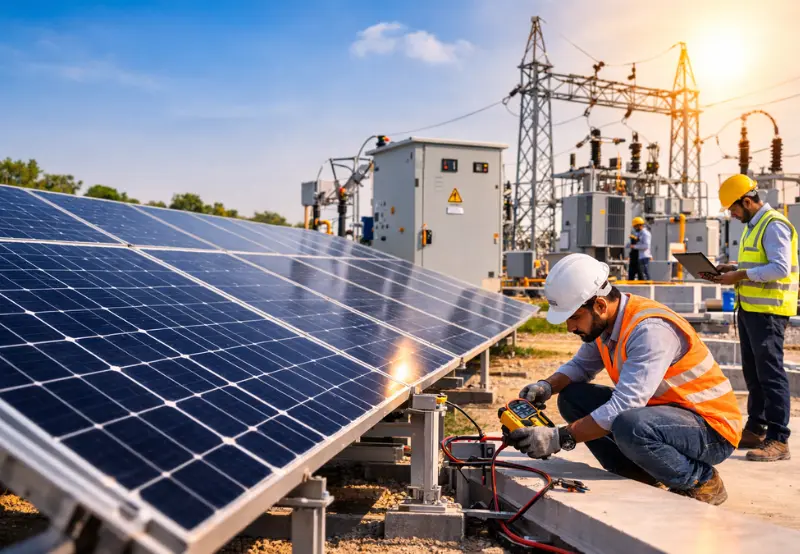
In 2025, energy regulators in India and the US are already monitoring potential impacts on renewable energy storage systems, especially in solar power-rich states like Rajasthan and California.
6.The Climate Connection: Is the Sun Getting Stronger?
No, but it’s important to understand the difference:
- Solar activity fluctuates naturally every 11 years.
- While sunspots and solar flares can influence weather patterns, long-term global warming is driven by human emissions, not solar cycles.
That said, short-term climate anomalies—like colder winters or stronger monsoons—can be partially influenced by solar activity during peak periods.
7. How Governments & Agencies Are Preparing
Governments and international bodies are taking Solar Cycle 25 seriously. Preparations include:
- NASA and ESA deploying new satellite shields and firmware patches.
- ISRO testing satellite redundancies in its upcoming Aditya L1 solar mission.
- The US Space Weather Prediction Center (SWPC) issuing regular alerts.
- India’s Ministry of Power conducting grid audits to assess geomagnetic storm risk.
- Airlines like Emirates and Lufthansa coordinating flight paths with space weather forecasts.
8. What Can Individuals Expect During This Time?
For most people, Solar Cycle 25 poses no direct threat. However, you might notice:
- Weird GPS glitches or signal drops
- Northern Lights visible at unusual latitudes
- News about satellite issues or flight reroutes
- Changes in radio frequency quality
Apps like Aurora Forecast and NOAA SWPC Alerts can help track solar storm days.
9. Is Solar Cycle 25 Dangerous or Normal?
Solar Cycle 25 is peaking more energetically than expected, but it’s still within the range of natural variation. While not catastrophic, the current solar maximum reminds us of the Sun’s power and unpredictability.
From glowing auroras to technological disruptions, this cosmic cycle is both beautiful and serious. With strong global coordination, better satellite design, and advanced forecasting, humanity is far better prepared than it was during previous solar peaks.