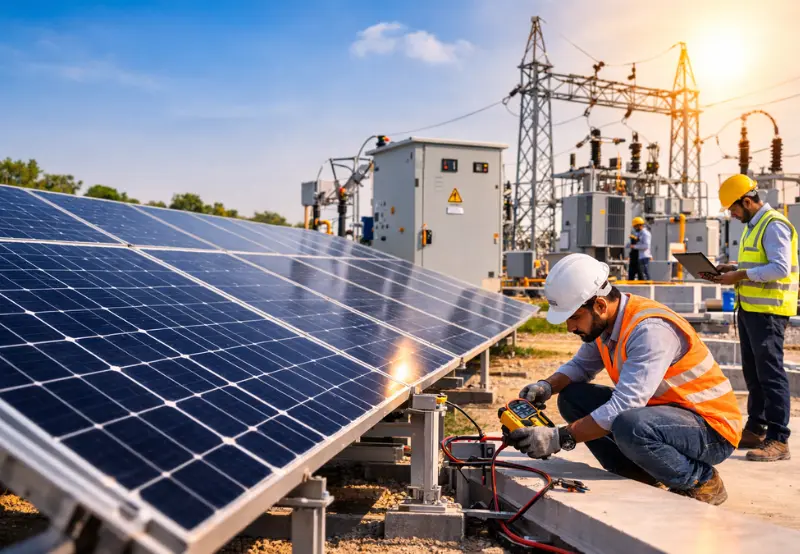
California backs the world-first curbside V2G charger. Learn how it transforms parked EVs into grid assets, supports sustainability, and boosts equitable clean energy access.
Table of Contents
- Introduction: Why the California Curbside V2G Charger Matters
- What is V2G and Curbside V2G Charging?
- Details of California’s First Curbside V2G Charger Project
- Equity and Grid Benefits of Curbside V2G
- Technology Highlights: J3068 Active Cable, Bi-Directional Charging & More
- Challenges and What Needs to Happen Next
- Outlook: Scaling, Adoption & Environmental Impact
- Conclusion: A Shift in How We Think of Parked EVs
1. Introduction: Why the California Curbside V2G Charger Matters
The California Curbside V2G Charger represents a pioneering step in electrical infrastructure: turning parked electric vehicles (EVs) into active grid resources. Supported by a grant from the California Energy Commission (CEC), this world-first curbside vehicle-to-grid (V2G) charger is more than just a new charger—it’s a new paradigm for urban clean energy, especially for drivers without access to home charging.
2. What is V2G and Curbside V2G Charging?
Vehicle-to-Grid (V2G) is technology that allows bidirectional flow of electricity between EVs and the grid. In simple terms:
- When the car is plugged in and batteries have spare capacity, energy can be sent back into the grid.
- During periods of high demand or low production from renewables, this stored energy helps stabilise the grid.
- Curbside V2G extends this concept to urban areas where many EV owners park on the street rather than having private garages.
It’s a way to decentralise energy storage, reduce fossil fuel reliance, and make EVs more than just transportation—they become mobile energy assets.
3. Details of California’s First Curbside V2G Charger Project
Here are the key facts about the project:
- The CEC awarded US$1.1 million to Brooklyn-based company It’s Electric to develop and commercialise the world’s first curbside V2G EV charger.
- It is funded under the Enabling Electric Vehicles as Distributed Energy Resources (DERs) grant via the EPIC programme.
- The goal is to bring this charger to market by 2028.
- Key partners include University of California, Berkeley and University of Delaware.
- The charger includes a new J3068 Active Cable, which enables untethered charging with bidirectional capabilities. In other words, it’s designed to work flexibly with different charging systems.
4. Equity and Grid Benefits of Curbside V2G
The project aims not only to innovate technologically but also to deliver social and grid-level returns:
- Equitable Access: Residents in urban settings without driveways or private chargers (often lower-income or underserved communities) will benefit from public curbside chargers.
- Peak Demand Mitigation: Parked EV batteries can supply energy back into the grid when demand is high, reducing strain and potentially avoiding rolling blackouts.
- Emissions Reduction: By using stored clean electricity instead of fossil fuels during demand peaks, emissions can be lowered.
- Accelerated EV Adoption: Public and reliable infrastructure encourages more people to choose EVs.
5. Technology Highlights: J3068 Active Cable, Bi-Directional Charging & More
Some of the technological innovations at the heart of the California Curbside V2G Charger:
- The J3068 Active Cable is novel: it supports untethered charging (you don’t have to plug in the charger physically in the same traditional way) while enabling electricity flow in both directions.
- Charger ensures compatibility across various EV models and charging systems, which helps in urban settings with mixed types of vehicles.
- Part of the project is research through partnership with universities, focusing on device safety, grid impact, and how to integrate V2G at scale.
6. Challenges and What Needs to Happen Next
Even though the concept is promising, there are several hurdles:
- Cost and Investment: While initial grant helps, building infrastructure at scale, deploying many units, and ensuring reliability will require more funding.
- Regulatory & Standards Frameworks: Need for clear rules around billing for electricity sent back, permissions from utilities, safety standards, and interoperability among different systems.
- Wear and Battery Degradation: Using batteries more often (charging + discharging) could reduce lifespan; need to ensure this is managed and balanced.
- Public Awareness & User Behaviour: Educating drivers to make use of V2G, ensuring they plug in when needed, trust the tech.
- Grid Modernisation: Distribution networks must be capable of handling bidirectional flows without causing instability.
7. Outlook: Scaling, Adoption & Environmental Impact
Looking ahead, the California Curbside V2G Charger project could lead to:
- Wider deployment of curbside V2G chargers in other Californian cities, and eventually across the U.S.
- Integration with renewable energy sources (solar, wind) to optimise use of generated power.
- Better resilience during heatwaves or peak periods by drawing on stored EV energy.
- Strong climate benefits via reduced greenhouse gas emissions.
- Potential cost savings for utilities and consumers, especially when electricity prices are high.
If successful by 2028, this could represent a model for global cities struggling with EV infrastructure and decarbonisation needs.
8. Conclusion: A Shift in How We Think of Parked EVs
The California Curbside V2G Charger is more than just a novel charger—it challenges how we view parked EVs. Instead of idle assets, they become active contributors to energy systems, helping power communities, easing grid stress, and making clean energy more equitable.
With partnerships, investment, technological innovation, and policy support, this project could reshape urban electricity, ensuring that even when your car is parked outside, it’s not just waiting—it’s working.
Read: India Developing EV Motors Without Rare Earth Magnets: 7 Powerful Innovations Shaping the Future