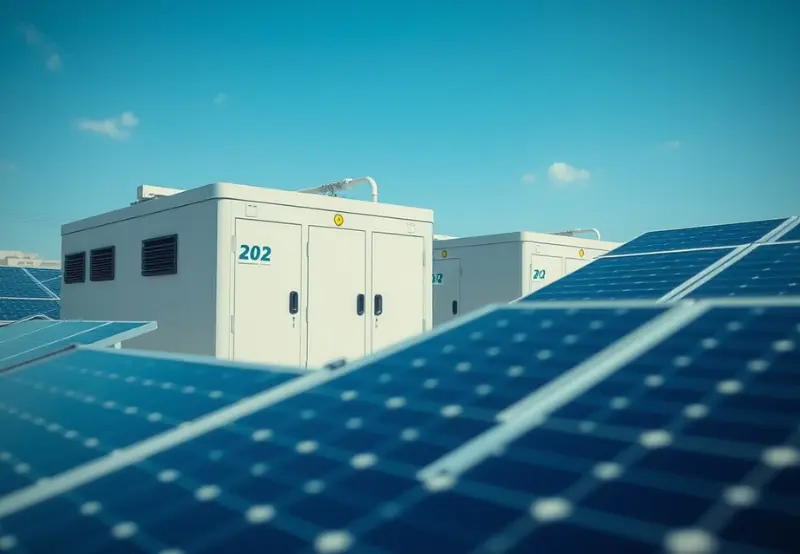
CERC Solar Developers Compensation case involving ACME Solar and AMPIN Energy highlights India’s push for accountability in renewable power. Learn how transmission delays and regulatory action could reshape investor confidence and clean energy growth.
1. Introduction
India’s renewable energy journey just reached a regulatory turning point. The Central Electricity Regulatory Commission (CERC) has accepted petitions filed by leading solar developers ACME Solar and AMPIN Energy, who are seeking compensation for financial losses caused by delays in transmission infrastructure.
This move highlights a persistent challenge in India’s green energy ecosystem — where generation projects often outpace the development of grid and transmission systems, leading to massive revenue losses and investor uncertainty.
2. What Triggered the Compensation Claims
Both ACME Solar and AMPIN Energy had commissioned solar projects that were ready to deliver power but faced delays due to incomplete transmission connectivity. These delays resulted in significant financial losses, including penalties for late delivery, higher interest costs, and idle capital.
The developers approached CERC seeking compensation, arguing that the delays were beyond their control and caused by infrastructure bottlenecks under the purview of government agencies and transmission utilities.
3. Understanding the Transmission Delay Problem
Transmission infrastructure is the backbone of renewable energy integration. However, India’s power sector has long struggled with asynchronous planning — solar and wind projects are often completed faster than the grid connections required to evacuate the generated power.
According to industry reports, over 10 GW of renewable projects have faced delays due to transmission constraints in recent years. These bottlenecks not only stall revenue generation but also discourage future investment.
4. CERC’s Role and the Legal Significance
By admitting these petitions, the CERC has opened the door for a detailed examination of responsibility and compensation mechanisms in cases of transmission delays. This move reflects the Commission’s growing recognition of the challenges developers face in meeting strict deadlines amid infrastructure lag.
If the Commission rules in favour of ACME and AMPIN, it could set a major precedent — paving the way for other developers to seek similar redress. Such a decision would also push transmission agencies and grid operators to improve coordination and accountability.
5. Financial Impact on Developers
Transmission delays translate directly into financial losses for developers. Every month of delay can mean crores in lost revenue, increased financing costs, and potential penalties from power purchase agreements (PPAs).
For large-scale developers like ACME Solar — which operates several gigawatts of capacity — even minor disruptions can severely impact cash flow and investor confidence. Smaller developers often suffer even more, with limited financial flexibility to absorb such shocks.
6. Implications for India’s Renewable Energy Sector
This case shines a spotlight on a structural weakness in India’s clean energy ecosystem. The country aims to achieve 500 GW of renewable capacity by 2030, but meeting that target requires synchronised growth between generation and grid infrastructure.
If compensation becomes a recognised right, developers may feel more secure in investing aggressively. However, transmission utilities may also need to rethink project timelines, contractual clauses, and risk-sharing frameworks to prevent such disputes.
7. Lessons for Policy and Infrastructure Planning
The CERC case underlines a crucial policy lesson: infrastructure planning must evolve from reactive to proactive. India needs an integrated approach that aligns renewable project pipelines with grid readiness.
Experts also suggest that Green Energy Corridors and National Grid expansion projects should be executed with greater efficiency and transparency. Public-private partnerships could play a vital role in bridging the infrastructure gap.
8. The Road Ahead for Developers and Investors
The outcome of this case will be closely watched by developers, investors, and policymakers alike. A favourable decision could:
- Reinforce investor confidence in India’s renewable framework.
- Encourage fair compensation mechanisms for uncontrollable delays.
- Establish a more robust foundation for risk-sharing between developers and transmission utilities.
If handled correctly, this could become a watershed moment for India’s clean energy governance, balancing accountability with ambition.
Conclusion
The CERC’s acceptance of compensation petitions by ACME Solar and AMPIN Energy marks a significant moment for India’s renewable energy industry. It not only addresses a long-standing issue of transmission delays but also opens the door for a more equitable and investor-friendly energy transition.
As India races toward its 2030 renewable goals, such regulatory interventions will play a decisive role in shaping a resilient, transparent, and financially sustainable clean energy ecosystem.
For more solar news, visit; Solar News