
Ferrari’s Elettrica EV Rejects Fake Engine Noise and amplifies actual motor vibrations using a guitar-style approach. Discover how this authentic sound innovation works.
Ferrari Elettrica Rejects Fake Engine Noise, Gets Guitar-Inspired EV Sound
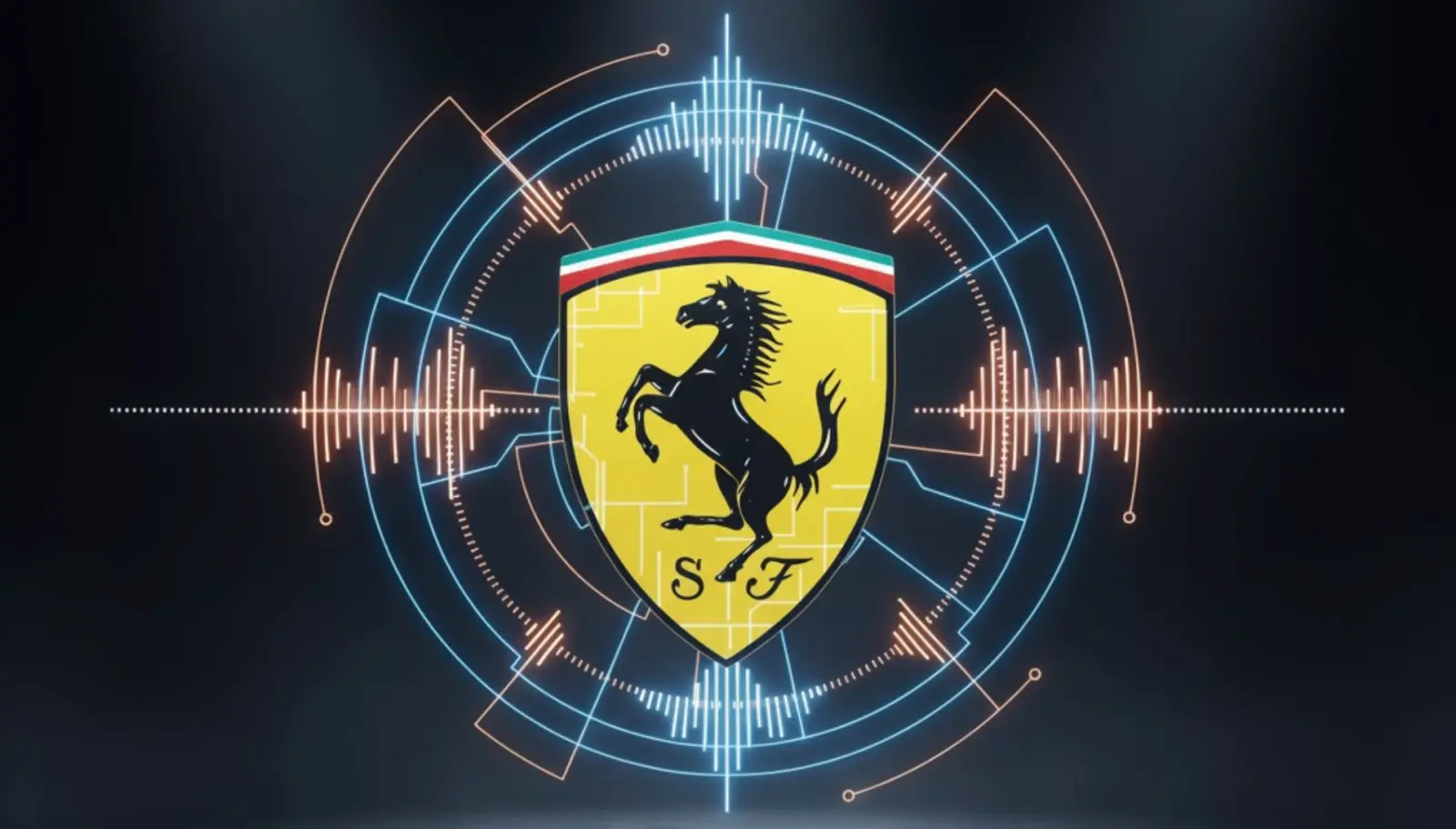
Ferrari has taken a distinct path with its first fully electric car, the Elettrica: instead of embedding synthetic engine roars, it amplifies the natural vibrations from its drivetrain to generate an “authentic” EV sound.
Why Ferrari Turned Down Fake Engine Noises
Many EVs in the market today use digitally composed engine sounds to compensate for the silent electric motor. But Ferrari insists on staying true to mechanical roots. It believes that manufactured soundtracks feel artificial and risk diluting driver engagement.
How It Works: From Motor Vibrations to Sound Waves
The Elettrica uses a high-precision accelerometer mounted to the inverter casing (rear axle), which captures subtle mechanical vibrations of its electric motors. Those vibrations are then amplified in a way akin to how an electric guitar amplifies string resonance.
Ferrari emphasises that the sound is not synthetic — it’s an enhanced version of what’s already there. According to Ferrari, latency is reduced to imperceptible levels, so the auditory feedback aligns with real-time driving dynamics.
Sound That Listens to the Driver
When you push harder, the sound intensifies; when you coast, it fades. In “normal” driving modes, silence is preferred for comfort. In more aggressive modes, the sound provides cues like revs, torque demand, even motor disconnects—serving more as driving feedback than pure theatrics.
Ferrari describes the technique as “language and connection” — letting drivers sense what the machine is doing in a visceral way
What Makes Ferrari’s Approach Unique
- No engine mimicry: Ferrari isn’t copying its V-12 roar; it’s building a new EV sound identity.
- Selective amplification: It filters out undesirable frequencies (e.g. gear whine) and only amplifies the pleasing harmonic components.
- Dynamic response: The sound evolves with torque, speed, and driver input — not a fixed loop.
Broader Implications & What to Watch
Ferrari’s approach may influence how future EVs speak — moving away from generic soundtracks towards bespoke acoustic experiences rooted in the vehicle’s physical behaviour. It could push automakers to rethink how sound is engineered, especially for performance and luxury EVs.
Questions remain though: how the sound is projected (in-cabin only or externally), how it performs under real world conditions, and how drivers will actually perceive it. The first full public debut should shed more light when Elettrica formally launches in 2026.
For more EV News, EV News