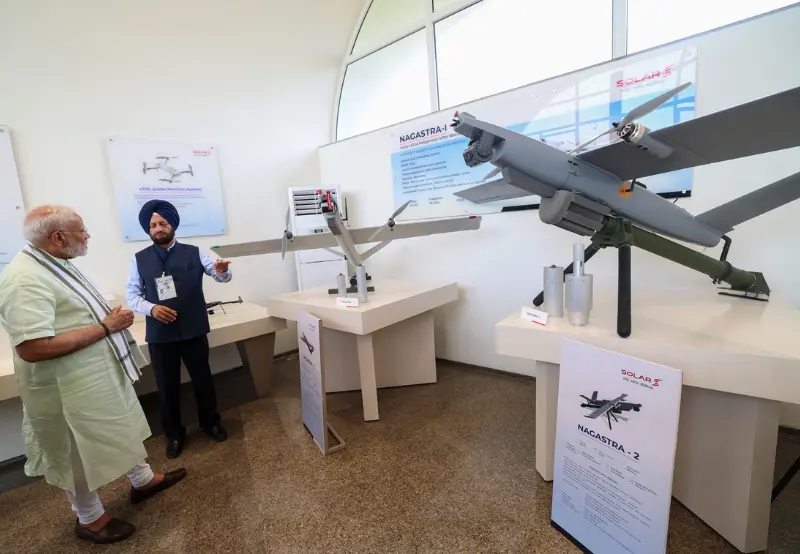

The Indian Army has taken a significant step in defence technology by introducing its first solar-powered surveillance drone. The Medium Altitude Persistent Surveillance System (MAPSS), developed under the Defence Ministry’s innovation initiative, marks a new era in long-endurance, renewable-energy-assisted unmanned aerial surveillance.
The Army has signed a contract worth ₹168 crore with a Bengaluru-based technology startup to supply the advanced drone system. MAPSS is designed to support intelligence, surveillance and reconnaissance missions along India’s sensitive border regions, helping monitor troop movements and enhancing situational awareness across varied terrain.
Solar Power Enhances Endurance and Stealth
Unlike conventional drones that rely primarily on batteries or fuel, the MAPSS platform harnesses solar energy during flight. This enables significantly longer endurance compared with traditional power systems, allowing the drone to stay airborne for extended periods without frequent landings for recharging or refuelling.
The solar-electric propulsion also generates less noise and a lower heat signature than combustion-based alternatives, making the system harder to detect during operations. Enhanced stealth and prolonged flight capabilities make the solar-powered drone an attractive tool for persistent surveillance tasks in areas ranging from the high Himalayas to arid deserts.
Operational Versatility and Strategic Value
The MAPSS drone fills a niche in the Army’s unmanned aerial system portfolio by providing continuous medium-altitude surveillance that complements existing long-endurance drones. Its ability to remain over a target area for long durations helps commanders gain actionable intelligence without risking manned aircraft.
Officials said the system has undergone rigorous trials and modifications to meet operational requirements. It is expected to improve monitoring of sensitive borders, assist with communications in remote regions, and support ground forces with real-time data.
Boost to Indigenous Defence Innovation
The induction of a solar-powered surveillance UAV also highlights the growing role of Indian startups in defence technology. Developed under an initiative aimed at encouraging innovation and self-reliance, the MAPSS project showcases how domestic research and development can contribute to modern military capabilities.
As unmanned systems become central to contemporary defence strategies, integrating renewable energy technologies such as solar power offers benefits in endurance, cost-efficiency and operational flexibility. The solar-powered drone represents a blend of advanced aerospace design with sustainable energy use, positioning India at the forefront of emerging defence innovations.