
As India accelerates its transition towards clean and renewable energy, innovation has become the cornerstone of progress. Among the most promising developments is the rise of floating solar power projects—an inventive solution that combines renewable energy generation with smart land use. With growing energy demand, limited land availability, and environmental concerns, floating solar technology offers India a sustainable and forward-thinking alternative.
What is Floating Solar?
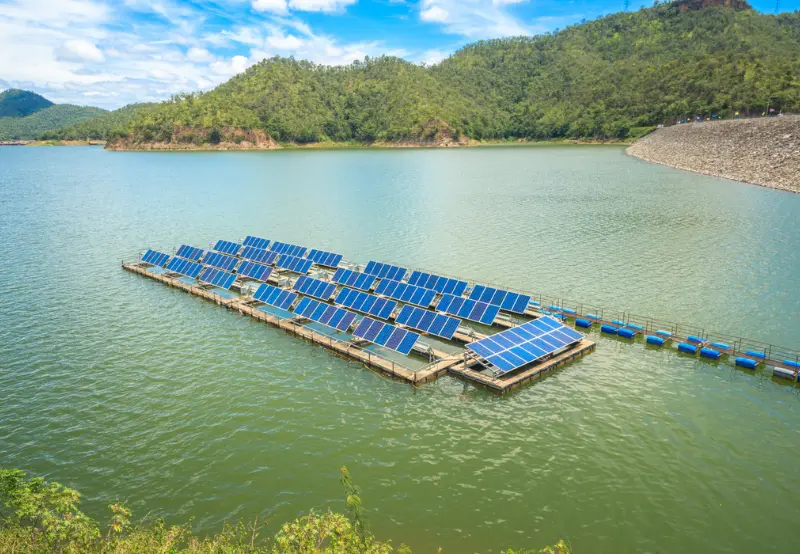
Floating solar power plants, also known as floating photovoltaic (FPV) systems, are solar panels installed on water bodies such as reservoirs, lakes, dams, and ponds. Instead of occupying valuable land, these panels are mounted on floating platforms anchored securely to the bed or banks of the water body. The electricity generated is transmitted to the grid just like conventional ground-mounted solar plants.
Why Floating Solar Matters for India
India faces a unique challenge: balancing rapid economic growth with environmental responsibility. As one of the world’s fastest-growing energy markets, the country requires vast areas of land for solar parks. However, land acquisition often leads to conflicts, ecological disruption, and increased project costs.
Floating solar addresses these challenges in several ways:
1. Efficient Land Utilisation
By installing solar panels on water surfaces, India can conserve agricultural and forest land. This is particularly important in densely populated states where land is scarce and expensive.
2. Higher Energy Efficiency
Water bodies naturally cool the solar panels, reducing heat-related efficiency losses. Cooler panels perform better, resulting in slightly higher electricity output compared to traditional solar installations.
3. Reduced Water Evaporation
Floating solar installations help reduce evaporation from reservoirs, which is especially beneficial in water-stressed regions of India. This contributes indirectly to water conservation.
4. Dual Use of Infrastructure
Many floating solar projects are being developed on existing reservoirs of hydroelectric dams. This allows for the integration of solar and hydro power, creating hybrid systems that improve grid stability and optimise transmission infrastructure.
India’s Progress in Floating Solar
India has emerged as one of the global leaders in floating solar adoption. Several large-scale projects have been commissioned across the country. States such as Telangana, Kerala, Tamil Nadu, and Madhya Pradesh have pioneered installations on reservoirs and dam sites.
One of the largest floating solar plants in India has been developed on the Ramagundam reservoir in Telangana, showcasing the country’s technical capability and commitment to renewable expansion. Similar projects across various states indicate that floating solar is no longer experimental—it is becoming mainstream.
Challenges to Overcome
Despite its promise, floating solar technology comes with certain challenges:
- Higher Initial Costs: Floating structures and anchoring systems increase upfront investment compared to ground-mounted solar plants.
- Maintenance Concerns: Panels must withstand humidity, water corrosion, and fluctuating water levels.
- Environmental Considerations: Careful planning is required to ensure minimal disruption to aquatic ecosystems.
However, with technological advancements and supportive government policies, these challenges are steadily being addressed.
A Step Towards a Sustainable Future
India has set ambitious renewable energy targets and aims to achieve net-zero emissions by 2070. Floating solar power projects represent a strategic innovation that aligns perfectly with these goals. By utilising untapped water surfaces, increasing energy efficiency, and promoting hybrid renewable systems, floating solar contributes meaningfully to India’s clean energy transformation.
In a country where sunlight is abundant and water reservoirs are widespread, floating solar is not just an alternative—it is an intelligent evolution in renewable energy development. As investments grow and technology advances, floating solar power is poised to play a vital role in shaping India’s sustainable energy future.