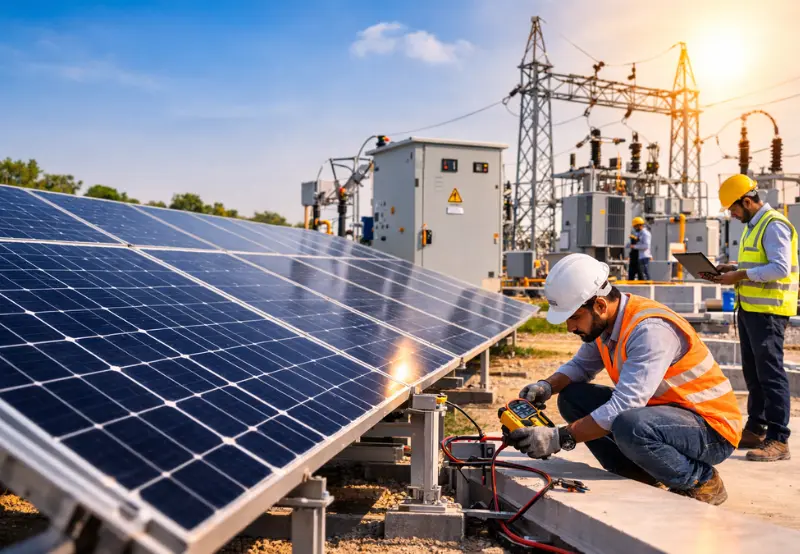

India’s agricultural sector — the backbone of the nation’s rural economy — is undergoing a quiet revolution. As the country races towards its renewable energy goals, solar power is emerging as a transformative force in farming, reducing costs, improving reliability and fostering sustainable growth. With energy demands rising and climate risks becoming more pronounced, solar energy offers a compelling combination of economic and environmental benefits for Indian agriculture.
Solar Power: A New Energy Paradigm for Farming
Traditionally, Indian farmers have relied heavily on grid electricity or diesel engines to power irrigation pumps. These conventional energy sources come with significant drawbacks: grid supply is often inconsistent, especially in rural areas, and diesel costs fluctuate widely, eating into profit margins. Solar energy, by contrast, harnesses an abundant and free resource of sunlight, providing a cleaner and more predictable power source.
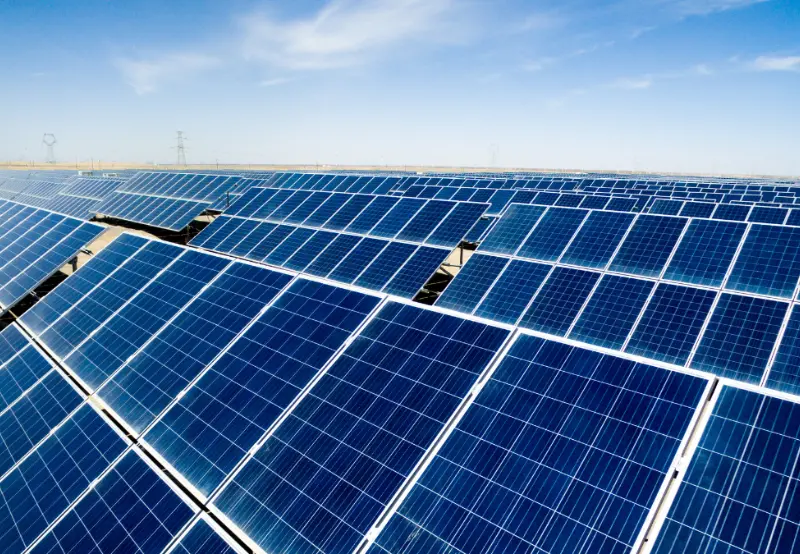
In recent years, the cost of solar photovoltaic (PV) panels and battery storage systems has declined rapidly. Technological improvements and economies of scale have made solar solutions increasingly affordable for rural and agricultural use, enabling farmers to adopt systems that are both cost-effective and scalable.
Solar Irrigation: Powering a Green Transformation
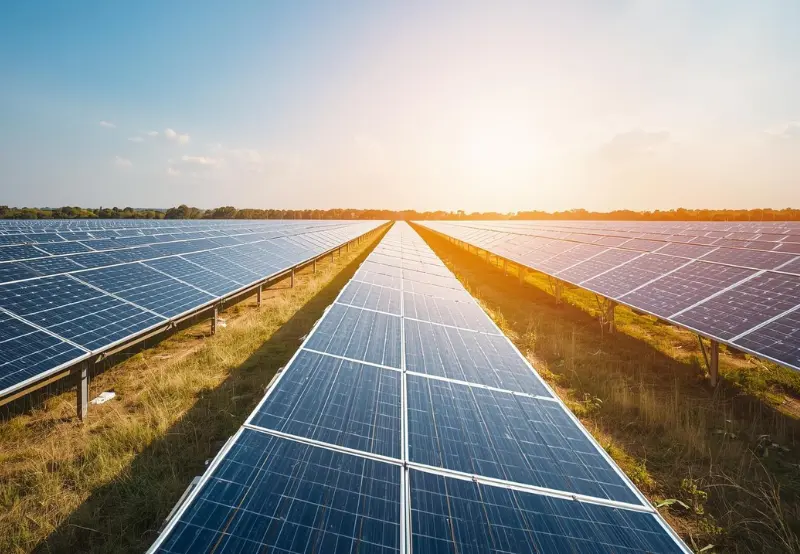
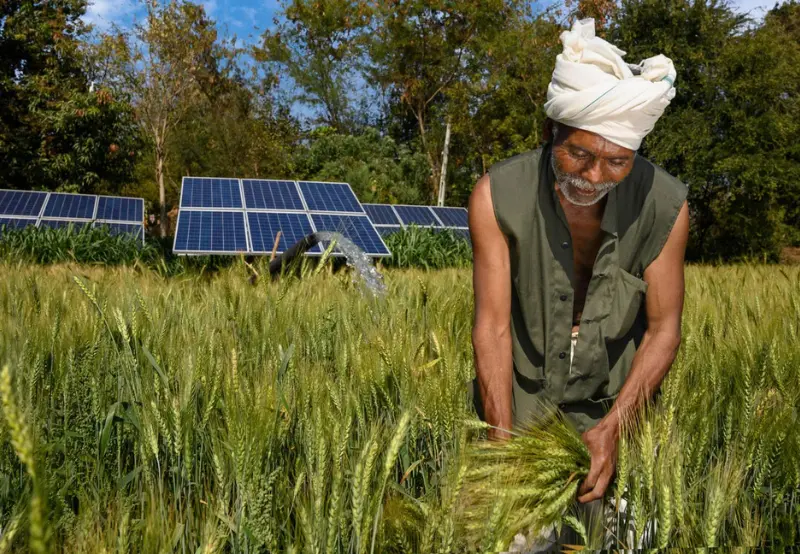
One of the most impactful applications of solar energy in agriculture is solar irrigation. Under this model, solar panels generate electricity to run water pumps, replacing diesel engines or unreliable grid supply. Solar irrigation systems can be classified into two main types:
- Standalone Solar Pumps: These systems run solely on solar power and are ideal in areas with high solar irradiation. They deliver water directly during daylight hours, helping farmers irrigate crops without fuel expenses.
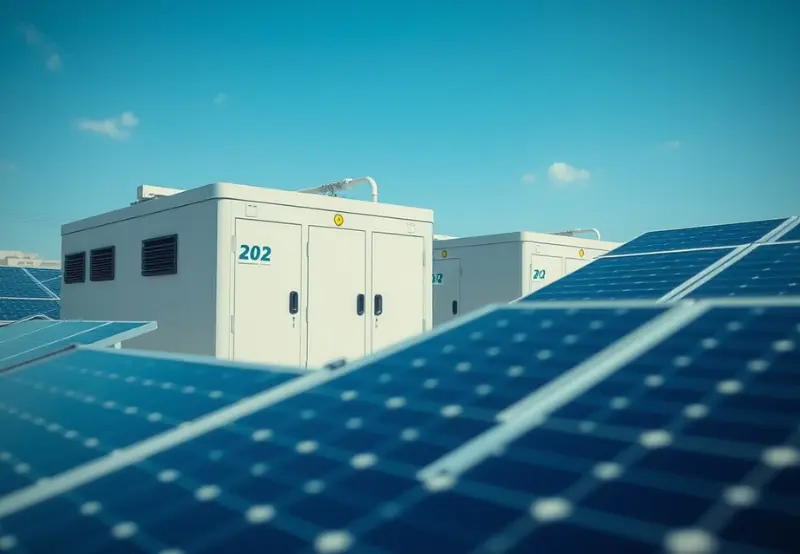
- Solar-Plus-Battery Pumps: These combine solar panels with battery storage, allowing pumps to operate even when sunlight is not directly available, such as early morning or late evening.
The adoption of solar irrigation has grown significantly under government initiatives that aim to electrify farming and reduce carbon emissions. Thousands of farmers across states like Rajasthan, Uttar Pradesh, Maharashtra, and Karnataka have already shifted to solar pumps, realising both economic gains and improved water management.
Government Schemes Driving Adoption
Solar energy penetration in agriculture has been accelerated by targeted government schemes. Central and state governments have introduced subsidies and incentives to make solar systems affordable:
- Subsidies of up to 60-90 per cent are available for the cost of solar water pumps, depending on the category of the beneficiary (small and marginal farmers typically receive higher support).
- Special loan schemes and credit facilities reduce upfront capital barriers, enabling more farmers to invest in solar technology.
- Ongoing programmes encourage agriculture-linked renewable installations, including solar power for cold storage, grain drying and other farm-based processing units.
These policies have helped bring solar technology within reach of small and marginal farmers who might otherwise struggle to finance such systems. The emphasis on rural electrification and decentralised energy solutions aligns with broader national goals of achieving a substantial share of renewable energy generation.
Economic Benefits for Farmers and Rural Communities
Solar pumps deliver direct economic benefits by dramatically lowering operating expenses. Unlike diesel pumps, which incur fuel and maintenance costs, solar pumps require minimal running costs after installation. Over a typical lifespan of 15 to 20 years, the cumulative savings on diesel or grid power can be substantial, improving farm incomes and reducing energy vulnerability.
In many cases, solar adoption enables farmers to irrigate more land or adopt crop diversification strategies due to consistent access to water. Net savings and improved reliability enhance resilience, especially in semi-arid regions prone to power shortages or erratic rainfall.
Beyond individual farms, solar energy drives local economic activity. Installation, maintenance and support services around solar technology create jobs in rural areas, strengthening local economies and building technical skills among rural youth.
Environment and Sustainability Gains
Solar power’s environmental advantages are equally compelling. Replacing diesel engines with solar pumps reduces greenhouse gas emissions, particulate pollution and noise. This contributes to both local air quality improvements and national climate targets.
India’s climate commitments include reaching net-zero emissions by 2070 and dramatically increasing non-fossil energy capacity. Solar adoption in agriculture contributes directly to these goals by displacing fossil fuel use and integrating renewable energy into everyday economic activities.
Additionally, solar energy can support water conservation practices. When solar systems are paired with efficient irrigation technologies such as drip or sprinkler systems, water use efficiency improves, benefiting both the farm economy and local ecosystems.
Emerging Trends: Solar Microgrids and Farm Electrification
Beyond water pumps, solar is powering a broader electrification of rural agricultural life. Solar microgrids are being deployed in remote villages to provide electricity for lighting, cooling, processing and storage. These decentralised energy systems ensure reliability and reduce dependency on distant grid infrastructure.
Solar-powered cold storage units are another emerging trend. Post-harvest losses in India are high due to inadequate refrigeration and storage. Solar cold chains help preserve perishable produce, improve market value and reduce waste, further strengthening farm incomes.
Challenges and the Way Forward
Despite significant progress, challenges remain. Initial capital investment, though subsidised, can be a barrier for marginal farmers. Reliable operation requires quality installation and periodic maintenance, highlighting the need for trained technicians and local support networks.
Grid integration and energy storage remain important considerations. As storage technology costs continue to fall, solar systems combined with batteries will become even more reliable and attractive for round-the-clock power availability.
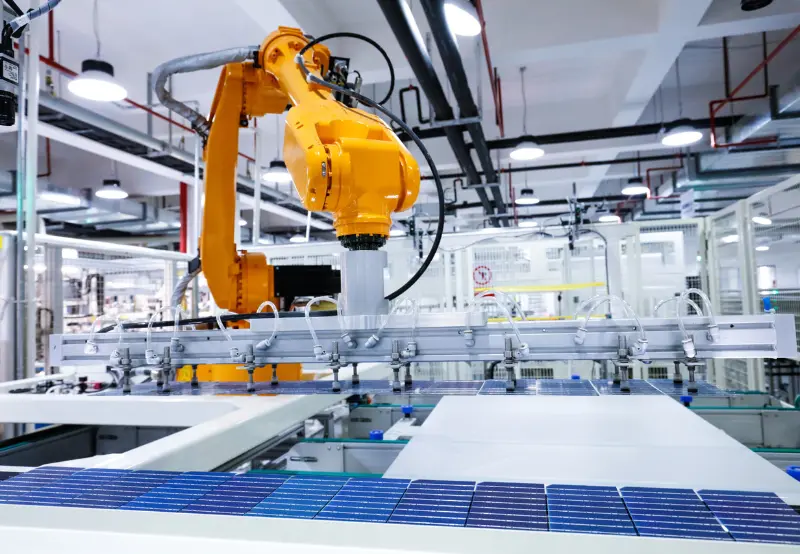
Policy consistency and continued financial incentives will play a crucial role in sustaining momentum. Programmes that support local manufacturing and supply chains for solar components can also broaden access and reduce import dependency.
Sunlight to Sustenance
Solar power is increasingly weaving itself into the fabric of Indian agriculture. From powering irrigation pumps to enabling cold storage and microgrid solutions, solar energy is enhancing farm productivity, lowering energy costs and contributing to sustainable rural growth. As technology advances and policy support deepens, solar energy is not just a clean power source — it is a foundational pillar of India’s agricultural future.