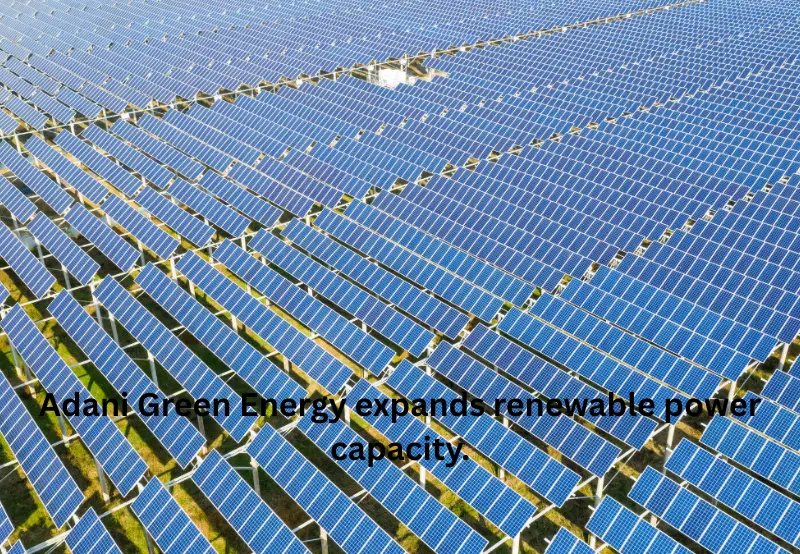

India’s expanding solar export industry has been dealt a significant challenge following a decision by the United States Commerce Department to impose steep countervailing duties (CVDs) on solar cells and photovoltaic (PV) modules imported from India, as well as from Indonesia and Laos. The move reflects broader global trade tensions and has immediate implications for Indian manufacturers that have relied heavily on U.S. markets for growth.
Preliminary Duties and Their Scale
The U.S. authorities have announced preliminary countervailing duties of around 125.87 per cent on solar imports from India after determining that domestic manufacturers benefited from government subsidies that allegedly distorted competition. Similar duties were applied to products from other Asian exporters, with Indonesia receiving rates over 100 per cent in some cases and Laos around 80 per cent.
Under such high tariff rates, the cost of Indian solar products entering the U.S. market would more than double — significantly eroding the price advantage that Indian producers had worked to achieve in one of the world’s largest renewable energy markets.
Impact on Indian Solar Makers
The announcement triggered an immediate sell-off in shares of major Indian solar manufacturers. Companies such as Waaree Energies, Premier Energies and Vikram Solar saw their stock prices fall sharply, reflecting investor concern over potential revenue losses and market access restrictions. Analysts say the U.S. market accounts for a large share of India’s solar export value, making the preliminary duties a major disruption.
Industry observers have described the trade action as a setback for exporters who had built significant portions of their business strategies around access to U.S. demand. With costs rising sharply due to tariffs, Indian solar firms may face difficulties competing on price in a market that once offered substantial revenue opportunities.
Domestic Capacity vs Export Demand
India has rapidly expanded its solar module manufacturing base in recent years, with total installed capacity exceeding 160 gigawatts (GW) by early 2026. Despite this expansion, domestic demand remains far lower — estimated at around 40-45 GW annually — creating a dependence on export markets to absorb the surplus production.
With U.S. exports now under threat from high duties, Indian manufacturers may need to redirect unsold inventory into the domestic market, potentially putting downward pressure on local prices and intensifying competition within India.
Ongoing Trade Process and Future Risks
The current countervailing duty ruling is part of a broader U.S. trade investigation. A separate determination on anti-dumping duties, which would address whether solar products were sold below cost, is expected in the coming months. If confirmed, additional duties could further raise the cost burden on Indian exports, compounding challenges for manufacturers already facing high preliminary tariffs.
Strategic Implications
The U.S. decision complicates India’s ambitions to become a major global supplier of solar technology at a time when solar manufacturing capacity is rapidly growing. While domestic policy incentives helped drive the sector’s initial success, reliance on a key overseas market now exposed to high trade barriers highlights the risks of export concentration.
Experts suggest that Indian solar firms may need to explore alternative markets, strengthen local demand through policy measures and invest in cost-competitiveness to mitigate the impact of U.S. trade measures. Diversifying export destinations could reduce dependency on any single market and help sustain long-term growth.