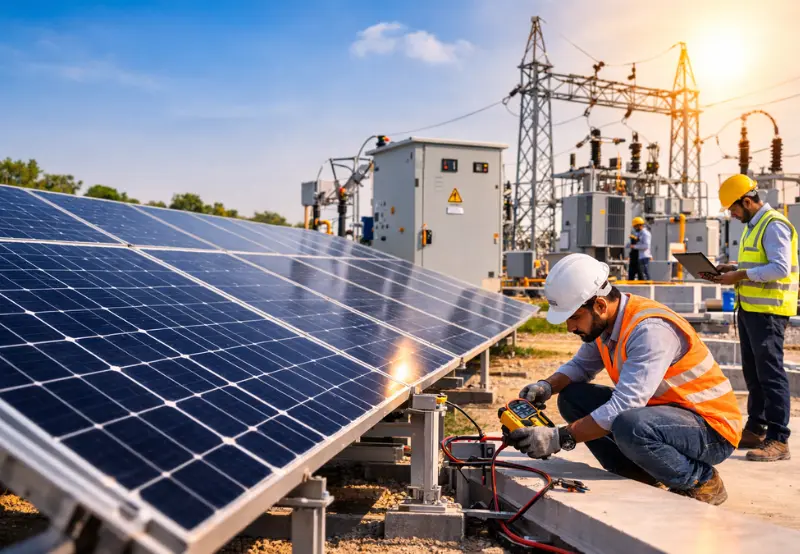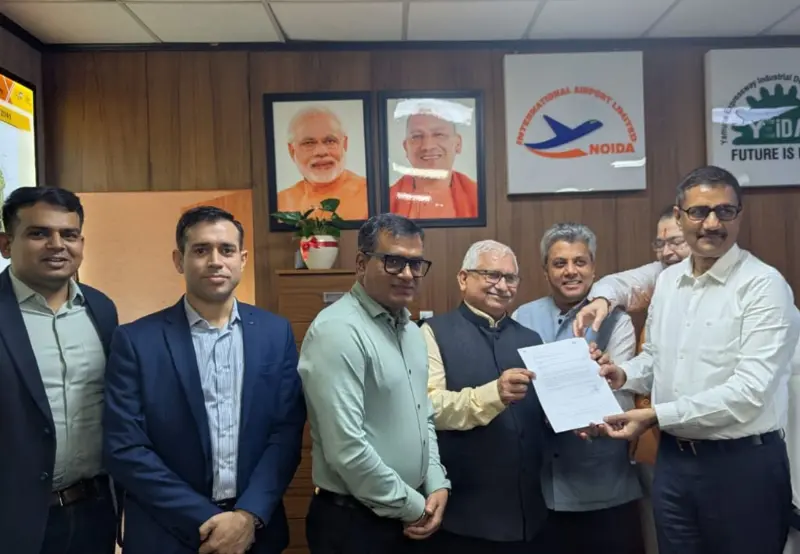

IB Solar Manufacturing Investment of ₹30 billion will set up a 4 GW TOPCon solar cell and module plant in Jewar, reducing imports and strengthening India’s domestic solar capacity.
📖 Table of Contents
- Introduction: IB Solar Manufacturing Investment
- The Details of the 4 GW TOPCon Plant
- Why Jewar, Uttar Pradesh Was Chosen
- What is TOPCon Technology?
- Boosting Domestic Manufacturing in India
- Economic and Environmental Impact
- Reducing Dependence on Imports
- India’s Solar Manufacturing Landscape
- Challenges Facing Domestic Solar Manufacturing
- Future Outlook and India’s 2030 Goals
- Conclusion
Introduction: IB Solar Manufacturing Investment
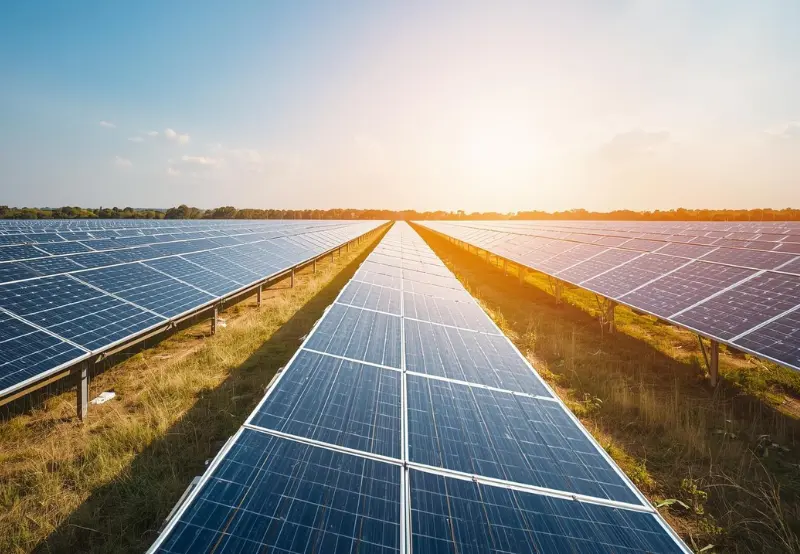
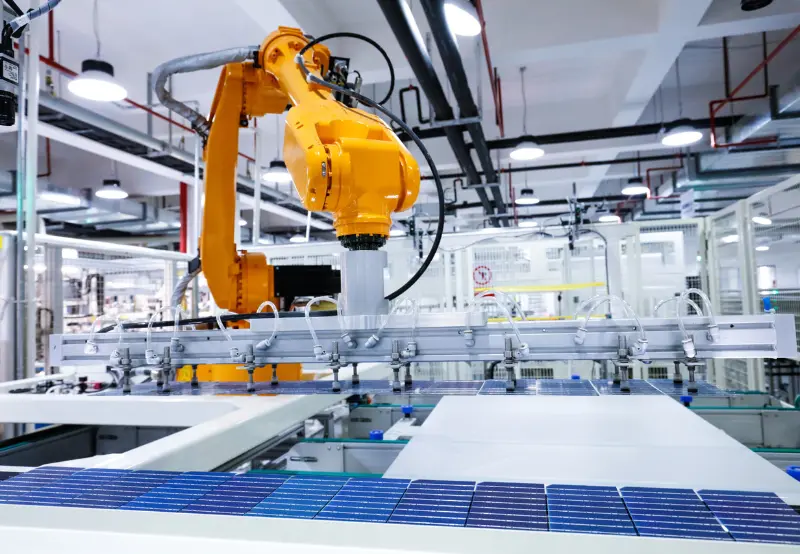
The announcement of the IB Solar Manufacturing Investment marks a major leap for India’s clean energy sector. Integrated Batteries (IB) Solar is investing approximately INR 30 billion (≈ US$340 million) to establish a 4 GW solar cell and module manufacturing facility in Jewar, Uttar Pradesh.
This mega investment is not only a sign of confidence in India’s renewable energy market but also a critical step toward reducing dependence on imported solar modules and cells, particularly from China.
The Details of the 4 GW TOPCon Plant
- Capacity: 4 GW (cells + modules)
- Technology: Tunnel Oxide Passivated Contact (TOPCon)
- Location: Jewar, Uttar Pradesh
- Investment Size: INR 30 billion (US$340 million)
- Objective: Strengthen India’s domestic supply chain, reduce imports, and contribute to the nation’s 500 GW renewable target by 2030.
This plant will be one of the largest domestic solar manufacturing facilities in India, reinforcing the government’s Make in India initiative.
Why Jewar, Uttar Pradesh Was Chosen
Jewar, located in Gautam Buddh Nagar district, is emerging as a new industrial and renewable hub. Its proximity to the upcoming Jewar International Airport, robust infrastructure, and connectivity to NCR make it an ideal site for large-scale solar manufacturing.
The region also benefits from state-level incentives, such as land availability and tax breaks, aimed at attracting clean energy investments.
What is TOPCon Technology?
TOPCon (Tunnel Oxide Passivated Contact) is an advanced solar technology that improves the efficiency of photovoltaic cells.
Key features:
- Higher efficiency (23–25% range) compared to traditional PERC technology.
- Lower degradation over time, increasing long-term performance.
- Enhanced energy yield, especially under low-light conditions.
By adopting TOPCon, IB Solar is positioning itself at the cutting edge of solar manufacturing, ready to compete globally.
Boosting Domestic Manufacturing in India
The IB Solar Manufacturing Investment aligns with India’s Production Linked Incentive (PLI) Scheme, which is designed to promote domestic solar cell and module production.
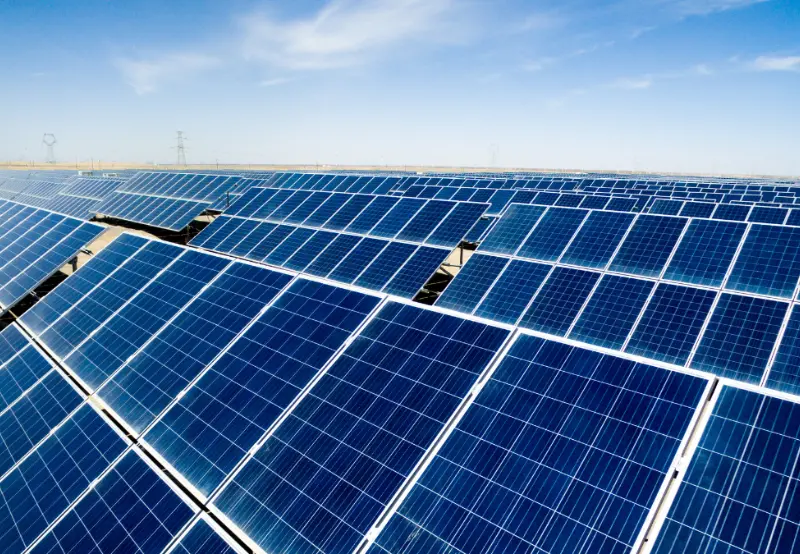
India currently relies heavily on imports, with over 70% of solar modules sourced from China. This plant will contribute significantly to bridging the domestic supply-demand gap.
Economic and Environmental Impact
Economic Benefits:
- Direct employment for thousands in manufacturing and R&D.
- Indirect job creation in logistics, supply chain, and services.
- Boost to local economies around Jewar.
Environmental Benefits:
- Supporting India’s shift to clean energy by enabling more solar capacity.
- Reducing carbon footprint compared to coal-based power.
- Encouraging circular manufacturing practices and recycling.
Reducing Dependence on Imports
One of the biggest challenges for India’s solar industry has been its over-reliance on imports, especially from China.
By localising production, IB Solar will:
- Enhance energy security.
- Ensure price stability in the domestic market.
- Reduce risks from global supply chain disruptions, like those seen during COVID-19.
🇮🇳 India’s Solar Manufacturing Landscape
India’s solar manufacturing sector is in a phase of rapid transformation. Alongside IB Solar:
- Adani Solar is expanding large-scale module production.
- Reliance Industries is investing in integrated solar, battery, and hydrogen manufacturing.
- Waaree Energies remains one of the top module producers.
This competitive landscape ensures India is steadily moving toward self-sufficiency in solar hardware.
Challenges Facing Domestic Solar Manufacturing
Despite the momentum, challenges remain:
- High Capital Costs: Setting up advanced plants requires huge upfront investments.
- Technology Dependence: India still imports key raw materials like wafers.
- Global Competition: Competing with low-cost Chinese imports remains tough.
- Policy Uncertainty: Fluctuations in duties and trade regulations create unpredictability.
Future Outlook and India’s 2030 Goals
With the IB Solar Manufacturing Investment, India is better placed to achieve:
- 500 GW renewable energy target by 2030.
- 280 GW solar power contribution within that target.
- Becoming a global hub for solar exports.
The combination of domestic manufacturing, advanced technology like TOPCon, and strong policy support will be pivotal in achieving these goals.
Conclusion
The IB Solar Manufacturing Investment of INR 30 billion in Jewar is a game-changing move for India’s renewable sector. By setting up a 4 GW TOPCon plant, IB Solar not only strengthens domestic manufacturing but also aligns with national ambitions for energy independence, job creation, and sustainable growth.
This project positions India as a serious global contender in advanced solar manufacturing, reducing dependency on imports and ensuring a resilient clean energy future.
Read : Gujarat Renewable Energy Expansion: 6 Powerful Insights from 2025’s Green Growth