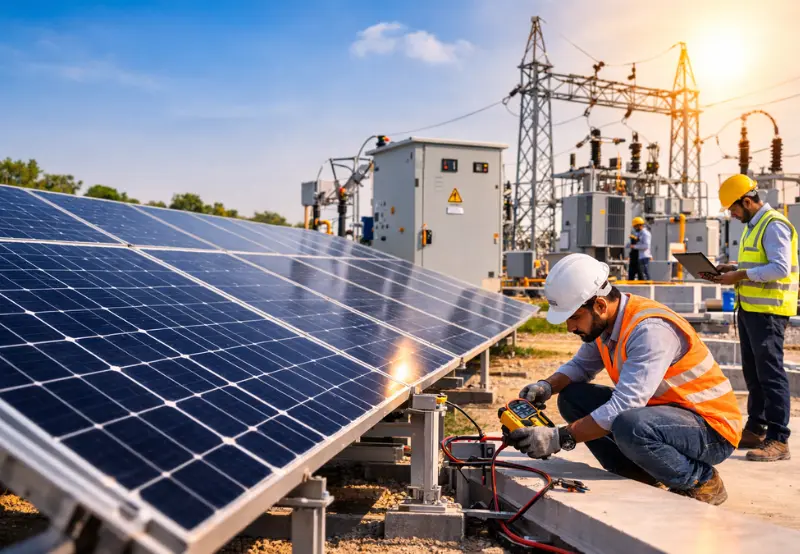
India Solar Parks Milestone reaches 110.8 GW, powering a clean future with storage integration, falling battery costs & solar parks like Bhadla.
Table of Contents
- Introduction: India Solar Parks Milestone at a Glance
- 1. Unprecedented Installed Capacity
- 2. Bhadla: The Crown Jewel of Solar Parks
- 3. Declining Battery Costs: Game-Changer
- 4. Solar + Storage = 24/7 Clean Energy
- 5. Environmental & Economic Gains
- 6. National Ambitions and Targets
- 7. What Lies Ahead: Growth & Integration
- Conclusion
Introduction: India Solar Parks Milestone at a Glance
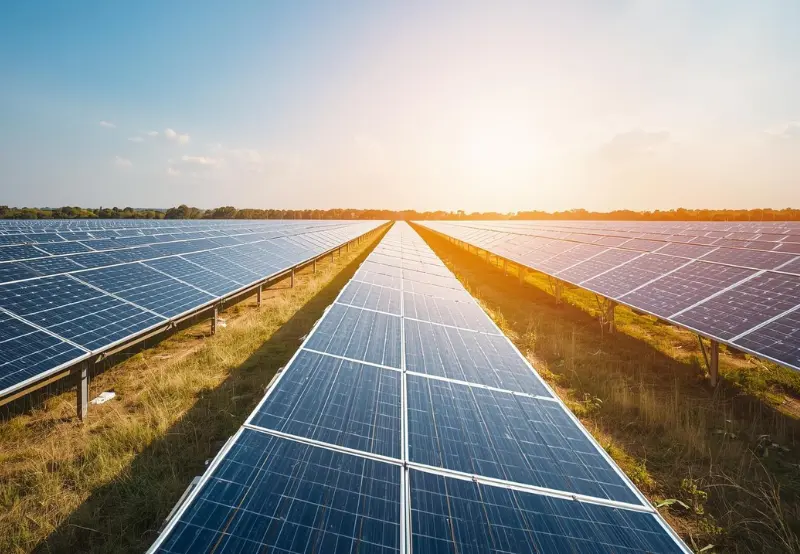
India Solar Parks Milestone marks an extraordinary moment in India’s green energy journey: over 110.8 GW of installed solar capacity, driven by record-breaking solar parks like Bhadla. The march isn’t stopping, declining battery costs and integrated solar + storage projects are paving the way for a round-the-clock renewable revolution.
1. Unprecedented Installed Capacity
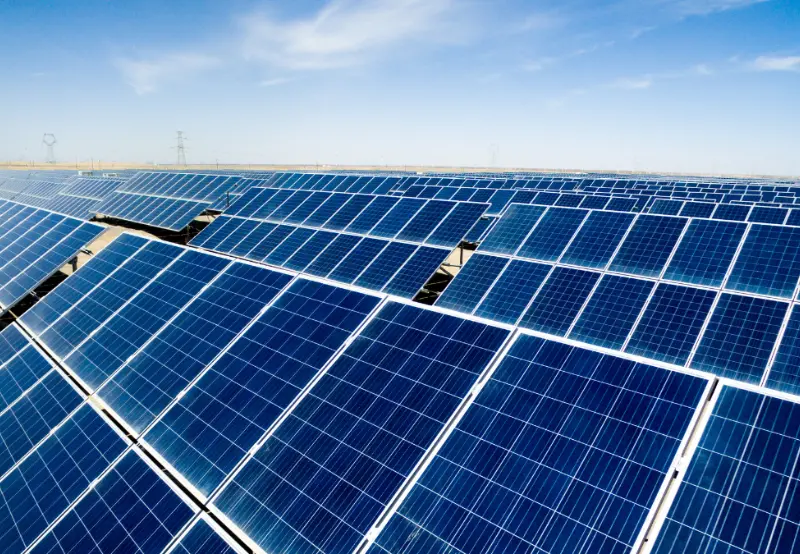
India’s solar installed capacity skyrocketed to 110.83 GW as of May 2025, with 110.8 GW_AC specifically from ground-mounted solar parks. That growth, over 30% year-on-year, is reshaping India’s energy landscape.
2. Bhadla: The Crown Jewel of Solar Parks
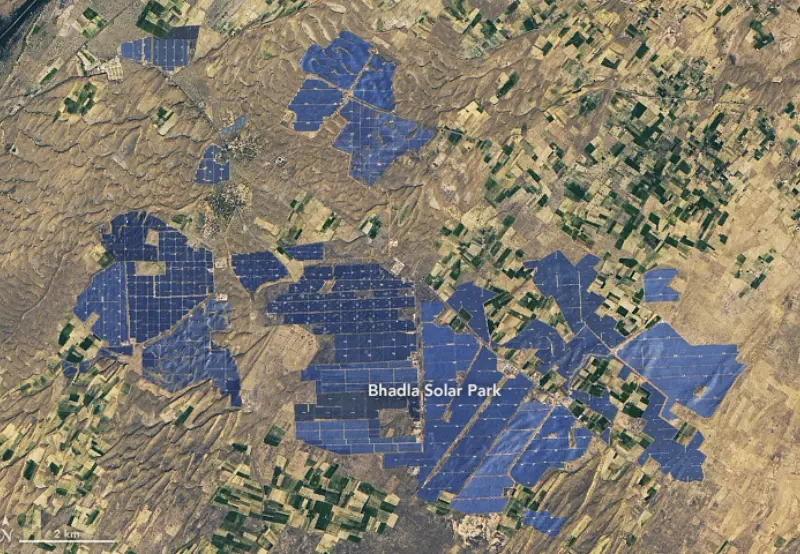
At the heart of this surge is the Bhadla Solar Park, India’s largest and the 11th-largest globally. Spanning 56 km² near Jodhpur, Rajasthan, it boasts 2,245 MW capacity, powering nearly 4 million homes and displacing around 4 million tonnes of CO₂ annually. Funded with US $2.175 billion, Bhadla exemplifies large‑scale ambition meeting environmental resilience.
3. Declining Battery Costs: Game-Changer
A seismic shift is underway: battery pack prices fell to roughly US $55/kWh by May 2025. This collapse in costs makes solar‑plus‑storage projects economically viable, rivaling coal, gas, and even nuclear on levelised tariffs. Auction results show solar + storage coming in at ₹3.1–3.5 /kWh—over 50% lower than new fossil fuel options.
4. Solar + Storage = 24/7 Clean Energy
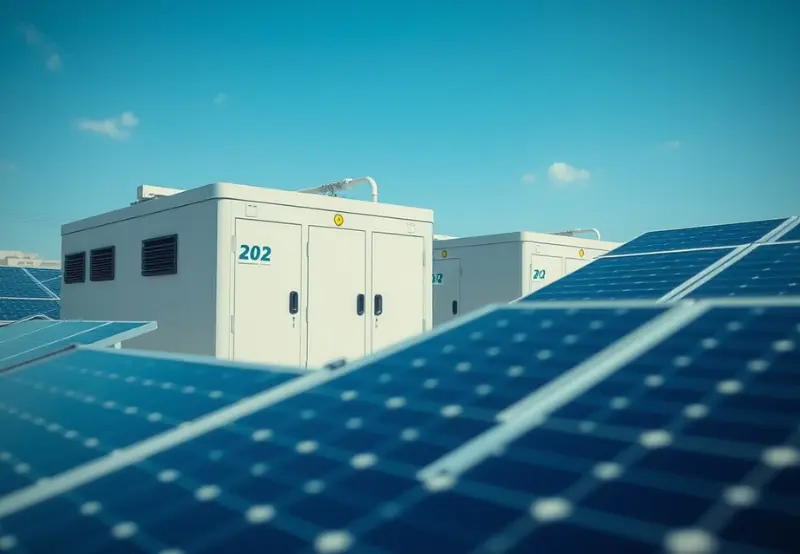
Thanks to cheaper batteries, solar parks no longer rely solely on daylight. Solar + storage plants now offer reliable energy 24/7, year-round. Studies suggest such hybrid systems can meet demand 100% of days, with 89% of days funded purely by solar + storage .
Furthermore, India already has over 219 MWh of battery storage installed as of March 2024, with ~90% tied into solar parks. This foundation enables widespread uptick in storage deployment, stabilising India’s grid.
5. Environmental & Economic Gains
The eco-advantages are clear—solar generation from April 2024 to March 2025 jumped to 144 TWh, a 24% hike, saving around 57 million tons of coal.
Bhadla itself created roughly 10,000 jobs during development, boosting regional livelihoods . The park’s success also attracts private investment, as seen in projects like Adani’s enormous Khavda and Renew’s Andhra Pradesh plan, which integrate solar, wind, and battery technology.
6. National Ambitions and Targets
India aims for a whopping 500 GW of renewable capacity by 2030—about half from solar. With solar parks like Bhadla and Pavagada (2,050 MW in Karnataka), momentum is strong.
Industry analysts (e.g., ICRA) expect 132 GW of solar by March 2026, driven by robust tender pipelines and affordable modules. Policy support like reduced transmission charges is making clean energy a smarter investment .
7. What Lies Ahead: Growth & Integration
The next frontier combines large-scale hybrid parks, grid-strengthening, and micro‑grids. Leading state actors like Maharashtra and Gujarat are planning projects storing 16,000 MW of solar power in batteries, aiming to meet nighttime demand and avert curtailment.
Moreover, Andhra Pradesh is set for India’s largest integrated renewable hub, 1,800 MW solar, 1,000 MW wind, and 2,000 MW battery, backed by ₹22,000 crore.
Conclusion
The India Solar Parks Milestone isn’t just a number, it marks a transformative shift to a sustainable, secure, and scalable energy future. With record deployment, falling costs, and robust hybrid systems, India is crafting a powerful renewable energy model—one that can lead global decarbonisation.
📌 Learn more
- Learn more about India’s renewable expansion on EcoDigest here: Solar Infrastructure Drives a Brighter Future Across India
- For deeper insight into solar project pipelines, see India expected to hit 132 GW by 2026