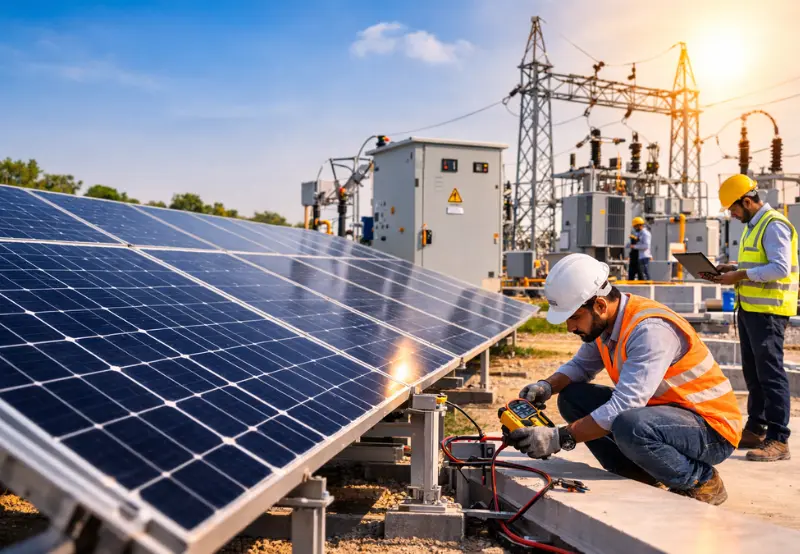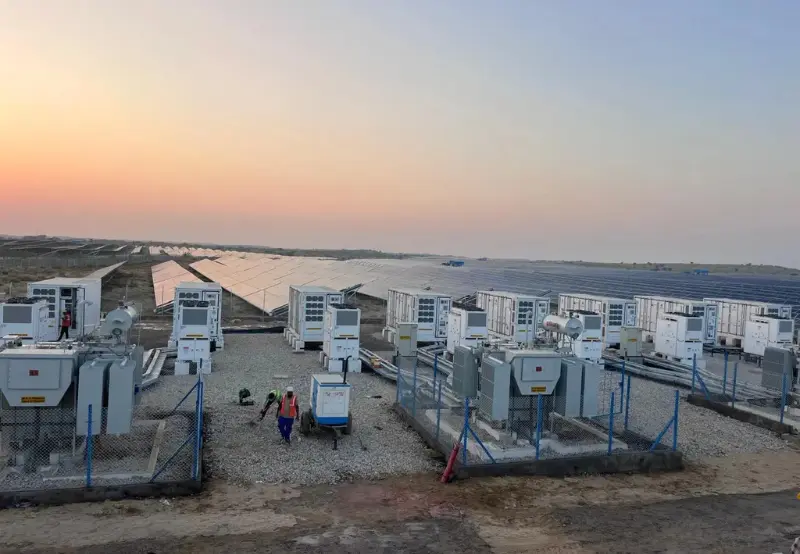

Juniper Green Energy has achieved a landmark milestone by commissioning India’s first merchant Battery Energy Storage System (BESS) in Bikaner, Rajasthan. This development marks a major step in the evolution of India’s power sector, signalling the growing role of standalone energy storage in strengthening grid reliability and enabling deeper renewable energy integration.
Understanding the Merchant BESS Model
Unlike traditional storage projects tied to long-term power purchase agreements, a merchant BESS operates independently in the electricity market. It earns revenue by responding to market signals such as peak demand, price fluctuations and grid-balancing requirements. This model introduces flexibility and commercial dynamism to the energy storage sector, reflecting a maturing power market ecosystem in India.
Project Capacity and Commissioning Details
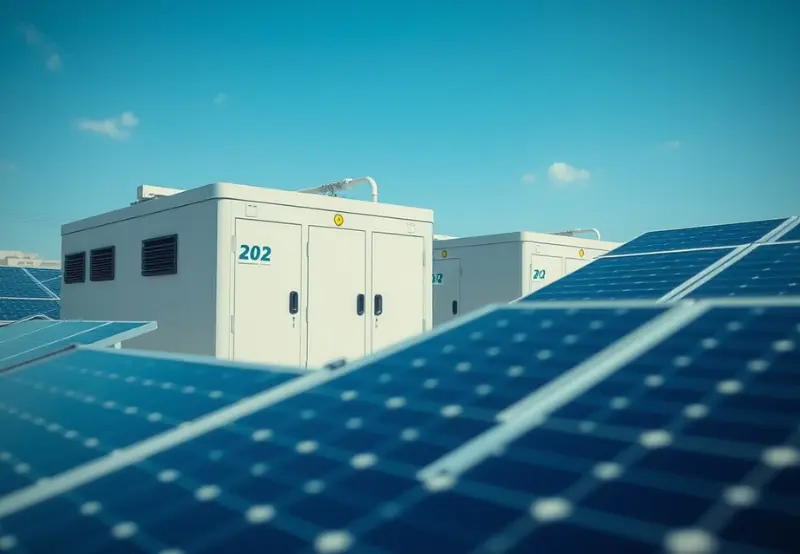
The project has been commissioned in phases, with 60 MWh of the planned 100 MWh capacity already operational. Following successful trials and regulatory clearances, the system has commenced commercial operations, making it the first of its kind in the country to function under a merchant framework.
Once fully completed, the facility will stand among India’s largest standalone battery storage projects, capable of delivering rapid-response energy support to the grid.
Enhancing Grid Stability and Renewable Integration
Battery energy storage systems play a crucial role in balancing electricity supply and demand, especially as renewable energy capacity continues to expand. The commissioned BESS will help manage peak loads, provide frequency regulation and store surplus renewable power for use during high-demand periods.
This capability is essential for reducing grid congestion, minimising renewable curtailment and ensuring a stable power supply.
A Strategic Step for India’s Energy Transition
The commissioning of India’s first merchant BESS reflects growing confidence in the commercial viability of energy storage technologies. It also demonstrates how policy reforms and market-based mechanisms are encouraging private investment in advanced power infrastructure.
By pioneering this model, Juniper Green Energy has positioned itself at the forefront of India’s energy storage landscape, setting a precedent for future projects that support a cleaner, more resilient and flexible electricity system.