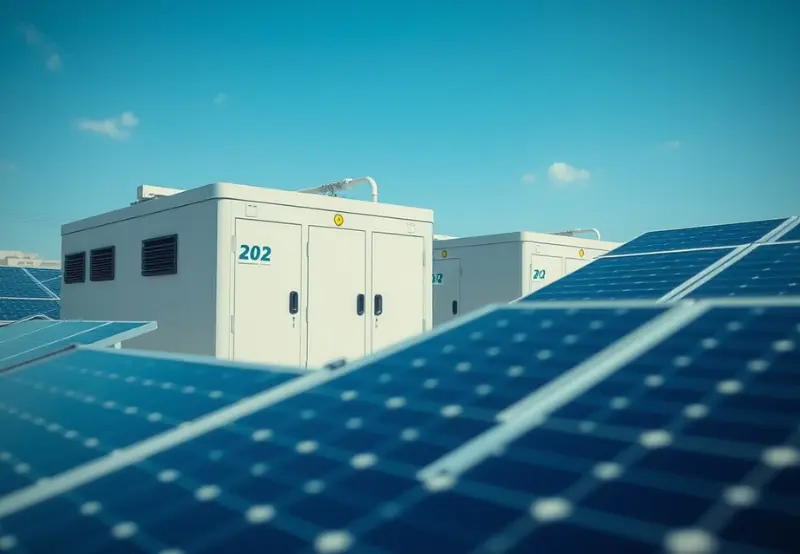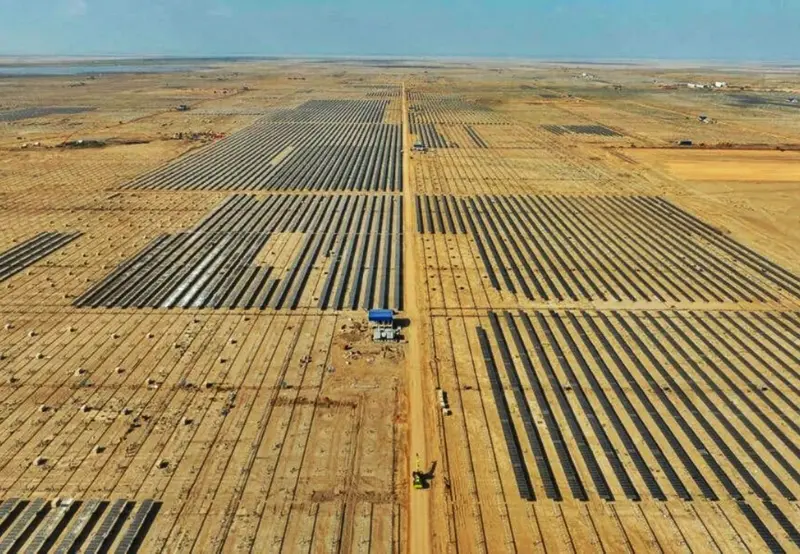

India is developing what is being described as the world’s largest renewable energy project in the vast Rann of Kutch desert in Gujarat, marking a major leap in its clean energy ambitions.
A Mega Project in the Desert
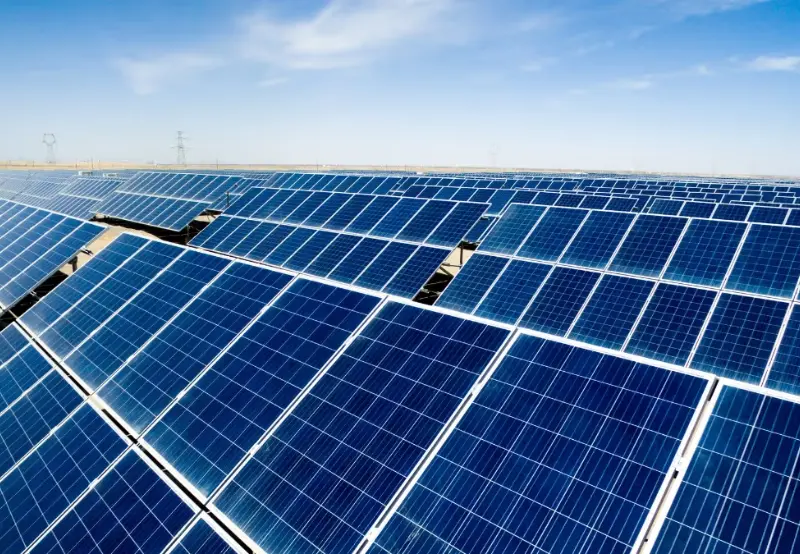
The project, known as the Khavda Renewable Energy Park, is being built across a massive 72,600 hectares of barren land—an area larger than Singapore.
Once completed, it will have a total capacity of 30 gigawatts (GW), making it the largest single-site renewable energy project in the world.
Powering Millions of Homes
The park is expected to generate enough electricity to power around 18 million homes, significantly contributing to India’s future energy needs.
The project combines:
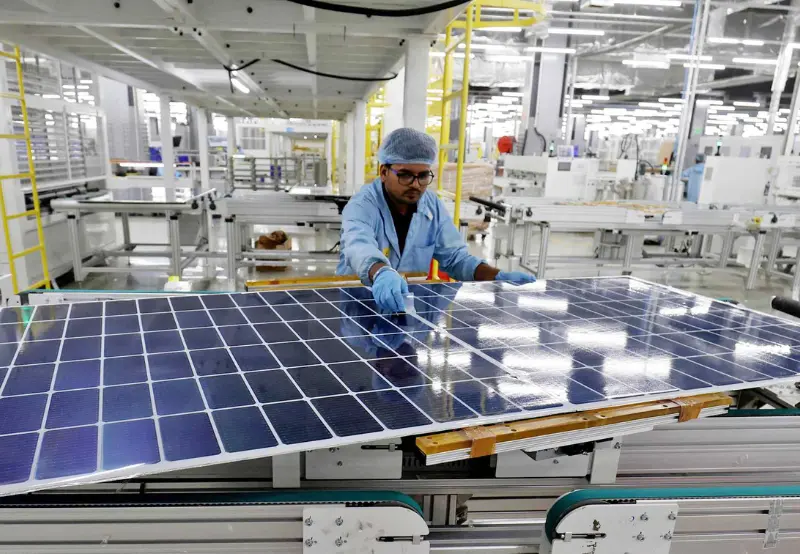
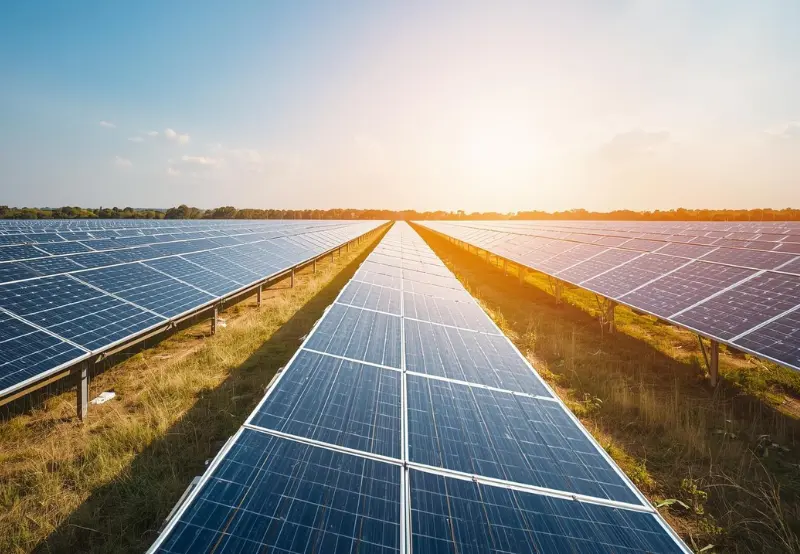
- 20 GW of solar power
- 10 GW of wind energy
This hybrid model ensures more consistent power generation by balancing daytime solar output with round-the-clock wind energy.
A Flagship Clean Energy Initiative
The Khavda project is a key part of India’s broader plan to achieve 500 GW of non-fossil fuel capacity by 2030.
It highlights how India is transforming unused land into productive energy hubs while reducing reliance on coal and fossil fuels.
Progress and Development
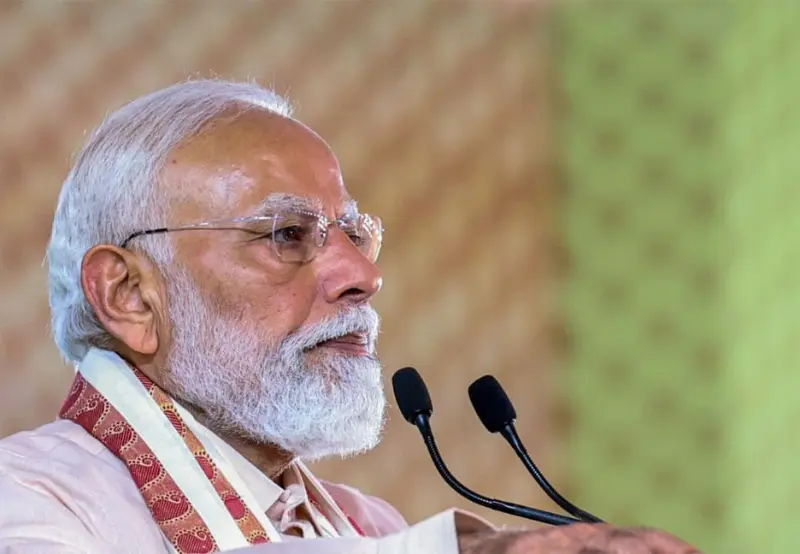
The project was launched in 2020, with Prime Minister Narendra Modi laying its foundation. It is being led by Adani Green Energy, in collaboration with global partners.
As of recent updates, over 1 GW capacity is already operational, with full development expected over the coming years.
Economic and Environmental Impact
The mega project is expected to:
- Create large-scale employment opportunities
- Boost renewable energy investments
- Strengthen India’s energy security
- Reduce carbon emissions
However, experts have also raised concerns about:
- Environmental impact on fragile desert ecosystems
- Challenges of integrating such large-scale renewable capacity
- Need for advanced energy storage solutions
Transforming the Energy Landscape
The Khavda Renewable Energy Park represents a new era of large-scale clean energy infrastructure. It demonstrates how innovative planning and technology can turn even harsh landscapes into powerful energy sources.
Conclusion
India’s “renewable energy beast” in Gujarat is more than just a project—it is a symbol of the country’s ambition to lead the global clean energy transition. If completed as planned, it will not only be the world’s largest renewable energy site but also a cornerstone of India’s sustainable future.