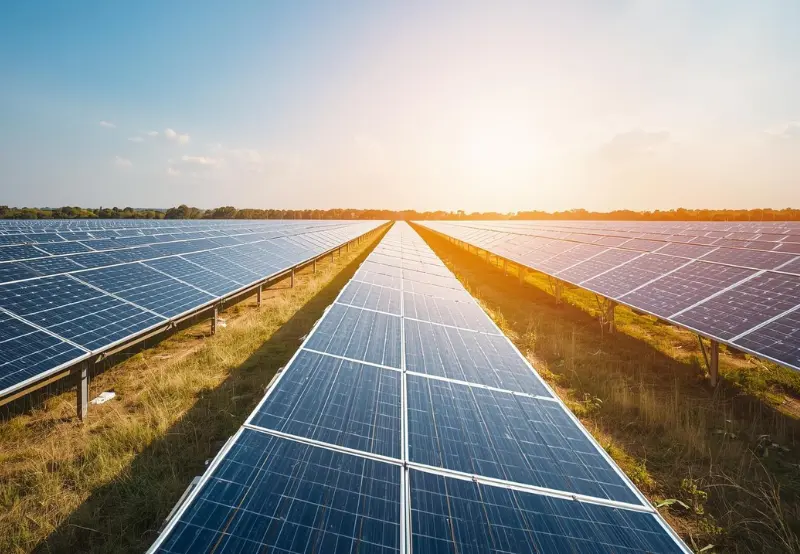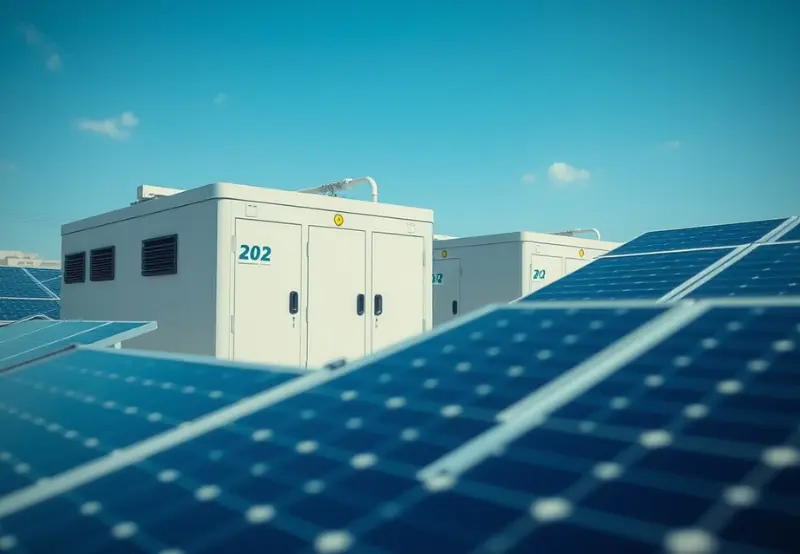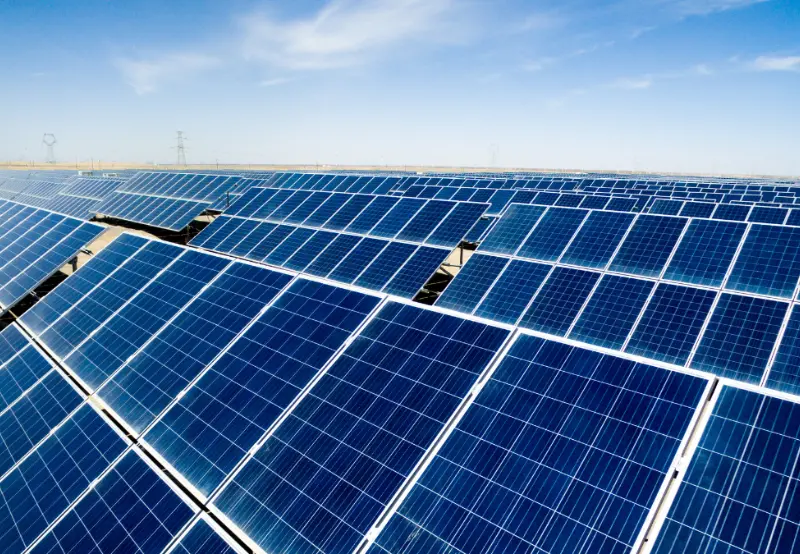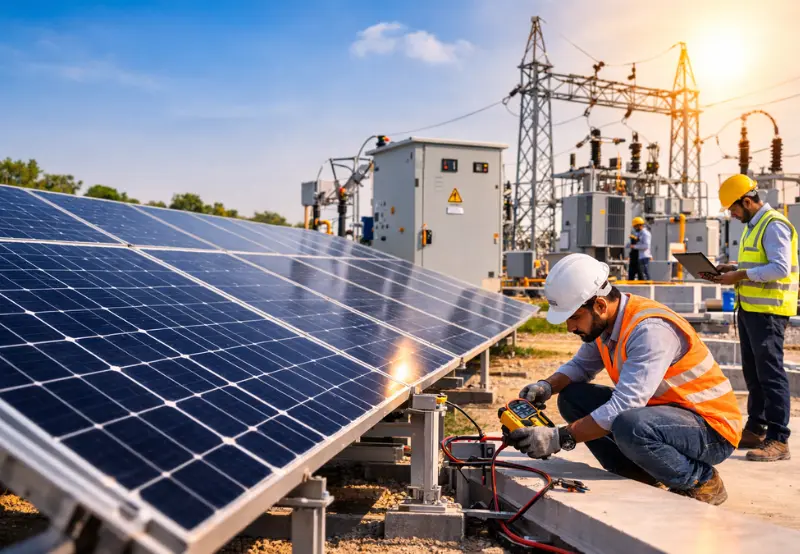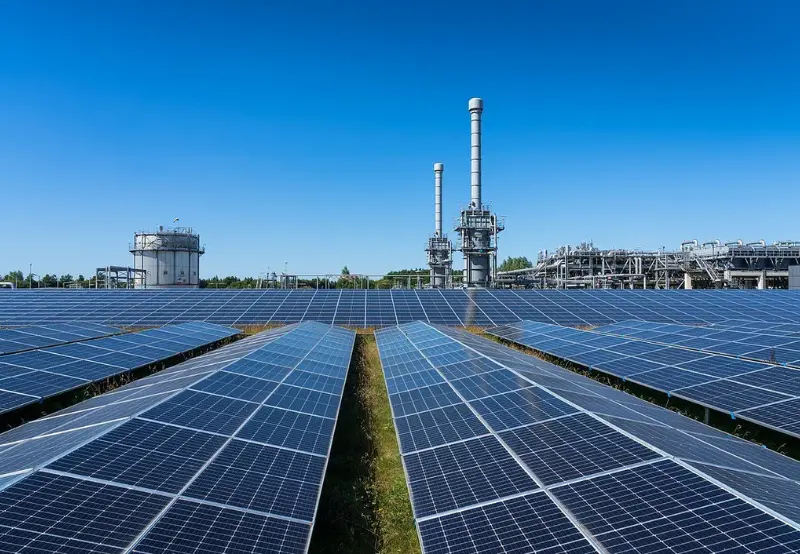

Morena solar-plus-storage project delivers India’s lowest-ever firm renewable tariff of ₹2.70/kWh, setting a new benchmark in green energy.
1. Introduction: A New Benchmark in Renewable Energy
The Morena solar project delivers cheapest firm green power—a claim rarely seen in India’s renewable landscape—that’s exactly what the project has achieved. With a tariff of ₹2.70 per unit (i.e. ₹2.70/kWh), it now sets a new standard for firm and dispatchable renewables. As officials put it, this project marks India’s first large-scale venture offering round-the-clock clean power at under ₹3 per unit.
This is more than a tariff record—it signifies a turning point for how solar + storage is viewed in India’s energy future.
2. What the Morena Project Is All About
The project, implemented in Morena, Madhya Pradesh, is built under the umbrella of Rewa Ultra Mega Solar Ltd (RUMSL). It combines solar generation with battery storage to deliver firm dispatchable renewable energy (FDRE)—i.e. guaranteed supply even outside daylight hours.
They’re constructing two units, each with ~220 MW capacity, across phases, combining:
- A composite solar + storage project, and
- A ‘Storage-as-a-Service’ component: surplus grid power at night is stored and then used in morning peaks.
This hybrid structure ensures more uniform power delivery, reducing dependence on just daytime solar output.
3. Achieving Firm Dispatchable Renewable Energy (FDRE)
In the past, renewable projects—especially solar—were deemed intermittent, suitable only when sunlight is present. The Morena project is different:
- It promises ~95% availability during peak hours, compared to typical ~50% peak-hour coverage in older systems.
- It targets ~95% annual availability too, surpassing the ~85% average in existing setups.
Because it integrates storage, the system can dispatch power when needed—even at night or during cloudy spells. That’s how “firm” supply becomes possible.
4. How the ₹2.70 Tariff Was Secured
The process was competitive and rigorous:
- An e-reverse auction was held on 19 September, concluding with the ₹2.70 per unit bid for a 25-year contract.
- Nearly 12 hours of bidding were involved, reflecting fierce competition.
- The strategy combined solar production with storage and intelligent dispatching to keep costs down while ensuring reliability.
This tariff is significant because it places firm renewable power within reach of DISCOMs (distribution utilities) at a cost comparable to conventional sources.
5. Key Technical and Operational Features
- Two 220 MW units across phases, integrated with battery storage.
- Surplus night power from the grid is used to recharge batteries (Storage-as-a-Service model), smoothing out supply and demand mismatches.
- The arrangement delivers a flat, reliable power profile over 24 hours, bridging the gap between solar generation and consumer demand.
- The project’s capability to deliver 95% peak-hour supply is especially notable, meaning it can reliably meet demand even during high-stress periods.
6. Implications for India’s Renewable Sector
The success of the Morena solar project delivers cheapest firm green power carries broad significance:
- For DISCOMs: It shows that clean energy can be firm, reliable, and cost-effective—potentially reducing reliance on fossil backups.
- For project developers: It validates hybrid models (solar + storage + intelligent dispatch) as commercially viable.
- For policy makers: It provides a blueprint for future auctions, particularly for FDRE tenders.
- For India’s climate & energy goals: It strengthens confidence that scaling renewables while maintaining grid stability is possible.
In short, it changes the conversation: renewables need not be “variable” or “intermittent” if properly engineered.
7. Challenges and Lessons
No path is without hurdles. Some points to watch:
- Capital Costs: High initial investment in battery storage remains a key hurdle.
- Technology Risks: Ensuring battery lifecycle, degradation, and operational reliability over decades is critical.
- Grid Integration: Managing dispatch, forecasting, and grid stability must be precise.
- Financing & Policy Certainty: Long-term contracts, regulatory stability, and investor confidence are essential.
Lessons from this project can guide risk mitigation: strong technical design, careful contractual structure (like combining storage and grid recharging), and competitive auctioning.
8. Future Outlook
If the Morena project proves reliable over time, it may inspire:
- More FDRE tenders across states.
- Adoption of similar hybrid solar + storage models in other regions.
- Improvements in battery technology costs and efficiency, making such projects more common.
- Enhanced energy security and reduced reliance on fossil-based peaking power.
Also, as storage costs decline further and technologies mature, the gap between “renewable + storage” and conventional power may narrow even more.
9. Final Thoughts
The news that the Morena solar project delivers cheapest firm green power is not just a headline—it’s a signal: India is entering a new phase in renewable energy, one where clean, dispatchable power is no longer aspirational but practical.
With a ₹2.70 per unit tariff and an ambitious design for reliability, this project could become a template for future renewable infrastructure across India. It’s a milestone in making round-the-clock green energy a mainstream reality.
Explore: Solar News