
India’s clean energy transition often focuses on mega solar parks and large utility projects. But sometimes, the real revolution begins quietly — in villages powered by community action.
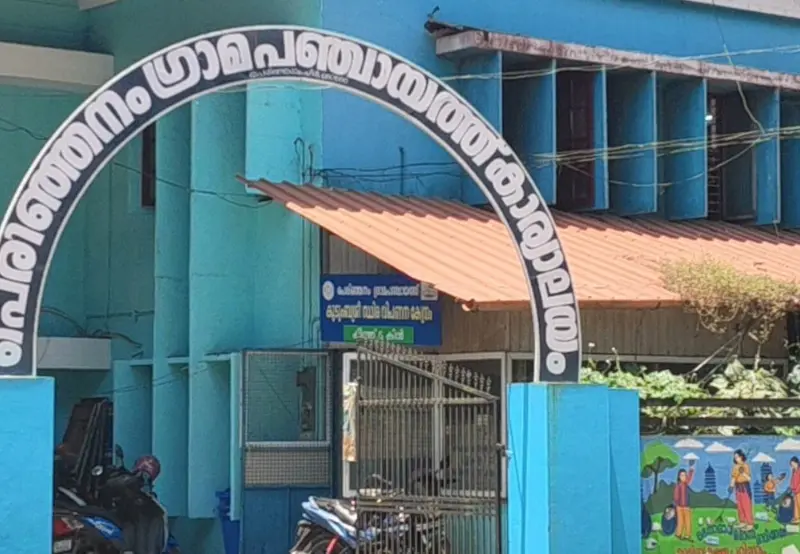
Perinjanam, a coastal panchayat in Kerala’s Thrissur district, has now emerged as a national model for decentralised renewable energy. The village has reportedly topped India in solar energy utilisation while unveiling the country’s first community-level Battery Energy Storage System (BESS) pilot, marking a major milestone in grassroots energy transformation.
So, what makes Perinjanam different? And why is the entire energy sector watching this small Kerala village closely?
Let’s explore.
From Coastal Village to India’s Solar Leader
Perinjanam’s solar success did not happen overnight. Over the past several years, the panchayat adopted a community-driven approach to renewable energy adoption.
Instead of waiting for large infrastructure investments, residents collectively embraced rooftop solar installations. Today, hundreds of households function as solar prosumers, generating electricity for personal use while contributing surplus energy to the grid.
This widespread adoption significantly reduced electricity dependence and helped households cut power bills by nearly 80% in some cases.
The result? A village that produces a substantial portion of its own electricity.
India’s First Community-Based BESS Pilot
The latest breakthrough comes with the launch of a Battery Energy Storage System (BESS) pilot project in Perinjanam.
Energy storage is often called the missing link in renewable energy systems. Solar power generation peaks during the day, while electricity demand usually rises in the evening.
The BESS pilot aims to solve this mismatch by:
- Storing excess daytime solar energy
- Supplying electricity during night-time demand
- Improving local grid stability
- Reducing reliance on conventional backup power
Kerala’s government has earmarked dedicated funding to test this community-owned storage model, signalling strong policy support for decentralised energy systems.
Why Energy Storage Matters Now
Solar panels alone cannot guarantee uninterrupted electricity.
Cloud cover, seasonal variation, and night-time demand create fluctuations that challenge grid operators. Traditionally, thermal power plants compensated for these gaps.
Battery storage changes the equation.
Think of BESS as a power bank for an entire village — storing renewable energy when production is high and releasing it when required.
If successful, Perinjanam’s model could reduce dependence on fossil-fuel-based backup generation.
Community Participation: The Real Game Changer
What truly sets Perinjanam apart is not technology — it’s governance.
The solar transition here was driven by:
- Local leadership initiatives
- Cooperative bank financing
- Public awareness campaigns
- Collective ownership models
Residents viewed solar adoption not merely as an environmental step but as an economic opportunity.
New homes in the village increasingly integrate solar panels during construction rather than adding them later.
A Blueprint for Energy Self-Sufficient Panchayats
Kerala now plans to replicate this decentralised energy model across other local bodies.
Community-based solar generation combined with shared storage systems could enable panchayats to become partially energy self-reliant.
Such models help:
- Reduce transmission losses
- Improve rural energy resilience
- Lower electricity costs
- Strengthen local climate action
In essence, energy production moves closer to where energy is consumed.
Supporting Kerala’s Clean Energy Vision
The Perinjanam initiative aligns with Kerala’s broader renewable energy strategy, which increasingly emphasises distributed generation and smart energy systems.
Recent state energy planning highlights investments in:
- Battery Energy Storage Systems
- Smart metering
- Green energy corridors
- Community solar projects
These efforts aim to build a flexible and resilient electricity network capable of handling rising renewable penetration.
National Significance of the Perinjanam Model
India’s renewable expansion has largely depended on large-scale solar parks. However, decentralised models like Perinjanam offer unique advantages:
✅ Faster implementation
✅ Local employment generation
✅ Reduced grid stress
✅ Greater public participation
As rooftop solar adoption grows nationwide, community storage solutions may become essential for maintaining grid reliability.
Perinjanam could therefore represent the future of India’s distributed energy transition.
Challenges Ahead
Despite its success, scaling this model across India will require overcoming several challenges:
- Financing community-owned storage systems
- Regulatory approvals
- Technical management capacity
- Long-term maintenance frameworks
Still, Perinjanam proves that local governance combined with policy support can overcome many barriers.
Conclusion
Perinjanam’s achievement goes beyond installing solar panels — it demonstrates how communities can actively shape the energy transition.
By combining widespread rooftop solar adoption with India’s first community BESS pilot, the Kerala village has created a working example of decentralised, resilient, and sustainable energy systems.
In a country striving for ambitious renewable targets, the lesson is clear: the future of clean energy may not only lie in massive solar parks, but also in empowered villages generating and storing their own power.
Sometimes, the biggest energy revolutions begin in the smallest places.