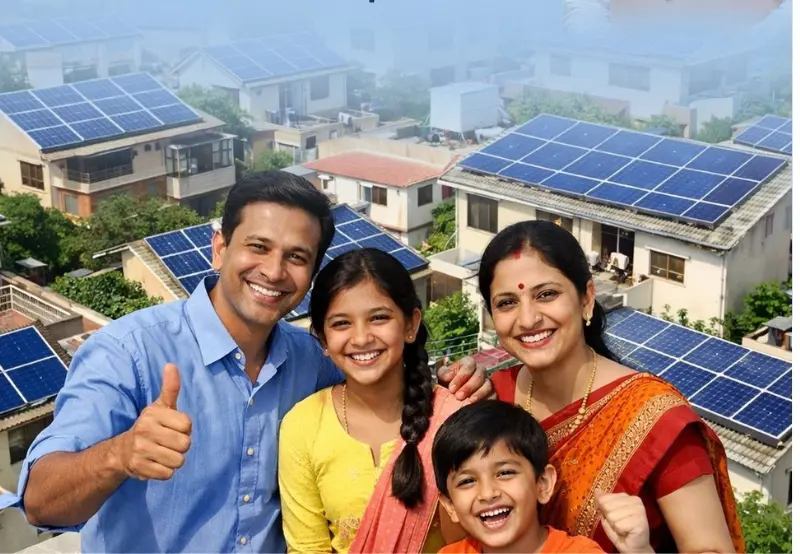

India has achieved a significant milestone in residential solar deployment, with over 30 lakh households installing rooftop solar systems under the PM Surya Ghar: Muft Bijli Yojana since the programme began in February 2024. This achievement reflects robust growth in decentralised clean energy and marks a major step forward in the nation’s renewable energy push.
A Major National Achievement
Prime Minister Narendra Modi welcomed the milestone, describing it as a “commendable achievement in India’s clean energy journey”. He acknowledged the millions of households that have adopted rooftop solar, highlighting how the scheme promotes savings, sustainability and energy self-reliance among Indian families. The rooftop installations are part of the government’s broader strategy to expand decentralised power generation and reduce dependence on fossil fuels.
The PM Surya Ghar scheme was launched with an ambitious goal of installing solar panels on one crore households by March 2027, aiming to enable cleaner and more affordable electricity generation across urban and rural India. Becoming one-third of the way towards this target in just over two years demonstrates the rapid pace of adoption and strong public interest in renewable solutions.
Driving Savings and Sustainability
Rooftop solar systems installed under the scheme not only help lower electricity bills for homeowners but also reduce grid demand. Households generate clean power from sunlight, which can offset conventional energy consumption and even export surplus power back to the grid in some cases. This contributes to lower household energy costs, reduced fossil fuel use and a smaller carbon footprint over time.
Under PM Surya Ghar, the government provides significant financial support and subsidies to eligible homeowners to make solar installation more affordable. Combined with net-metering policies, the scheme encourages residents to choose solar power over traditional electricity sources, helping improve energy security and reduce emissions in line with national climate goals.
Benefits for Households and National Goals
The rooftop solar surge is contributing to India’s broader clean energy ambitions. If the programme continues at its current pace, it is expected to not only meet but potentially surpass expectations for household solar adoption. The Ministry of New and Renewable Energy estimates that widespread rooftop solar could eventually produce thousands of gigawatt-hours of clean electricity, reduce millions of tonnes of CO₂ emissions and create economic opportunities across the solar value chain.
Support for rooftop solar also encourages local solar markets, creates jobs in installation and maintenance, and improves technology deployment at the consumer level. As more households embrace solar power, decentralised generation becomes a significant complement to India’s large utility-scale renewable infrastructure.
Looking Ahead
With 30 lakh households now equipped with rooftop solar systems, India’s clean energy transition at the residential level is gaining strong traction. Continued awareness campaigns, supportive policies and streamlined implementation are expected to drive further adoption across states and regions.
The success of the PM Surya Ghar scheme highlights how policy-driven incentives can accelerate clean energy uptake, helping the country move towards a more sustainable, resilient and energy-secure future.