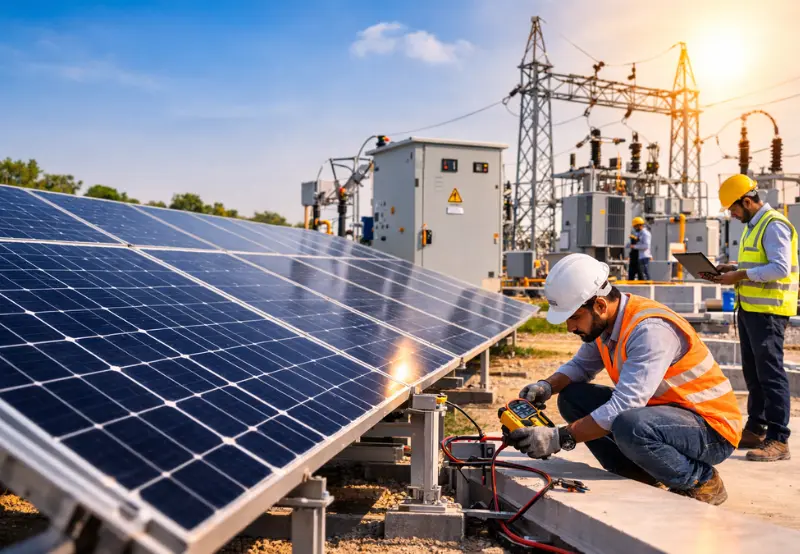
India’s Power Ministry has unveiled a transformative support package to propel its renewable energy ambitions, with a remarkable ₹5,400 crore (₹54 billion) Viability Gap Funding (VGF) scheme aimed at deploying 30 GWh of Battery Energy Storage Systems (BESS) by 2028. This initiative dovetails with vital grid reforms, marking a historic leap for clean energy infrastructure.
Unpacking the Mega-Funding for Storage
- Bolstering BESS Deployment
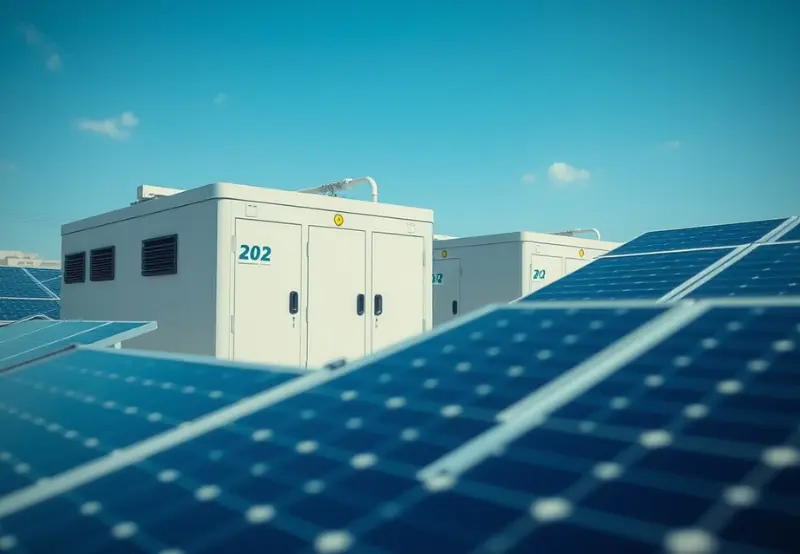
The scheme allocates ₹18 lakh per MWh for battery storage projects, distributing 25 GWh across 15 states and earmarking 5 GWh for NTPC, the national power corporation. - Strategic Roll-Out Timeline
The government plans to issue tenders within the next three months. These projects must be commissioned within 18 months of signing a Power Purchase Agreement (PPA) or Battery Energy Storage Purchase Agreement (BESPA). - Milestone Achieved
This new 30 GWh tranche builds upon the 13.2 GWh under the earlier VGF scheme, bringing India’s planned BESS capacity to over 43 GWh by 2028 — edging closer to the projected requirement of 37 GWh by 2027 and 236 GWh by 2032 .
Incentives & Infrastructure: Building the Backbone
- Transmission Charge Waiver Extended
Inter-state transmission charges for battery and pumped-storage projects are waived until 30 June 2028—lowering costs and speeding up implementation. - Upgrading Grid Connectivity
Government to develop nine Ultra High Voltage AC lines at 1,100 kV by 2034, with improved land compensation (tower area: 200%; right-of-way: 30%) to ease land acquisition .
Why This Is a Game-Changer
- Round-the-clock renewable power
BESS enables solar and wind energy to be stored and released during high-demand evening hours, balancing the intermittency of clean energy. - Massive investment attraction
The VGF scheme is expected to leverage up to ₹33,000 crore in private investment. - Supporting national clean-energy targets
This funding supports India’s goal of 393 GW of renewable capacity (293 GW solar, 100 GW wind) by 2030, and aligns with grid reliability improvements.
India’s ₹5,400 crore investment in battery storage is a landmark step in its journey to decarbonise the power sector. By pairing financial incentives with infrastructure upgrades and regulatory support, the country is laying the groundwork for a resilient grid—capable of delivering affordable, round-the-clock clean energy. This initiative not only helps stabilise the national grid but also invites private innovation and investment, signalling a major milestone in the green energy transition.