
Union Minister for New and Renewable Energy Pralhad Joshi has highlighted the transformative potential of solar-powered irrigation for India’s agriculture and energy sectors. Speaking at the 4th National Agro-RE Summit in New Delhi, the minister said that integrating solar energy with farming can ensure reliable irrigation for farmers while strengthening the country’s renewable energy capacity.
Solar Irrigation for Sustainable Farming
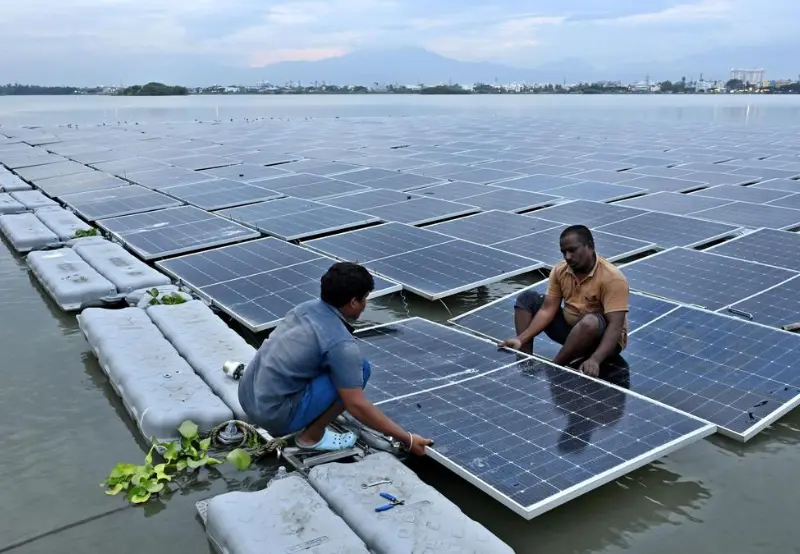
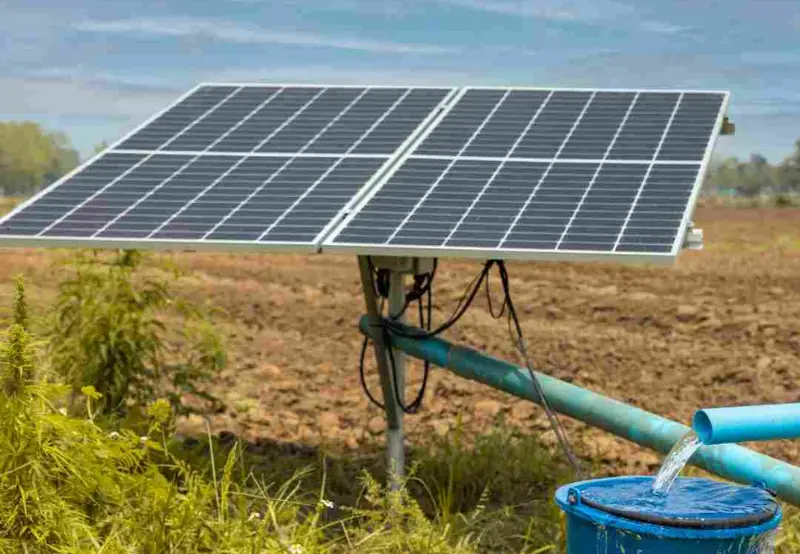
According to Joshi, solar irrigation systems allow farmers to access reliable daytime irrigation, reducing dependence on conventional electricity supply and diesel-powered pumps. This shift can make agriculture more sustainable while lowering operational costs for farmers.
Solar pumps are increasingly seen as a key solution for improving irrigation access in rural areas where electricity supply may be inconsistent. By harnessing solar power, farmers can irrigate crops during the day without worrying about power shortages or rising fuel prices.
Boost to India’s Renewable Energy Capacity
The minister noted that India’s renewable energy capacity has expanded rapidly over the past decade. The country’s installed electricity capacity from non-fossil fuel sources has increased from about 81 GW to nearly 275 GW, reflecting the strong growth of solar, wind, hydro, and nuclear power.
Solar irrigation projects can further strengthen this progress by combining agricultural productivity with clean energy generation, helping India reduce its dependence on fossil fuels.
Benefits for Farmers
Solar irrigation systems can bring several advantages to farmers, including:
- Lower irrigation costs compared with diesel pumps
- Reliable water supply during daylight hours
- Reduced carbon emissions and environmental impact
- Additional income opportunities through surplus solar power generation
Under government initiatives such as the PM-KUSUM scheme, millions of solar pumps are being installed or solarised across the country to support farmers and expand decentralised renewable energy.
Rising Energy Demand in India
Joshi also pointed out that India’s energy demand is expected to grow significantly as the economy expands. According to energy studies, the country’s energy consumption could surpass that of several developed nations by 2040, making the transition to renewable energy even more critical.
Linking Agriculture and Clean Energy
Experts believe that integrating solar power with agriculture can play a crucial role in ensuring energy security, climate resilience, and rural development. By promoting solar irrigation and similar solutions, India aims to create a future where farmers not only produce food but also contribute to clean energy generation.