
Space-Based Solar Power could meet 80% of Europe’s renewable energy needs by 2050. Explore the benefits, challenges, and future of orbital solar technology.
Table of Contents
- Introduction: A Solar Revolution in Orbit
- What is Space-Based Solar Power?
- Space-Based Solar Power in Numbers
- 7 Bold Reasons Why Space-Based Solar Power Matters
- Unlimited Energy Potential
- 24/7 Power Supply
- Reduced Need for Land Use
- Less Reliance on Batteries
- Climate Independence
- Cutting Fossil Fuel Dependence
- Boosting European Energy Security
- Technological Foundations of Space-Based Solar Power
- Challenges Facing Space-Based Solar Power
- Global Interest and Competitors
- Policy, Funding, and International Cooperation
- What This Means for Europe’s Net-Zero Goals
- Conclusion: The Future of Clean Energy Lies in Space
Introduction: A Solar Revolution in Orbit
As Europe races towards net-zero emissions by 2050, a groundbreaking idea is gaining momentum: Space-Based Solar Power (SBSP). According to a new study led by King’s College London, solar panels placed in orbit could generate up to 80% of Europe’s renewable energy needs by 2050.
This futuristic concept, once limited to science fiction, now sits at the intersection of climate ambition, technological innovation, and energy security. It offers Europe a way to reduce reliance on terrestrial energy infrastructure and potentially cut battery storage requirements by two-thirds.
But how realistic is it? Let’s explore.
What is Space-Based Solar Power?
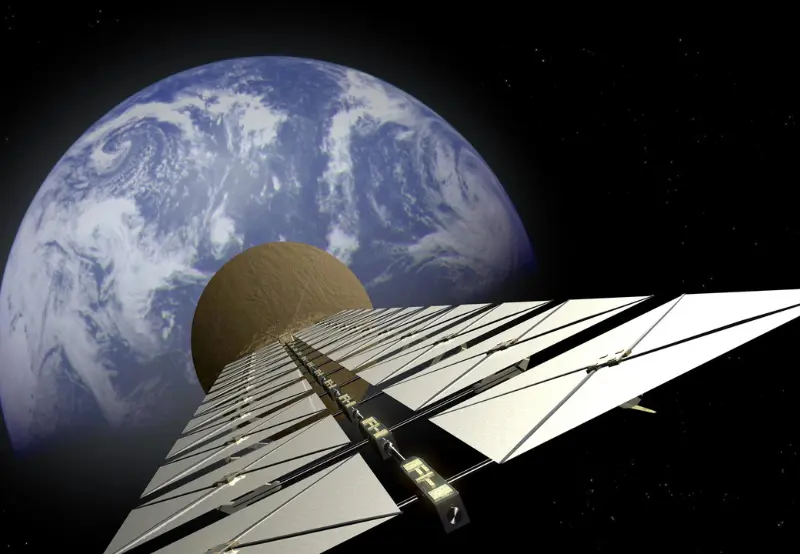
Space-Based Solar Power refers to capturing solar energy using satellites equipped with photovoltaic panels in Earth’s orbit. Unlike terrestrial solar farms, these panels aren’t affected by weather, night-time cycles, or atmospheric interference.
Here’s how it works:
- Solar collection in orbit – Satellites capture sunlight continuously.
- Conversion to microwaves/lasers – Energy is converted into beams.
- Transmission to Earth – Beams are directed to receiving stations (rectennas).
- Integration into the grid – Electricity flows into Europe’s renewable system.
The result? 24/7 clean power, independent of climate conditions.
Space-Based Solar Power in Numbers
- 80%: Share of Europe’s renewable energy demand potentially met by SBSP by 2050.
- Two-thirds: Reduction in terrestrial battery storage needs.
- £16 billion: Estimated cost of building a 2 GW space solar station (UK Space Energy Initiative).
- 30%: More efficient energy capture in orbit compared to ground-based panels.
7 Bold Reasons Why Space-Based Solar Power Matters
1️⃣ Unlimited Energy Potential
Unlike land-based farms, SBSP harnesses uninterrupted sunlight. With no weather disruptions and constant exposure, energy output could dwarf Earth-based systems.
2️⃣ 24/7 Power Supply
Terrestrial solar depends on daylight and weather. SBSP beams energy day and night, eliminating the “duck curve” problem and ensuring round-the-clock supply.
3️⃣ Reduced Need for Land Use
Europe’s land availability for solar farms is limited. SBSP bypasses this entirely, freeing land for agriculture, housing, and biodiversity.
4️⃣ Less Reliance on Batteries
The King’s College study shows SBSP could reduce battery storage needs by two-thirds, saving billions in infrastructure and raw material costs.
5️⃣ Climate Independence
Whether it’s storms in Spain or cloud cover in Germany, Earth’s weather limits solar performance. Space panels operate above it all.
6️⃣ Cutting Fossil Fuel Dependence
Europe still leans on natural gas during demand peaks. SBSP could replace fossil fuel backup plants, reducing emissions and energy imports.
7️⃣ Boosting European Energy Security
Geopolitical shocks—from oil crises to Russia–Ukraine tensions—prove the fragility of Europe’s energy system. SBSP offers sovereign, secure, renewable energy.
Technological Foundations of Space-Based Solar Power
SBSP relies on advanced technologies, including:
- Lightweight solar panels designed for space environments
- Wireless power transmission (microwave/laser beaming)
- Mega-constellations of satellites working in tandem
- Smart grids to integrate incoming orbital energy
Japan’s JAXA, NASA, and ESA are already running pilot studies. The UK recently announced plans to build its first orbital solar demonstrator by the early 2030s.
Challenges Facing Space-Based Solar Power
While promising, SBSP isn’t without hurdles:
- Orbital congestion: Thousands of satellites already clutter space.
- Transmission efficiency: Wireless power transfer must be improved to minimise losses.
- High upfront cost: Billions required for infrastructure and launches.
- Space debris risks: Increased satellite deployment heightens collision risks.
- Public acceptance: Microwave energy transmission faces perception challenges.
Global Interest and Competitors
- China plans a 1 MW SBSP demo satellite by 2028.
- USA (NASA) has revived space solar projects under the Artemis programme.
- Japan (JAXA) has led wireless transmission tests since 2015.
- UK & EU are funding feasibility studies for 2030–2040 deployment.
Europe’s opportunity lies in collaborating with allies while leading deployment within the continent.
Policy, Funding, and International Cooperation
For SBSP to succeed, Europe needs:
- Public–private partnerships (e.g., Airbus, ESA, national governments).
- Long-term funding models, with early-stage subsidies.
- Global treaties to regulate orbital solar deployment.
- International collaboration to prevent conflicts over space energy.
🇪🇺 What This Means for Europe’s Net-Zero Goals
Europe has pledged net-zero by 2050. Current strategies—solar farms, wind energy, hydrogen, and nuclear—may not fully meet demand. SBSP could act as the missing piece, delivering massive renewable capacity without overburdening land use or storage systems.
If executed, it could:
- Power hundreds of millions of homes
- Replace fossil fuel imports
- Reduce reliance on volatile international markets
Conclusion: The Future of Clean Energy Lies in Space
Space-Based Solar Power is no longer a distant dream. With the potential to supply 80% of Europe’s renewable energy by 2050, it offers a revolutionary pathway to secure, sustainable, and continuous clean power.
Yes, challenges remain—costs, congestion, and transmission hurdles—but with coordinated research and international cooperation, SBSP could become a cornerstone of Europe’s energy independence.
The race is on, and Europe must decide: will it lead the orbital solar revolution, or watch others dominate the skies?