
UPERC approves 1,500 MWh battery storage procurement via e-reverse auction. Discover how this milestone will reshape India’s renewable energy and grid stability.
📑 Table of Contents
- Introduction
- UPERC Approves 1,500 MWh Battery Storage: Why It Matters
- Understanding the E-Reverse Auction Model
- The Winning Bidders and Project Split
- Battery Energy Storage Systems (BESS): A Quick Overview
- India’s Growing Need for Energy Storage
- Role of Uttar Pradesh in National Energy Transition
- Benefits of Large-Scale Battery Storage
- Challenges and Barriers Ahead
- Global Comparisons: Lessons from Other Countries
- Government Policies and Support Mechanisms
- Future Outlook: India’s 2030 Energy Storage Targets
- Conclusion
1. Introduction
In a decisive move towards strengthening India’s clean energy future, the Uttar Pradesh Electricity Regulatory Commission (UPERC) has given the green light for the procurement of 1,500 MWh of battery energy storage capacity. This procurement, facilitated through an innovative e-reverse auction, is split evenly between two winning bidders, each tasked with deploying 187.5 MW / 750 MWh.
The approval represents not just a technical milestone, but a significant step in India’s ambition to integrate reliable, large-scale storage solutions into its electricity grid. As renewable energy adoption accelerates, the need for stable storage becomes urgent, and this initiative by UPERC could set a benchmark for other states to follow.
2. UPERC Approves 1,500 MWh Battery Storage: Why It Matters
The focus keyword—UPERC Approves 1,500 MWh Battery Storage—symbolises a turning point in India’s energy landscape. This project matters because:
- It supports grid reliability, ensuring uninterrupted power supply.
- It addresses the intermittency problem of renewable energy sources like solar and wind.
- It highlights Uttar Pradesh’s growing role in India’s energy transition.
- It reflects the effectiveness of innovative auction mechanisms in driving down costs.
3. Understanding the E-Reverse Auction Model
The e-reverse auction model is a competitive bidding process where bidders reduce their prices in real-time to secure contracts. This transparent mechanism has been successfully used in India for solar, wind, and hybrid power projects.
By applying it to battery storage procurement, UPERC has demonstrated how market-driven price discovery can make cutting-edge technology more affordable and scalable.
4. The Winning Bidders and Project Split
The tender was awarded to two separate bidders, with each securing:
- 187.5 MW of power capacity
- 750 MWh of storage capacity
This split ensures risk diversification and encourages healthy competition among developers. It also creates opportunities for innovation in system design, financing, and operational strategies.
5. Battery Energy Storage Systems (BESS): A Quick Overview
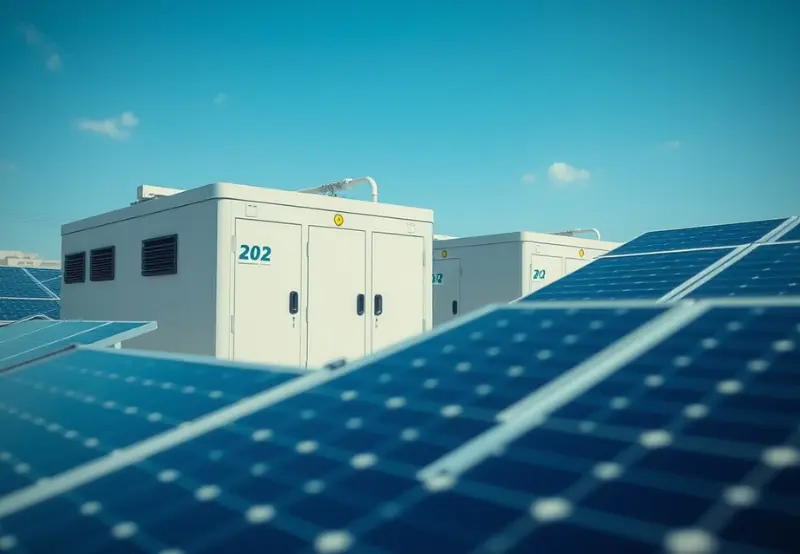
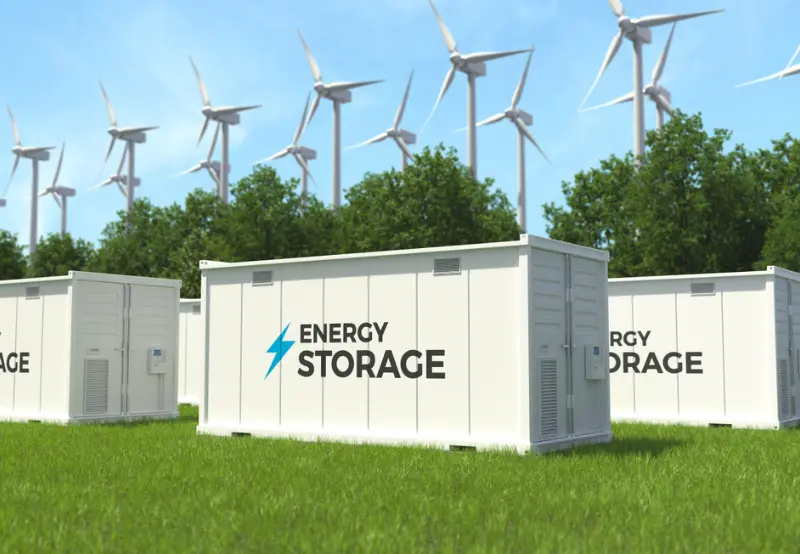
Battery Energy Storage Systems (BESS) store electricity generated during off-peak hours or from renewable sources, and discharge it during high demand.
Key functions include:
- Load balancing
- Frequency regulation
- Peak shaving
- Backup power supply
In India, the declining cost of lithium-ion batteries has made BESS projects more viable. By 2030, India aims to have over 50 GW of BESS capacity, making projects like this one critical stepping stones.
🇮🇳 6. India’s Growing Need for Energy Storage
India’s renewable capacity surpassed 180 GW in 2024, but without storage, the grid faces instability. Solar power peaks during the day, while demand peaks at night.
BESS bridges this gap by:
- Ensuring round-the-clock renewable supply
- Reducing reliance on coal peaker plants
- Supporting climate goals under the Paris Agreement
7. Role of Uttar Pradesh in National Energy Transition
Uttar Pradesh is one of India’s most populous states and a critical player in energy demand. By approving such a large storage project, UPERC:
- Sets a precedent for state-level innovation
- Attracts private investment in energy infrastructure
- Strengthens regional energy independence
This aligns Uttar Pradesh with India’s national target of 500 GW non-fossil capacity by 2030.
8. Benefits of Large-Scale Battery Storage
- Grid Stability: Maintains balance between demand and supply.
- Decentralisation: Enables localised energy solutions.
- Economic Growth: Creates new jobs in storage manufacturing and deployment.
- Environmental Impact: Reduces dependence on fossil fuels.
- Energy Security: Protects against outages and seasonal fluctuations.
9. Challenges and Barriers Ahead
Despite the positive momentum, challenges remain:
- High upfront costs of BESS projects.
- Limited domestic battery manufacturing capacity.
- Regulatory hurdles and lack of uniform policy frameworks.
- Concerns around battery recycling and disposal.
Addressing these barriers will be essential to scaling projects beyond pilot phases.
10. Global Comparisons: Lessons from Other Countries
India can learn from countries leading in BESS:
- United States: Large-scale projects in California exceed 3 GW of storage.
- China: Over 16 GW of storage deployed, with government-backed policies.
- Germany: Strong integration of storage in decentralised solar systems.
By adopting best practices, India can leapfrog into becoming a global storage leader.
11. Government Policies and Support Mechanisms
The central government has introduced several supportive measures:
- Production-Linked Incentive (PLI) Scheme for advanced chemistry cell batteries.
- Energy Storage Obligations (ESO) mandating storage in renewable projects.
- Financial incentives for state DISCOMs to adopt storage.
UPERC’s move is aligned with these national efforts, creating a coherent policy ecosystem.
12. Future Outlook: India’s 2030 Energy Storage Targets
By 2030, India targets:
- 500 GW non-fossil fuel capacity
- 47 GW of battery storage capacity
- Round-the-clock renewable power availability
The UPERC-approved 1,500 MWh storage project is not just a step but a leap towards these goals.
13. Conclusion
The headline “UPERC Approves 1,500 MWh Battery Storage” marks a landmark achievement for India’s energy transition. By embracing e-reverse auctions, Uttar Pradesh has unlocked a cost-efficient way to deploy cutting-edge storage at scale.
This project will play a critical role in stabilising the grid, integrating renewables, and setting the pace for India’s 2030 energy storage ambitions.
As technology advances and policies align, initiatives like this will prove that India can not only meet but lead global benchmarks in renewable storage solutions.
Read: India Revokes 17 GW Grid Access: A Powerful Move Reshaping Clean Energy