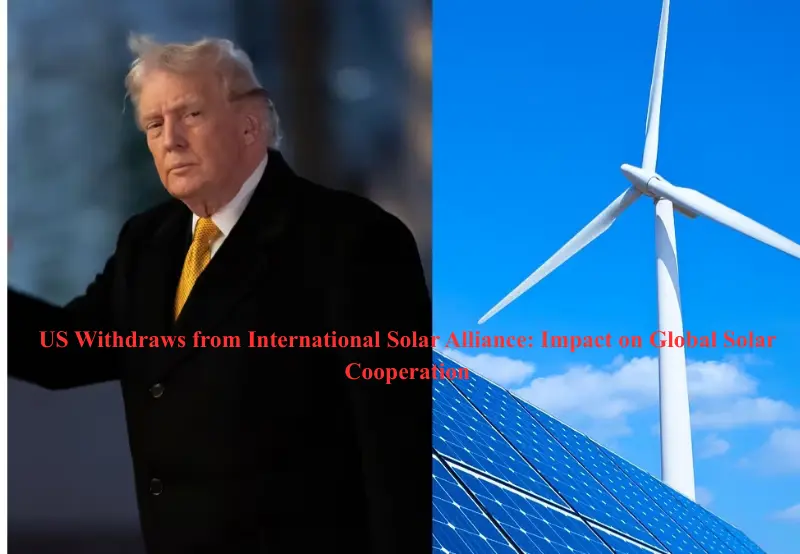

The United States has formally withdrawn its membership from the International Solar Alliance (ISA), a multilateral organisation co-founded by India and France to promote the deployment of solar energy worldwide. This move is part of a broader decision by the current US administration to disengage from more than 60 international bodies, including several climate and energy-focused organisations, on the grounds that they are “contrary to American interests.”
Why the Withdrawal Matters
The International Solar Alliance was conceived as a global platform to accelerate the adoption of solar power, particularly in sun-rich developing countries. It aims to mobilise financing, reduce technology and cost barriers, and support national solar programmes across member nations. As of early 2026, the ISA has 125 member and signatory countries, reflecting widespread international commitment to solar energy growth.
The US exit removes one of the world’s largest economies from the organisation at a time when global cooperation on clean energy is considered crucial to meeting climate targets and scaling up renewable deployment. Critics argue the move could weaken international coordination and slow efforts to increase solar investments, especially in emerging markets.
ISA’s Response and Future Direction
Despite the setback, officials from India’s Ministry of New and Renewable Energy and other ISA members have stated that the alliance will continue its core mission. The organisation remains committed to supporting member countries, particularly least developed nations and small island developing states, in addressing shared challenges in solar energy deployment — including financing, capacity building and risk mitigation. The ISA’s work continues across numerous programmes and partnerships aimed at promoting solar adoption and achieving universal energy access.
Broader Context
The US decision reflects a broader geopolitical shift, with the administration pulling back from multiple global institutions and multilateral agreements. This retreat appears to prioritise national sovereignty and economic interests over participation in international cooperative frameworks, including those focused on climate change and renewable energy.
While the withdrawal may reduce American influence within global solar cooperation efforts, the ISA’s continued work with its remaining members suggests that the organisation aims to remain a key platform for advancing solar energy worldwide.