
Volkswagen eyes India for affordable EVs to expand in emerging markets. Learn about its localisation strategy, pricing plans, and the future of electric mobility in India.
📖 Table of Contents
- Introduction
- Why Volkswagen is Targeting India’s EV Market
- Volkswagen’s Strategy: Affordable EVs for Emerging Markets
- India’s EV Landscape: Opportunities & Challenges
- The Competition in India’s EV Segment
- VW’s Global EV Ambitions
- The Road Ahead for Volkswagen in India
- Conclusion
🚗 Introduction
Volkswagen Eyes India for Affordable EVs—a headline that signals a major shift in global EV strategies. The German auto giant, renowned for premium vehicles, is pivoting towards small, cost-effective electric cars aimed at emerging markets. India, with its rapidly growing automotive industry, rising EV demand, and government-backed electrification push, is a key part of Volkswagen’s long-term plan.
This move reflects Volkswagen’s global vision to make EVs accessible for mass adoption while addressing one of the world’s largest consumer markets. The decision underscores India’s transformation into a hub for EV innovation and manufacturing, driven by government incentives, consumer demand, and the need for sustainable mobility solutions.
🌍 Why Volkswagen is Targeting India’s EV Market
India represents one of the world’s fastest-growing EV markets, projected to reach $113.99 billion by 2029, growing at a 66.52% CAGR. The country’s EV revolution is fuelled by:
- A strong government EV policy framework, including FAME II subsidies.
- Rapid urbanisation and growing middle-class aspirations.
- Increasing environmental awareness and fuel price concerns.
- Local battery manufacturing initiatives reducing costs.
Volkswagen’s entry is well-timed, as affordable EV options remain limited despite high demand. India’s market is dominated by compact cars, making it ideal for Volkswagen to deploy its urban-friendly, small EV models.
⚡ Volkswagen’s Strategy: Affordable EVs for Emerging Markets
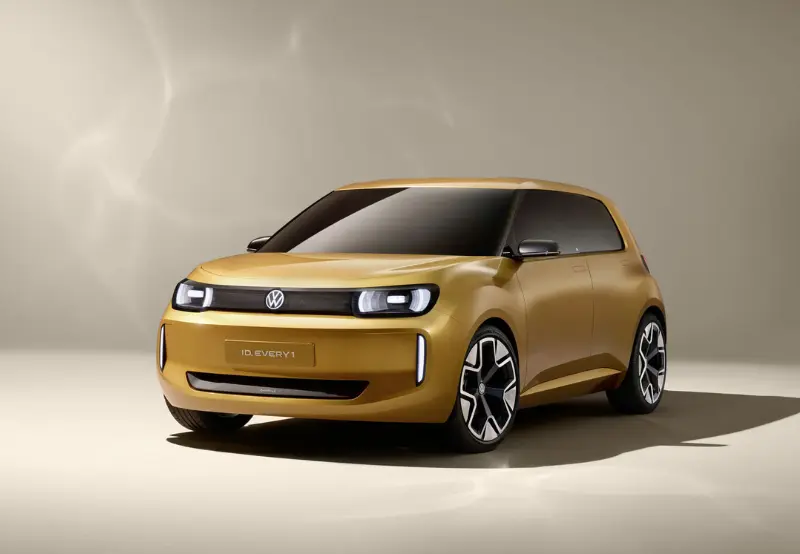
Volkswagen is taking a localised approach to make EVs affordable in price-sensitive regions. The company is exploring:
- Platform localisation: Adapting its MEB Entry platform for compact EVs.
- Battery localisation: Leveraging India’s growing lithium-ion cell manufacturing ecosystem.
- Cost efficiency: Exploring local partnerships for supply chain and production.
- Charging infrastructure development: Collaborating with private and government bodies.
The company aims to launch EVs under €20,000 (₹18–20 lakh), which would place them in a sweet spot for urban Indian buyers.
🔋 India’s EV Landscape: Opportunities & Challenges
India’s EV ecosystem is rapidly evolving but comes with challenges:
Opportunities:
- EV sales crossed 1.5 million units in 2023, with strong momentum in two-wheelers and small cars.
- Battery prices are declining, making EV ownership more affordable.
- Expanding charging infrastructure, with more than 12,000 charging stations as of 2025.
Challenges:
- Lack of robust nationwide charging coverage.
- Supply chain bottlenecks for critical materials.
- Consumer scepticism about range and resale value.
Volkswagen’s strong R&D background positions it well to tackle these challenges and scale adoption.
🚙 The Competition in India’s EV Segment
Volkswagen’s affordable EV plans will face stiff competition from domestic and international automakers:
- Tata Motors leads India’s EV space with affordable models like the Nexon EV and Tiago EV.
- MG Motors and Hyundai have gained traction with the MG ZS EV and Kona Electric.
- BYD is aggressively expanding in India with premium EV offerings.
Volkswagen’s strategy must focus on pricing, localisation, and brand trust to capture market share.
🌐 VW’s Global EV Ambitions
Volkswagen is pursuing one of the largest electrification plans globally, with over €180 billion allocated for EV development and software integration by 2030. The automaker aims to:
- Launch 10+ affordable EV models by 2027.
- Expand battery production with gigafactories across Europe and Asia.
- Develop a robust charging ecosystem in emerging markets.
The company is also working on solid-state battery technology, promising longer ranges and faster charging, which could revolutionise India’s EV sector.
🛣️ The Road Ahead for Volkswagen in India {#road-ahead}
Volkswagen’s India plans are not just about selling cars—they reflect a larger commitment to sustainability and localisation. The company is likely to:
- Set up local R&D and assembly plants for small EVs.
- Collaborate with charging network operators to create seamless infrastructure.
- Introduce battery leasing models to lower ownership costs.
- Export India-made EVs to other emerging markets in Asia and Africa.
If executed well, Volkswagen could reshape India’s EV narrative, pushing traditional automakers to follow suit.
Conclusion
The headline “Volkswagen Eyes India for Affordable EVs” marks a historic shift in the automotive industry. India is no longer just a market for entry-level petrol cars—it’s fast becoming a global hub for EV innovation.
Volkswagen’s foray into affordable EVs highlights:
- A commitment to climate goals by providing sustainable mobility.
- A strategic pivot to emerging markets, leveraging India’s growth.
- A bold plan to democratise EV adoption worldwide.
If the German giant successfully launches compact, affordable EVs tailored for Indian consumers, it could trigger a new era of mass-market electrification in Asia.