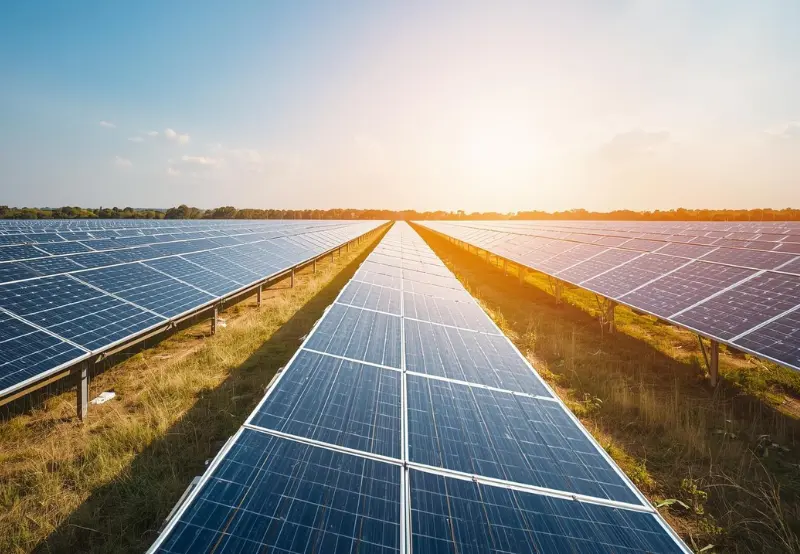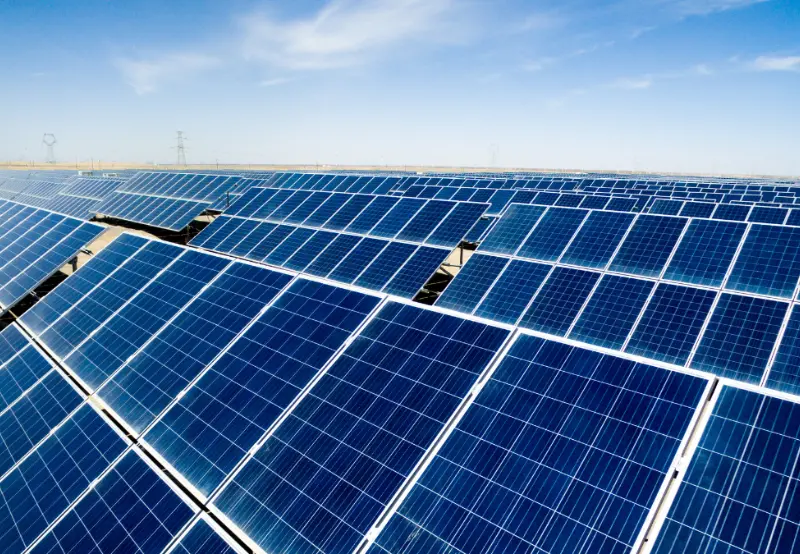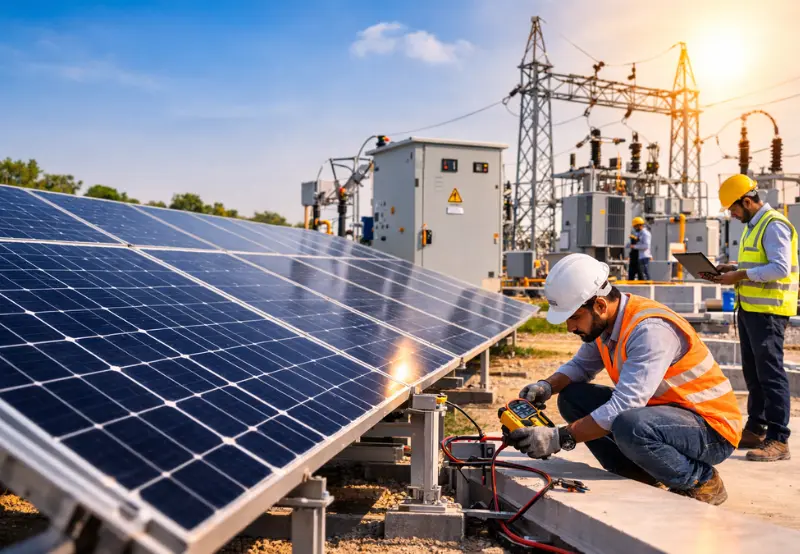

Waaree Energies revamps its module supply-chain to sidestep high-tariffs on solar panels in the U.S. market—revealing strategic manoeuvres by Indian exporters amid trade tensions.
Introduction
Indian solar-module exporter Waaree Energies has chosen a bold path to preserve access to the U.S. market. The company is reconfiguring its supply-chain to minimise the impact of steep U.S. import tariffs—part of a broader reaction among Indian solar manufacturers to shifting trade rules.
With the U.S. accounting for nearly 60% of Waaree’s export order-book (24 GW worth about ₹47,000 crore) as of end-September, the stakes are high.
What’s Changing in the Supply Chain?
Waaree’s key move is to source solar-cells from countries where U.S. tariffs are less punitive than those applied to Indian-origin modules. As CEO Amit Paithankar puts it: “If you configure your supply chain well, the high tariffs currently in place on Indian goods can be sidestepped.”
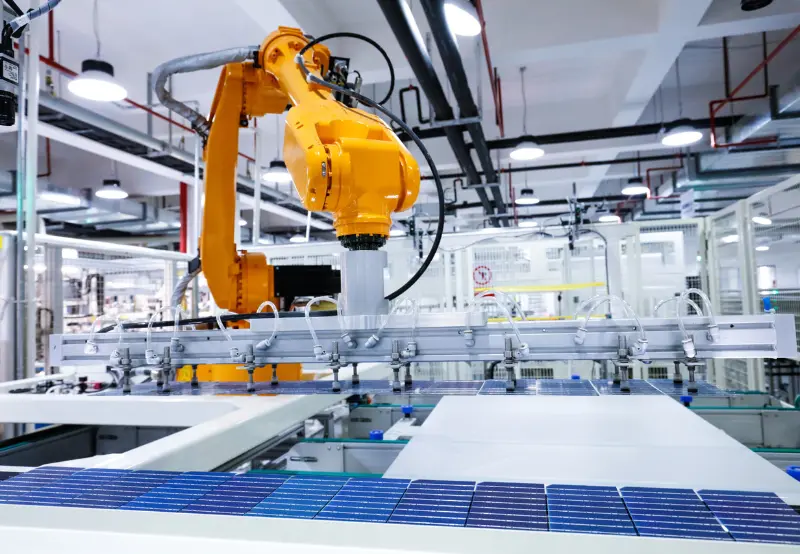
Under U.S. customs rules, the tariff on a solar module depends on the country where the cell’s PN-junction (the part that converts light to electricity) was made, not where the module was assembled.
By sourcing from third-countries with favourable bilateral duty structures, Waaree aims to avoid the high tariffs faced by Indian-cell modules destined for the U.S.
Why the Urgency?
Several contextual factors make this supply-chain shift critical for Waaree:
- The U.S. introduced tariffs of up to ~50% on solar imports from India as of late August 2025, following trade-policy shifts.
- Waaree is also under a U.S. trade-investigation which centres on whether the company mis-labelled Chinese-made cells as “Made in India”.
- Given the large order-book and export orientation, any tariff disruption could significantly affect Indian module-makers’ margins, exports and competitiveness.
Strategic Implications for Waaree
Access Retention
By redesigning the supply-chain, Waaree preserves access to the U.S.—arguably the world’s largest solar export market—avoiding tariff-shock while keeping production in India and its U.S. offset facility in play.
U.S. Manufacturing Expansion
Waaree plans to double the capacity of its Houston facility to 3.2 GW in the next six months and has invested some US$150 million in U.S. manufacturing assets, signalling a strong long-term commitment.
Competitive Edge
This proactive manoeuvre could give Waaree an edge over less agile competitors, especially as global buyers seek tariff-resilient supply chains and trustworthy sources of modules.
Challenges and Risks
While the strategy is elegant, Waaree still faces several risks:
- Regulatory scrutiny: The U.S. investigation into alleged duty-evasion remains active; any adverse finding could jeopardise shipments or result in retroactive duties.
- Complex logistics and cost: Sourcing from third-countries may reduce tariffs but adds complexity, cost or risk of supply-chain disruptions.
- Tariff policy uncertainty: If the U.S. tariff regime tightens further—or India faces retaliatory measures—exporters could see increasing risk.
- Maintaining margins: Even with lower tariffs, competition, input-cost inflation (modules, cells, shipping) and exchange-rate pressures remain.
- Execution risk: Expanding U.S. manufacturing and supply-chain realignment require capital, time and reliable demand continuity.
Broader Significance: The Indian Solar Export Landscape
Waaree’s case is illustrative of a wider trend: Indian solar-module makers are repositioning to navigate global trade friction and shifting supply-chain economics.
For India’s solar-manufacturing ecosystem, this shift holds several implications:
- Make-in-India is only half the story: Domestic manufacturing helps, but global trade rules and rules-of-origin matter significantly.
- Exports remain critical: With weaker domestic demand or low tariffs, exports to markets like the U.S. are vital for scale and margin.
- Supply-chain diversification: Firms will increasingly source cells, wafers or critical components from multiple jurisdictions to avoid concentration or tariff risk.
- Policy backup needed: India may need complimentary trade-support, export incentives or diplomatic initiatives to counter tariff risks.
- Competitive pressure: Tariff avoidance strategies may force all firms to adapt, shifting competitive advantage to those with agile global sourcing and manufacturing footprints.
What to Watch Next
- Monitoring how much of Waaree’s U.S. shipments successfully transition to the new supply-chain structure without tariff-penalties.
- Outcome of the U.S. Customs & Border Protection (CBP) investigation into Waaree—any levy or ruling could ripple across exports.
- Whether other Indian exporters adopt similar supply-chain reconfigurations—and how this affects global module-pricing, capacity utilisation and trade flows.
- Further U.S. policy moves: introduction of new tariffs, stricter country-of-origin rules or duties on Indian modules may challenge adaptation.
- India’s counter-measures—such as boosting local manufacturing incentives, diplomatic trade relief or exploring alternate export destinations beyond the U.S.
Conclusion
Waaree Energies’ decision to rejig its supply chain is a clear signal: for solar-module exporters in 2025, manufacturing in India is just one piece of the puzzle—the global tariff regime, country-of-origin rules and supply-chain architecture matter equally.
By sourcing cells from jurisdictions that enable access to the U.S. market with lower tariffs, Waaree is attempting to secure its export future in the face of trade friction. While risks remain, this approach underlines the adaptability of Indian solar companies as they grapple with global trade headwinds and strive to maintain growth, margins and global competitiveness.
For the broader Indian solar industry, Waaree’s strategy may become a blueprint, highlighting that success in the global green-energy race hinges as much on supply-chain sophistication as on module-efficiency or scale.
For more solar insights, Solar News