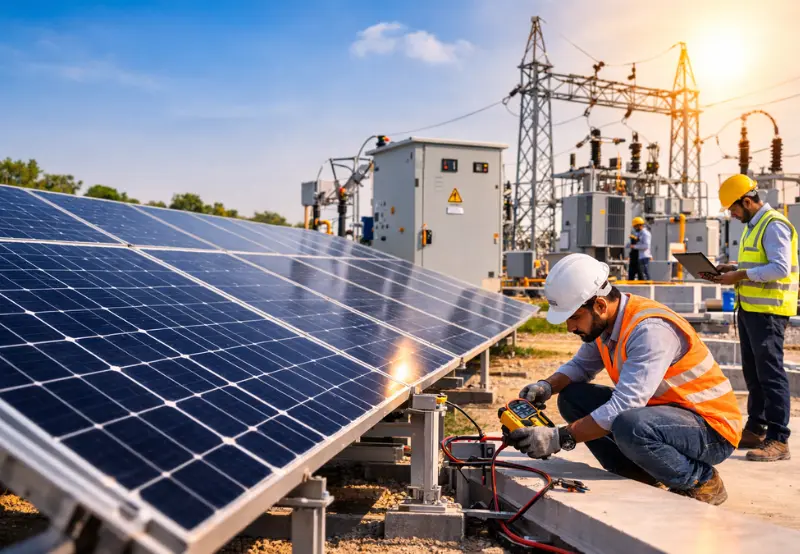
Hazoor Multi Projects secures 200 MW EPC contract for the Khavda Solar Project. Learn 7 key insights into India’s growing solar energy ambitions.
📘 Table of Contents
- Introduction: A New Chapter for Khavda
- Hazoor Multi Projects: Who Are They?
- What Makes Khavda So Special?
- About the 200 MW EPC Contract
- India’s Broader Solar Vision
- Challenges in Khavda’s Solar Push
- Conclusion: A Bright Future for Khavda
🔆 Introduction: A New Chapter for Khavda
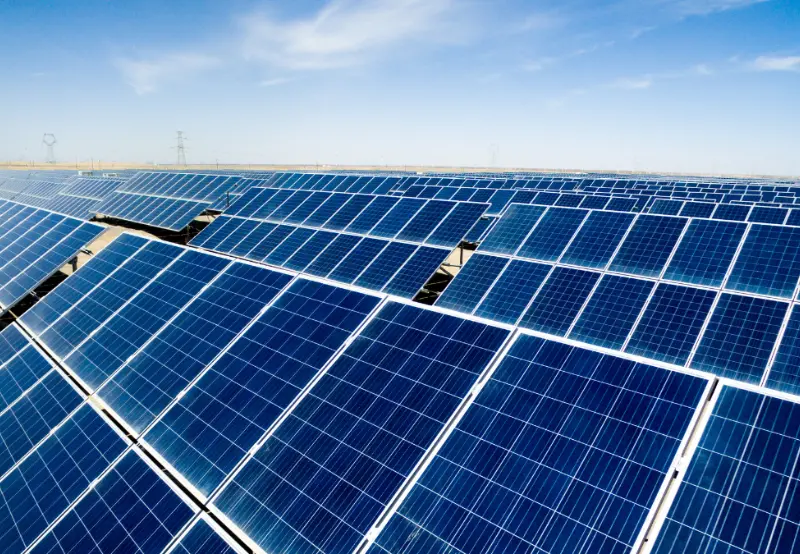
The Khavda Solar Project has gained fresh momentum with Hazoor Multi Projects Limited securing the Engineering, Procurement, and Construction (EPC) contract for a 200 MW solar plant. The Letter of Award (LoA), issued on July 4, marks a pivotal step in India’s march toward its 500 GW renewable energy target by 2030.
This blog uncovers the most critical updates, challenges, and vision behind this major solar development.
🏗 Hazoor Multi Projects: Who Are They?
Hazoor Multi Projects is an emerging infrastructure company in India with growing credentials in renewable energy. Known primarily for road and civil works, its foray into large-scale solar infrastructure—especially in high-profile zones like Khavda—signals its diversification into the booming green energy space.
Securing a 200 MW contract in a location like Khavda not only boosts Hazoor’s project portfolio but also places the firm at the centre of India’s clean energy transition.
🌅 What Makes Khavda So Special?
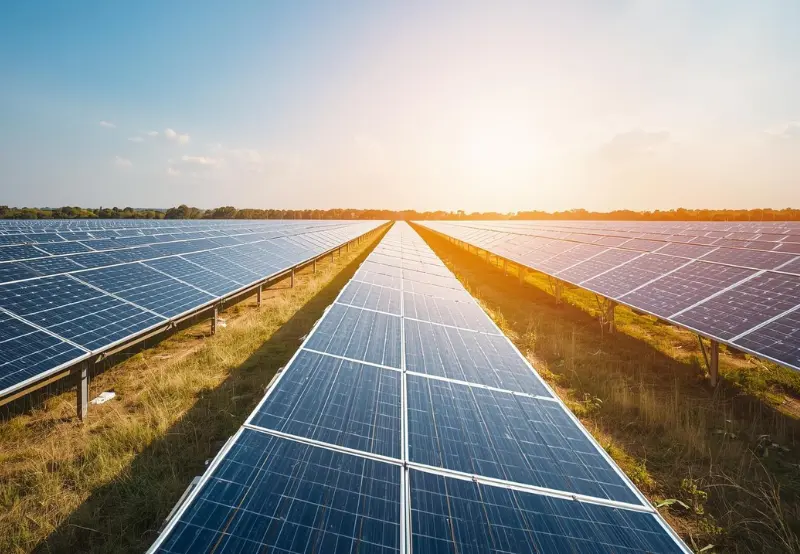
The Khavda Renewable Energy Park, located in Kutch, Gujarat, is on track to become the world’s largest renewable energy park, spanning over 72,000 hectares.
This area is known for its:
- High solar irradiance
- Vast barren land
- Proximity to grid infrastructure
- Supportive state policies
Planned to host 30 GW+ of renewable capacity, Khavda is a crown jewel in India’s energy roadmap. Major players like Adani Green Energy and NTPC are already active in the region, and now Hazoor joins the race.
🔧 About the 200 MW EPC Contract
The EPC contract awarded to Hazoor Multi Projects is part of the larger national effort to fast-track solar energy deployment. EPC contracts involve the complete design, procurement, construction, and commissioning of the plant—so this is not just a supply job but a full-scale execution role.
Key points of the 200 MW deal:
🌍 India’s Broader Solar Vision
India’s solar push is not limited to Khavda. With over 110.8 GW of installed solar capacity, the country is rapidly scaling toward its 2030 target of 280–300 GW solar capacity out of a total 500 GW renewable mix.
Key components driving this momentum include:
- Falling battery storage costs
- Solar + storage hybrid projects
- Supportive government schemes like CPSU Phase II and PLI
- International collaborations (ISA, COP28 commitments)
Read about India’s recent solar park success:
🔗 India Solar Parks Milestone Reaches 110.8 GW
⚠️ Challenges in Khavda’s Solar Push
While the Khavda Solar Project is promising, it’s not without obstacles.
Top challenges include:
- Harsh desert conditions (wind and heat)
- Accessibility and logistics issues due to its remote location
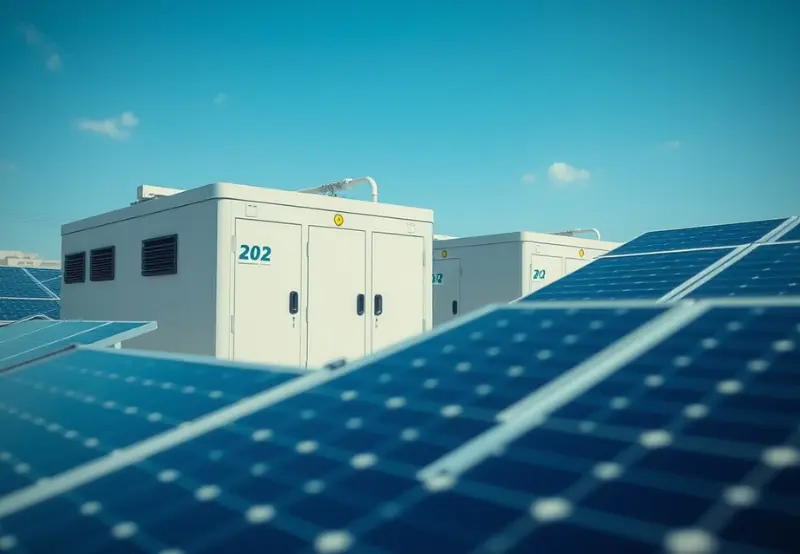
- Need for advanced grid and storage integration
- Land acquisition and ecological concerns
However, these challenges are being tackled with smart engineering, drone surveys, and robust policy support.
🌟 Conclusion: A Bright Future for Khavda
The Khavda Solar Project is more than just another solar plant—it’s a symbol of India’s clean energy ambition. Hazoor Multi Projects’ win of the 200 MW EPC deal proves the increasing participation of diverse companies in the solar movement.
With ambitious targets, strong industry players, and massive government backing, Khavda could soon emerge as a global beacon for large-scale renewable energy development.