
Learn how IIT-Bombay’s ART-PV India achieved a 29.8% efficiency with perovskite–silicon tandem solar cells, setting a new benchmark in clean energy innovation.
Table of Contents
- A Solar Milestone from IIT-Bombay
- What is a Perovskite–Silicon Tandem Solar Cell?
- 29.8% Efficiency: Why It Matters
- ART-PV India: A Game-Changing Startup
- Union Government’s Support & MNRE Funding
- Global Context: How India Compares
- Challenges & the Road to Commercialisation
- What This Means for India’s Renewable Energy Goals
- A Bright Step Toward Energy Independence
A Solar Milestone from IIT-Bombay
India has reached another remarkable milestone in its clean energy journey. A startup born out of IIT-Bombay, ART-PV India, has unveiled a perovskite–silicon tandem solar cell with a record-breaking 29.8% efficiency—a leap that could reshape global solar technologies.
This isn’t just another laboratory triumph. With strong government backing and real-world pilot projects on the horizon, this innovation could soon power homes, industries, and even entire cities.
What is a Perovskite–Silicon Tandem Solar Cell?
A tandem solar cell stacks two light-absorbing materials—silicon and perovskite—to capture more of the solar spectrum. Traditional silicon cells max out around 22–25% efficiency, but by layering perovskite on top, the tandem structure captures both visible and near-infrared light.
This is the science behind why the 29.8% efficiency milestone is so significant—it breaks through the ceiling of current commercial tech.
29.8% Efficiency: Why It Matters
Hitting 29.8% efficiency puts India at the cutting edge of global solar research. Most commercial solar panels today operate at 19–21%, meaning this tandem tech delivers up to 50% more output from the same area.
In an energy-hungry and land-constrained country like India, efficiency gains like this translate directly into:
- Lower costs per unit of energy
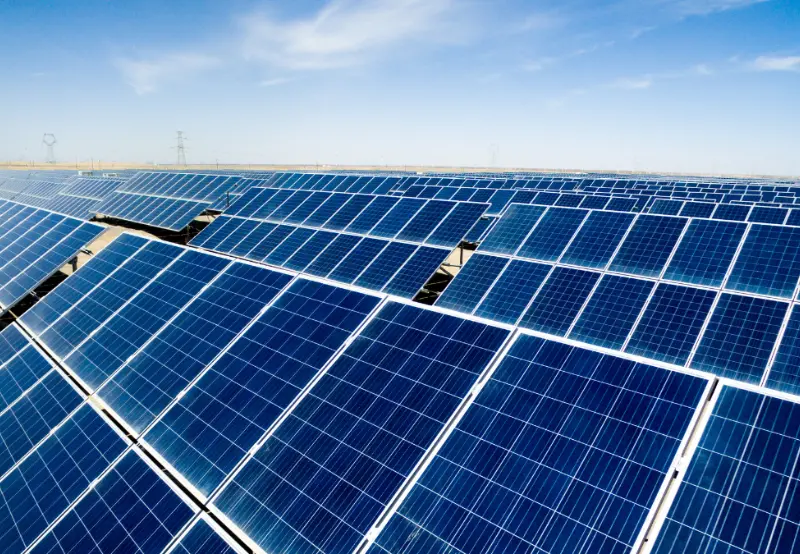
- Smaller land footprint for utility-scale plants
- Reduced pressure on transmission infrastructure
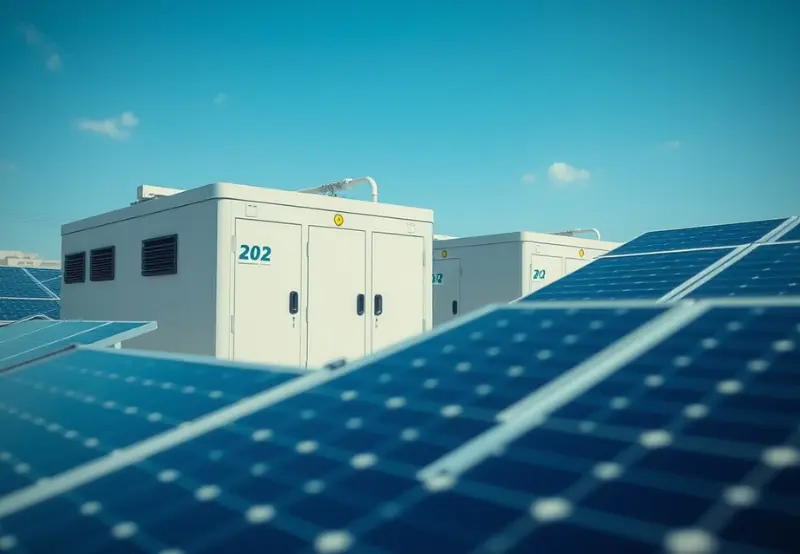
This efficiency leap could also reduce the cost of solar energy storage, by generating more energy per square foot during the day.
ART-PV India: A Game-Changing Startup
ART-PV India, short for Advanced Research in Tandems for Photovoltaics, was incubated at IIT-Bombay. This spin-off is helmed by a team of researchers and engineers deeply rooted in cutting-edge PV science.
Their focus has been clear: take laboratory-scale innovations and scale them up for commercial pilot manufacturing. The company’s vision aligns perfectly with India’s energy security goals and Make-in-India vision.
Union Government’s Support & MNRE Funding
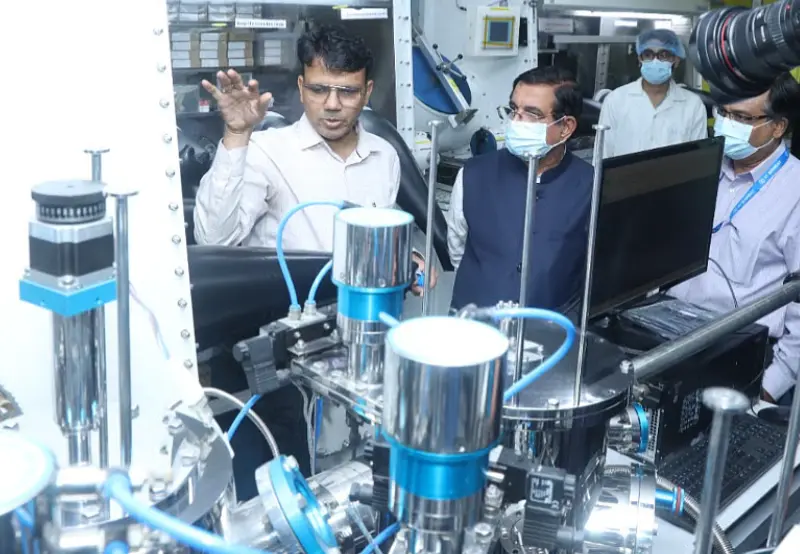
Recognising the strategic importance of this technology, Union Minister Pralhad Joshi described the development as a “game-changer“. In his official statement, he confirmed that the Ministry of New and Renewable Energy (MNRE) will provide funding to ART-PV India for pilot-scale manufacturing.
This public sector investment ensures that the technology can bridge the infamous “lab-to-market” gap, which many clean-tech startups fail to cross.
Global Context: How India Compares
India’s 29.8% perovskite–silicon tandem solar cell now stands shoulder to shoulder with global leaders like:
- Oxford PV (UK) – previously held records of ~28%
- National Renewable Energy Laboratory (USA)
- Fraunhofer ISE (Germany)
What sets ART-PV apart is its speed of scale-up and public funding support, both of which are lacking in many global counterparts.
⚠️ Challenges & the Road to Commercialisation {#challenges}
While this breakthrough is monumental, challenges remain:
- Stability: Perovskite materials can degrade under heat and humidity.
- Scalability: Producing tandem cells on industrial scales while maintaining quality is no small feat.
- Cost: Despite potential savings, perovskite materials are still more expensive per gram than traditional silicon.
But with MNRE’s backing, and IIT-Bombay’s tech ecosystem, ART-PV is well-positioned to navigate these hurdles.
🇮🇳 What This Means for India’s Renewable Energy Goals
India has set its sights on 500 GW of renewable energy by 2030, and solar is expected to deliver more than half of this target. High-efficiency tandem solar cells:
- Boost output without requiring additional land
- Reduce balance-of-system costs
- Make solar+storage systems more viable
When used in urban rooftops, solar parks, and even floating solar applications, these advanced panels could redefine India’s clean energy landscape.
For related insights, check EcoDigest’s report on India’s solar growth and India’s 132 GW solar target by 2026.
A Bright Step Toward Energy Independence
The unveiling of a 29.8% efficient perovskite–silicon tandem solar cell by ART-PV India isn’t just a scientific win—it’s a statement that India is ready to lead the future of clean energy technology.
With political will, academic excellence, and industrial vision converging, India may soon become a global exporter of solar tech, not just a consumer.
And as efficiency climbs and costs fall, India’s rooftop and grid-scale solar systems will only become more powerful, reliable, and scalable, powering millions of homes and businesses, one cell at a time.